Teens Out & About: Phone Safety When They’re Independent
There’s a particular week most parents remember: the first time a teenager goes into town without you. Maybe it’s a bus to a friend’s, a gig with mates, a trip to the shops with a fiver and a bank card. It’s a good thing — it’s the whole point of raising them — and it also lands somewhere in your stomach. The phone in their pocket is the thread that keeps the two of you connected while they’re off being their own person. Set it up well, and it’s a genuine safety net that lets you relax and them feel free. Set it up badly, and it becomes either a leash or a liability. This is about getting the balance right: real independence, with a net underneath.
Getting the phone ready before they go
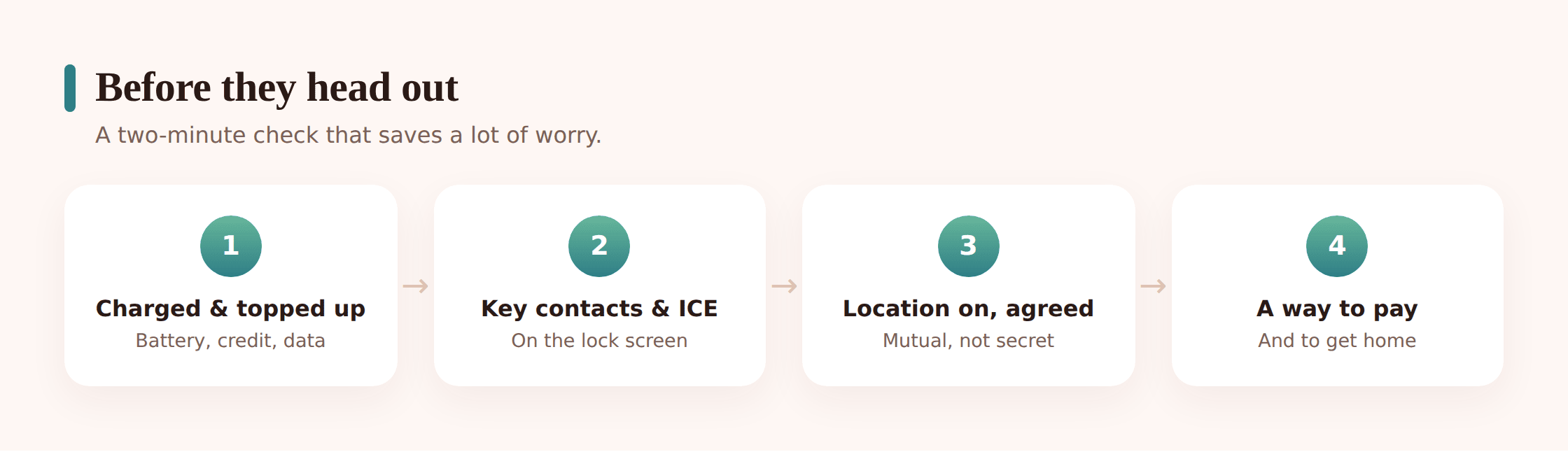
Half of staying safe out and about is decided before anyone leaves the house. A phone that’s dead by three in the afternoon, or has no way to pay for a bus home, isn’t a safety device — it’s a paperweight. Ten minutes of setup turns it into something you can both lean on. The first time, do it together. After that it becomes a habit they run themselves.
Charge it and know it’ll last
Fully charged before they leave, and honest about how long that lasts. If their battery is tired and dies by lunchtime, a cheap power bank in the bag changes everything. A phone that stays alive is the single most useful safety feature there is.
Credit or data that actually works
Check they can make a call and get online away from home Wi-Fi. A pay-as-you-go phone with no credit can’t ring anyone. If they’re on a data plan, make sure they haven’t burned through the allowance, because maps and messaging need it.
Key contacts saved and easy to find
You, another trusted adult, and a couple of friends — saved with real names, not just a number they’d have to squint at in a panic. Pin the important ones as favourites so they’re one tap away.
ICE and medical info on the lock screen
Both iPhone and Android let you put emergency contacts and medical details (allergies, conditions, medication) on a Medical ID or emergency info page that a stranger or paramedic can reach without unlocking the phone. If your teen has a health condition, this one genuinely matters.
Find-my and agreed location sharing, set up openly
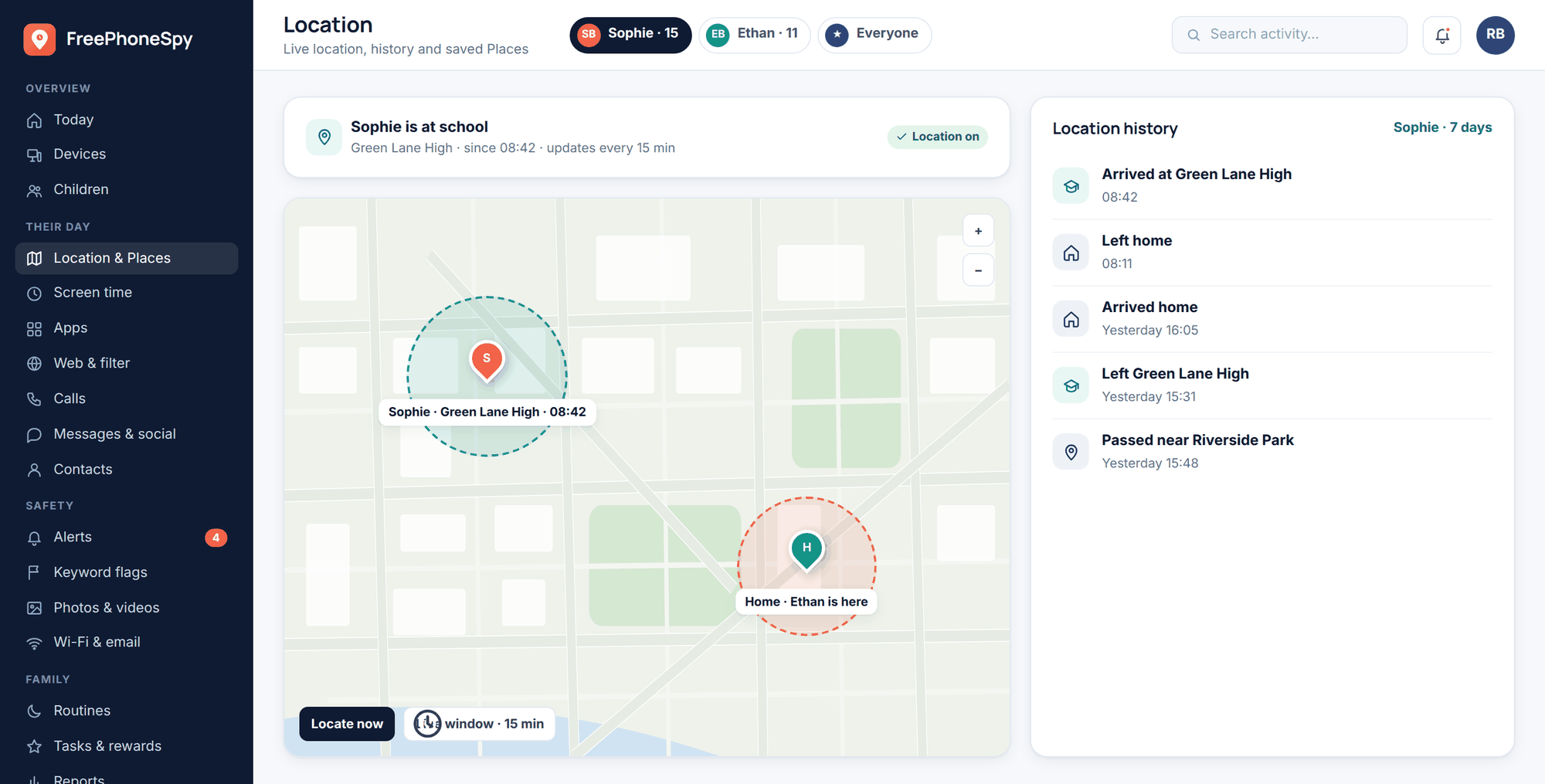
Turn on the phone’s built-in find-my feature so a lost device can be located. And if your family shares location, make sure it’s actually on and working before they head out — not something you scramble to fix later. More on doing this the right way below and in our guide to teen location sharing.
A way to pay for the journey home
Contactless on the phone, a bank card, or cash for a bus or train. The point is that getting home never depends on someone else’s goodwill or a phone that’s died. A backup fiver tucked in a pocket has rescued a lot of teenagers.
Staying in touch without hovering
Here’s the tightrope. You want to know they’re okay. They want to feel like they’ve actually been let off the lead. Get the touch too heavy and you’ve sent them out with an ankle monitor; too light and you’re up at midnight not knowing which town they’re in. The trick is to agree the rhythm in advance, out loud, so nobody’s guessing.
A check-in that isn’t surveillance
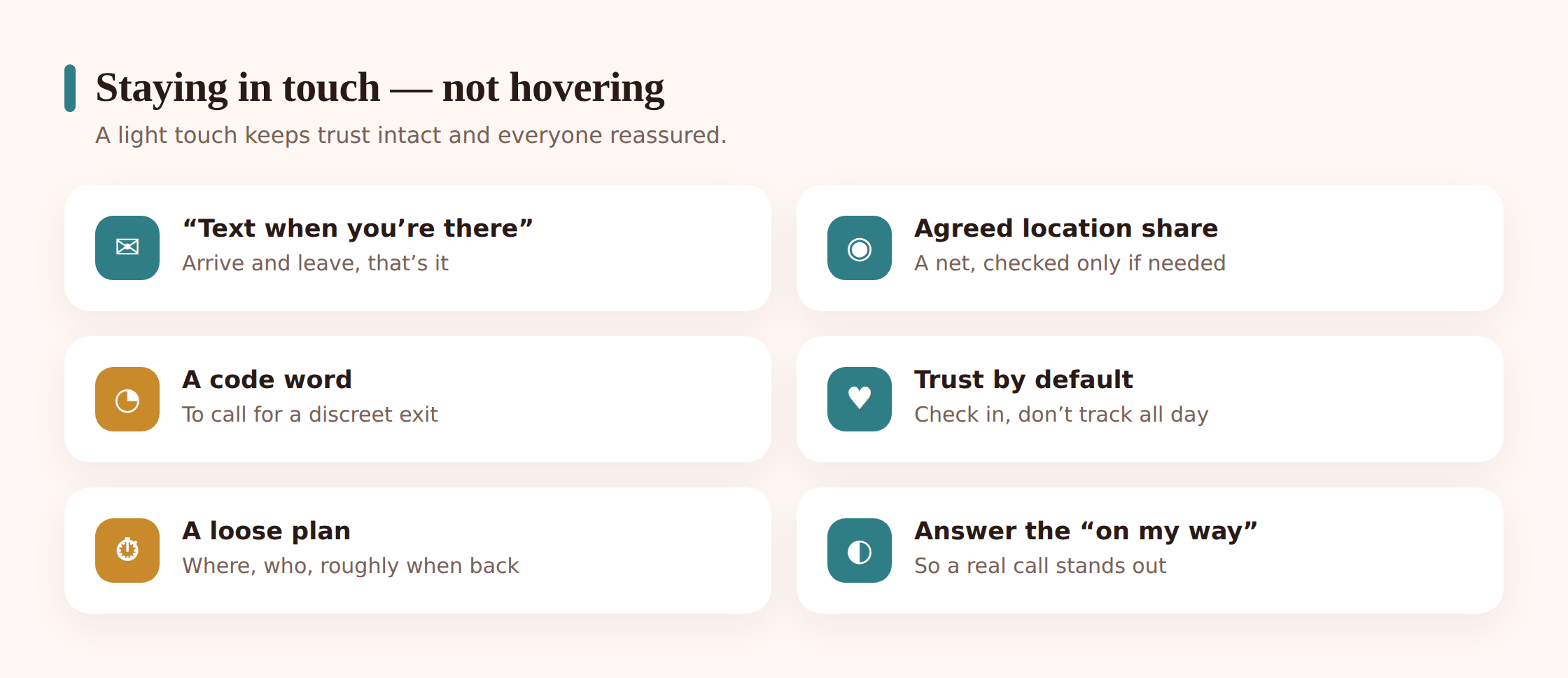
The healthiest arrangement is small and predictable: “text when you arrive, text when you leave.” Two messages bracketing the outing. That’s it. It tells you the two things that actually matter — they got there, they’re heading back — without a running commentary on their afternoon. Constant “what are you doing now?” pings do the opposite of what you want: they teach a teenager that being trusted comes with a catch, and they train them to reply on autopilot without really telling you anything.
If you’d rather not rely on messages at all, this is where agreed location sharing earns its place. When both of you can glance at a map, you don’t need to ask — and neither do they, if they want to know you’re home. The difference between a net and a leash is entirely in the framing: it’s something the family does together, mutually, in the open, not something done to them while they’re not looking.
Agree the “text me back” rule up front
One reasonable expectation is worth stating plainly: if you send a genuine “are you okay?” they answer within a sensible window. Not because you’re checking up, but because that single reply is what lets you not worry. Frame it as a courtesy that buys them freedom — “answer when I actually check in and I won’t need to check in much” — rather than a rule they’re breaking every time the phone’s in a bag.
A code word for a discreet exit
This is the one every teenager secretly appreciates. Agree a word or a short phrase — sent by text or said on a call — that means “come and get me, no questions right now.” It lets them leave a situation that’s gone weird, awkward, or unsafe without having to explain themselves in front of the people they’re with. A teen at a party that’s turned into something they don’t want to be at can text a single innocuous word, and you ring back with a ready-made reason they have to leave. No embarrassment, no argument, just an exit. Set it up before they ever need it.
Personal safety habits worth building
Apps and settings are the easy half. The other half is a handful of small habits that keep a teenager safer than any software — the kind of ordinary streetwise awareness that used to get passed down without a phone in the picture. None of this is about scaring them. It’s about a few things becoming second nature.
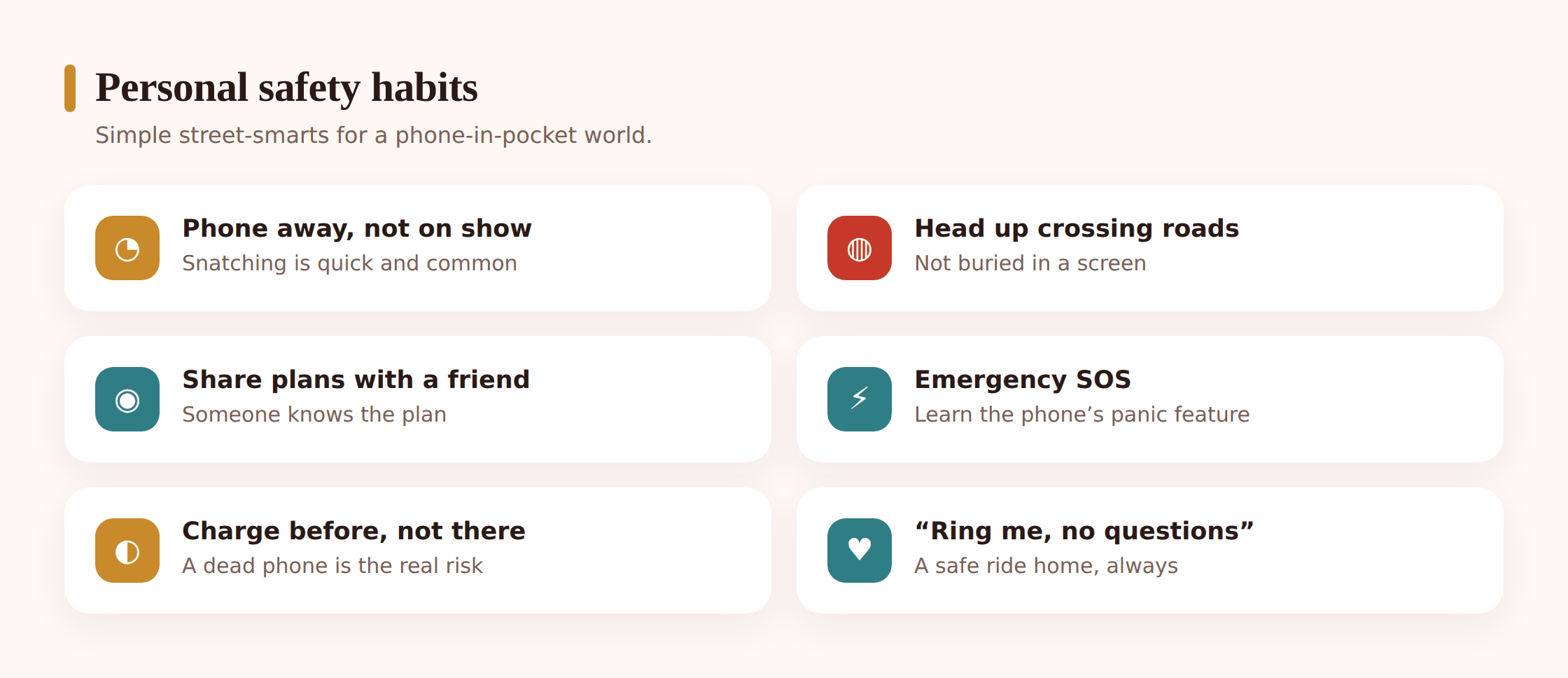
- Keep the phone pocketed, not on show. Phone snatching — someone grabbing a handset from an open hand, often off a bike or scooter — thrives on phones held out in the street. Checking a map is fine; walking along filming a text with the phone waving about is an invitation. Step to one side, look, put it away.
- Head up crossing roads. This sounds like nagging and it’s still true: the most common way a phone gets someone hurt out and about isn’t a stranger, it’s stepping off a kerb while reading a screen. Look up, cross, then look back down.
- Share the plan with a friend. Not just you — a mate too. “I’m getting the 7:40 back, text me when you’re on it.” Two people knowing the plan is far more robust than one, and friends often reply faster than parents anyway.
- Meeting new people goes through you. If a friend from online becomes a plan to meet in person, that’s a conversation to have — public place, daytime, someone knows where they are. Our guide to teens, privacy and independence covers how to keep that door open without a lecture.
- Trust the odd feeling. If a place, a person, or a situation feels off, leaving is always allowed. The code word exists precisely so they never have to justify that instinct in the moment.
- Keep a bit of battery in reserve. Getting home is the one thing the phone must be able to do. A habit of not draining it to nothing on videos means there’s always enough left to call.
Safety apps and features on the phone
Modern phones have a fair bit built in already, and it’s worth knowing what’s actually there before reaching for a third-party app. Walk through these together so your teen knows they exist and how they behave — a feature nobody’s tried is no use in a crisis.
Emergency SOS
Both iPhone and Android have an emergency SOS you can trigger from the buttons without unlocking — a few presses of the side button (iPhone) or power button (Android, on most models) to call emergency services, and on many phones it can text your emergency contacts your location automatically. Practise it once so they know the feel of it. On some phones it’s easy to set off by accident, so knowing how it works cuts both ways.
Sharing a live journey
Both Google Maps and Apple Maps let you share a live trip — a friend or parent sees your route and gets a nudge if you stop or arrive. It’s brilliant for a walk home in the dark or a first solo journey: nobody’s tracking their life, they’ve just handed one specific trip to one person for one evening. It ends when the journey does. That “for this trip only” quality is what makes it feel like help rather than surveillance.
What these features actually do
The honest framing for your teen is that these tools don’t prevent anything — they shorten the gap between something going wrong and help arriving. An SOS gets responders coming faster. A shared journey means someone notices sooner if the dot stops moving. Agreed location means “come and get me” doesn’t need a ten-minute phone call to explain where “here” is. That’s the whole value: fewer minutes between trouble and help. For the wider setup across the family, our family location sharing guide goes deeper.
Money and going out
A phone is increasingly a wallet too, and a little sense here saves both hassle and risk. The principles are old-fashioned and still sound.
- Contactless has a limit for a reason. If they carry a card or pay by phone, the tap limit caps what a lost card can spend before it needs a PIN. Make sure they know their PIN and don’t keep it written next to the card. A phone wallet with a passcode or fingerprint is safer still, because a snatched phone can’t just be tapped.
- Don’t flash cash. Counting a wad of notes at a bus stop, or a new phone waved around, marks someone as worth targeting. Keep money and the phone low-key and put away.
- Keep enough for the journey home separate. The fare home shouldn’t be the same money that gets spent on chips and a drink. A small stash that’s only ever for getting back means a fun-but-skint afternoon still ends at home, not stranded.
- Know how to check a balance. A quick glance at a banking app before committing to a taxi beats an awkward moment at the other end. Five seconds of checking saves a lot of standing around.
When something goes wrong
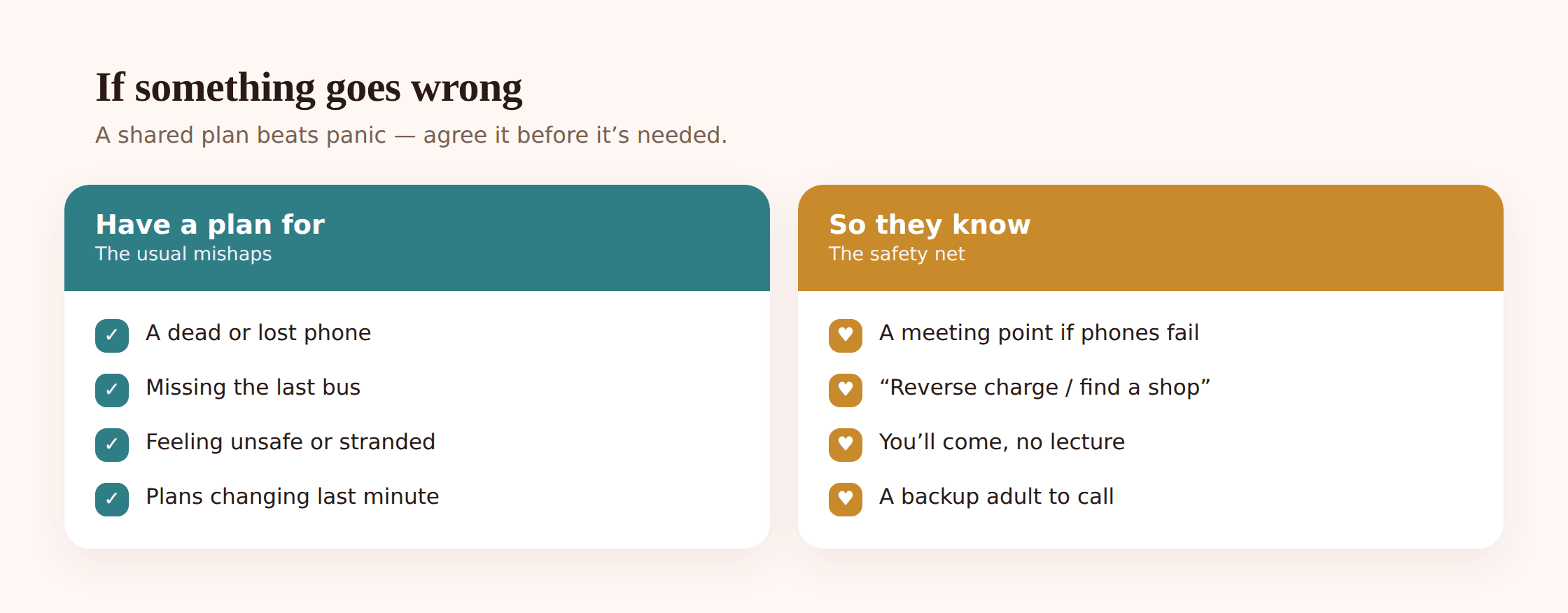
It will, occasionally — not dramatically, usually just a dead phone or a missed bus. The measure of a good setup isn’t that nothing ever goes wrong; it’s that when it does, there’s a plan, and your teenager knows they can come to you without it turning into a row. That last part matters more than any feature. A teen who’s afraid of the reaction will hide the problem until it’s bigger.
Lost or stolen phone
Agree in advance what happens. Find-my helps you locate it or wipe it remotely, and they should know your number by heart — or have it written somewhere — so they can borrow a phone and reach you without needing the device that’s gone. If it’s stolen, getting them home safe comes first; sorting the phone, blocking the SIM and reporting it comes after. Our guide to finding a lost or stolen phone walks through the steps calmly.
Stranded or needs picking up
This is exactly what the code word and the reserve battery are for. The message from you should always be the same and they should know it cold: if you’re stuck, ring me, and I’ll come. No interrogation on the doorstep, no “I told you so.” A teenager who’s certain of that reaction rings early, while it’s a small problem. One who isn’t waits, and small problems don’t stay small.
Phone dead and no way to call
Have a fallback that doesn’t need their phone at all. A memorised number and the knowledge that most people will lend a stranded teenager a phone to make one call. A prearranged “if we can’t reach each other by X, here’s the plan” — a meeting point, a fallback time — means a flat battery is an inconvenience, not an emergency. Old-fashioned, and it works precisely because it doesn’t depend on the thing that failed.
FAQ
Should I track my teen’s location when they go out?
Think of it as sharing rather than tracking, and make it mutual and agreed. Location sharing works as a safety net when your teen knows it’s on, can see it, and ideally can see yours too — the kind of thing a family does for each other. Covertly following their movements is a different thing entirely and tends to backfire: it teaches them to hide rather than to be safe. Set it up openly, explain it’s there so “come and get me” is easy and so you can both relax, and be willing to dial it back as they show they can be trusted.
What if their phone dies while they’re out?
Plan for it before it happens. A memorised phone number, a prearranged fallback meeting point and time, and the knowledge that most people will lend a stranded teenager their phone for one call. A cheap power bank in the bag prevents most of these, and a habit of not draining the battery to zero on videos does the rest. A dead phone should be an annoyance, not a crisis.
How often should I check in when they’re out?
As little as the situation allows. For most outings, “text when you arrive and when you leave” is plenty — two messages, not a running conversation. Save active check-ins for when there’s an actual reason, and when you do send one, agreeing in advance that they’ll reply within a reasonable window means a single answer settles it. Constant pinging trains them to reply without thinking and teaches them that trust always has strings.
What is a code word and how do I set one up?
It’s a pre-agreed word or short phrase your teen can text or say that means “come and get me, no questions.” You then call back with a ready reason they have to leave, so they can exit an uncomfortable situation without losing face in front of the people they’re with. Pick something ordinary that won’t look odd in a message, agree what you’ll do when you get it, and set it up long before they need it.
Is it safe for my teen to carry a bank card or pay by phone?
Generally yes, with a couple of sensible habits. Contactless limits cap what a lost card can spend before a PIN is needed, and a phone wallet locked behind a passcode or fingerprint is safer still because a snatched phone can’t simply be tapped. Make sure they know their PIN without writing it beside the card, keep the fare home separate from spending money, and keep both card and phone low-key rather than on show.
How do I let them be independent without worrying myself sick?
Build the net once, then trust it. A charged phone, agreed check-ins, shared location if that’s your family’s way, a code word, and a clear “ring me and I’ll come” — with those in place, you’ve done the useful part, and hovering beyond that mostly feeds your anxiety rather than their safety. Start with shorter, closer trips, let each one that goes fine earn the next, and let the worrying shrink as their track record grows. Independence is the goal, not a risk to be managed away.