A Family Phone Agreement That Actually Works (Free Template)
A phone agreement isn’t a contract you hand down. It’s a short set of rules you and your child write together, both sign, and pin to the fridge. Get it right and the nightly “give me the phone” fight mostly disappears, because the answer was agreed weeks ago, calmly, when nobody was cross.
Why an agreement beats a lecture
Lectures don’t stick. You say “less time on the phone” and your child hears noise. Next week you say it again, a bit louder, and now it’s a row. Nothing changed because nothing was ever specific, and nothing was ever agreed.
An agreement fixes both. It’s specific — a number, a time, a place — so there’s nothing to argue about later. And it’s shared. When your child helps decide that the phone goes on charge in the kitchen at 8:30, they’ve bought in. It stops being your rule and becomes the family’s rule. That single shift does more than any amount of nagging.
There’s a calmer reason too. Kids like knowing where the line is. A phone with no boundaries is stressful for them — every night becomes a negotiation, every “no” feels personal. A clear agreement takes that weight off. The line is drawn. Inside it, they’re free.
Write it together (not at them)
Pick a quiet moment — not the middle of a screen-time argument. Sit down with a single sheet of paper and a pen. Tell your child straight: “We’re going to write the phone rules together, and I want you to suggest some of them.”
Then actually let them. Ask what they think is fair for bedtime. Ask how much screen time feels right on a school night. You’ll be surprised how sensible kids are when they’re asked instead of told — and a rule they proposed is a rule they’ll keep. You keep the final say, but start from their number, not yours.
- Keep it short. One page. If it needs a second page, it’s too complicated to follow.
- Be specific. “Be sensible online” means nothing. “Phone charges in the kitchen overnight” means something.
- Write the reason next to the tricky rules, so it doesn’t read like a list of bans.
- Both of you sign it. You too — the agreement runs both ways.
- Pin it up where everyone sees it. The fridge, the hallway, wherever the family passes.
New to all this? Our first phone guide walks through the practical setup, and if you’re still deciding whether a phone is even the right call yet, what age to monitor a child’s phone is worth a read first.
The rules that matter, section by section
Screen time and a daily budget
Agree a number of minutes for a school day and a slightly bigger one for weekends. Talk about what counts — most families leave school work, video calls to Grandma and audiobooks out of it, and count games and social apps in. The budget isn’t a punishment. It’s the amount you both decided is healthy, so the phone doesn’t quietly eat the whole evening.
Bedtime and where the phone sleeps
This is the big one. The phone charges outside the bedroom overnight — the kitchen, the hallway, your room, anywhere but under the pillow. Sleep and a glowing screen don’t mix, and a phone in the bedroom at midnight invites trouble no eleven-year-old should face alone. Agree a “phone down” time and where it goes. Make it a family rule, not a kid rule, so your own phone charges in the kitchen too. That fairness matters more than you’d think.
Apps, downloads and spending
New apps get a yes from a parent before they’re installed — not because you don’t trust them, but because you can check the age rating and what the app actually does together. Set the rule on in-app spending plainly: nothing bought without asking, and no card details saved on the phone. A surprise £40 of game currency is a rotten way to learn this lesson.
Who they can talk to
Agree that they only message people they actually know in real life, and that a stranger asking to chat gets shown to you, not answered. No meeting anyone from online without a parent. Say it once, calmly, and write it down — then they know it’s a rule and not you being suspicious of a particular friend.
Privacy — and being open about any monitoring
Your child gets real privacy. You’re not reading every message over their shoulder. But if you use a monitoring tool, they know it’s there, they know exactly what it shows you, and it’s written into the agreement. Openness is the whole deal — the phone tells them it’s set up, and you’ve explained why. Trust that’s out in the open is trust worth having. If you’re weighing this line, monitoring vs spying is exactly the distinction to get right.
Being kind online
The rule is simple: don’t type anything you wouldn’t say to someone’s face. No piling on, no group chats that turn on a person, no sharing a photo of someone without their okay. And if a chat turns nasty, the move is to leave and tell you — not to fire back.
Telling you if something goes wrong
This is the most important clause and the one people forget. Promise, in writing, that if something scary or upsetting happens — a horrible message, a stranger, a mistake they made — they can come to you and they won’t lose the phone for it. Kids stay quiet because they’re afraid of the punishment. Take that fear away and they’ll actually tell you. A phone you can talk to your parent about is a hundred times safer than one you can’t.
Consequences that actually work
Most consequences fail because they’re vague, huge, and handed out in anger. “That’s it, no phone for a month” is unenforceable and everyone knows it. By day three you’ve caved, and now the rules mean nothing.
Good consequences are the opposite: calm, small, specific, and aimed at fixing the thing rather than making your child suffer.
What works
- Decided in advance, so it’s automatic, not a mood.
- Small and proportionate — a lost slice of tomorrow’s time, not a lost fortnight.
- Tied to the rule broken. Late to bed on the phone? Bedtime moves earlier tomorrow.
- Restore, don’t just punish. “You went over, so let’s earn some back with a job” beats a flat ban.
Write two or three consequences into the agreement so nobody’s inventing them at 9pm. And keep the “come to me if something goes wrong” clause fenced off from all of it — telling you about a problem is never the thing that gets punished. Break that promise once and they’ll never tell you anything again.
How the tools back the agreement up
Here’s where a tool earns its place. The agreement is the deal; FreePhoneSpy is just the thing that enforces the deal you already made, on any web browser, so it isn’t you playing traffic warden every single night. It runs on your child’s Android phone, they can see it’s installed, and it does nothing until you’ve set it up together. (iPhone in the house? Apple’s own Screen Time and Family Sharing cover that side — our child app is Android.)
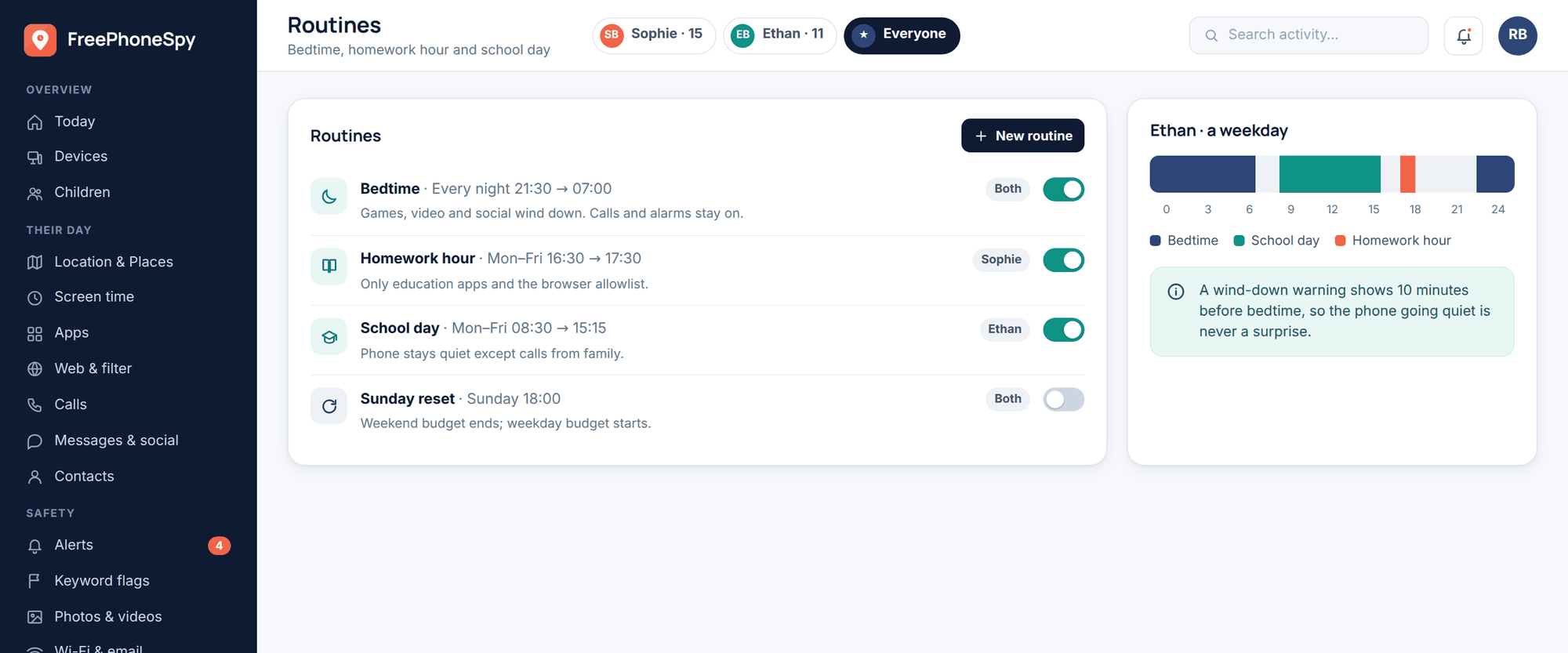
Routines enforce bedtime and homework. You agreed the phone winds down at 8:30 and that Homework Hour is quiet — so set a Bedtime routine that locks the fun apps at that time automatically. No standing in the doorway. The phone does what the fridge poster says.
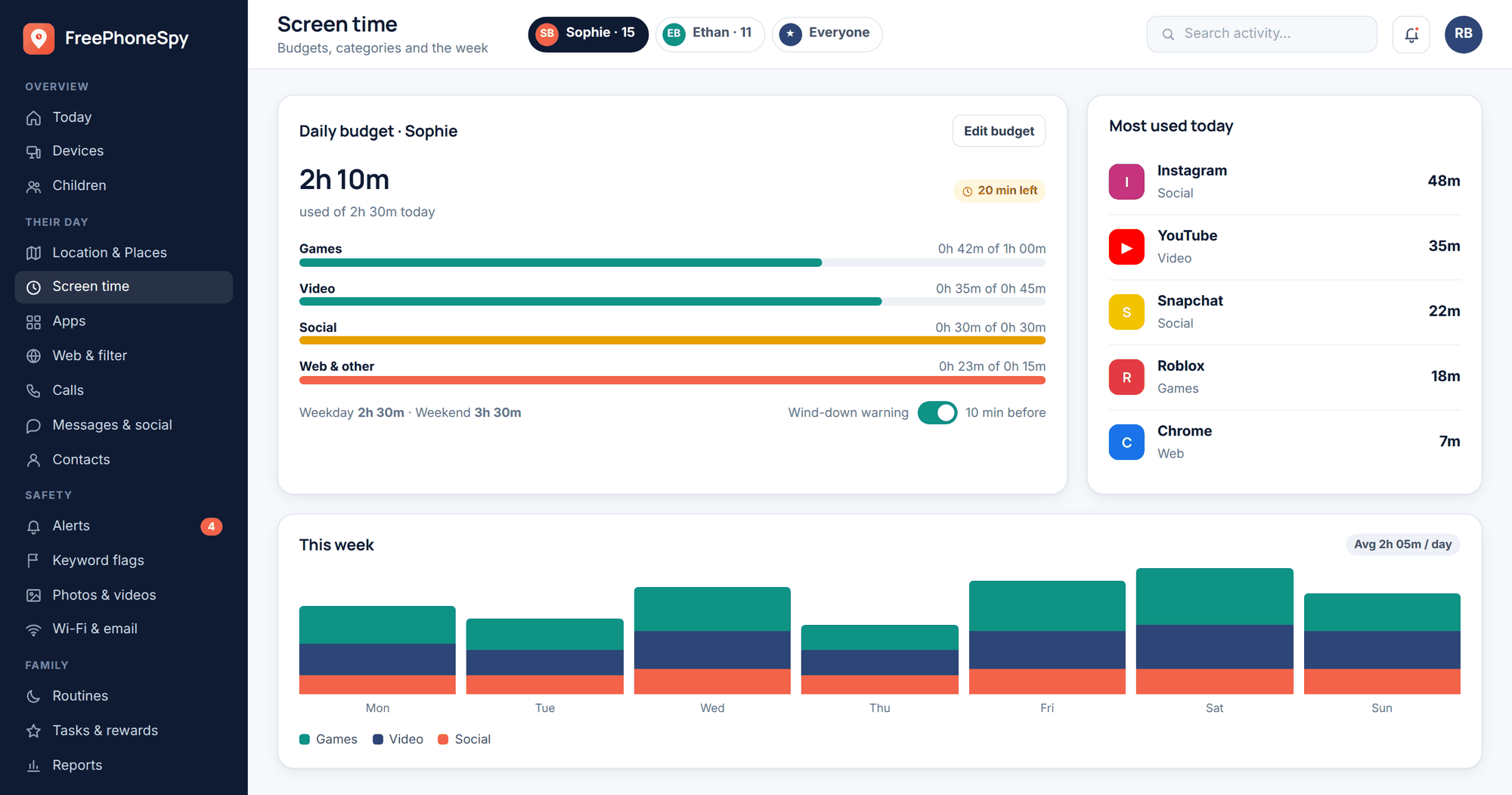
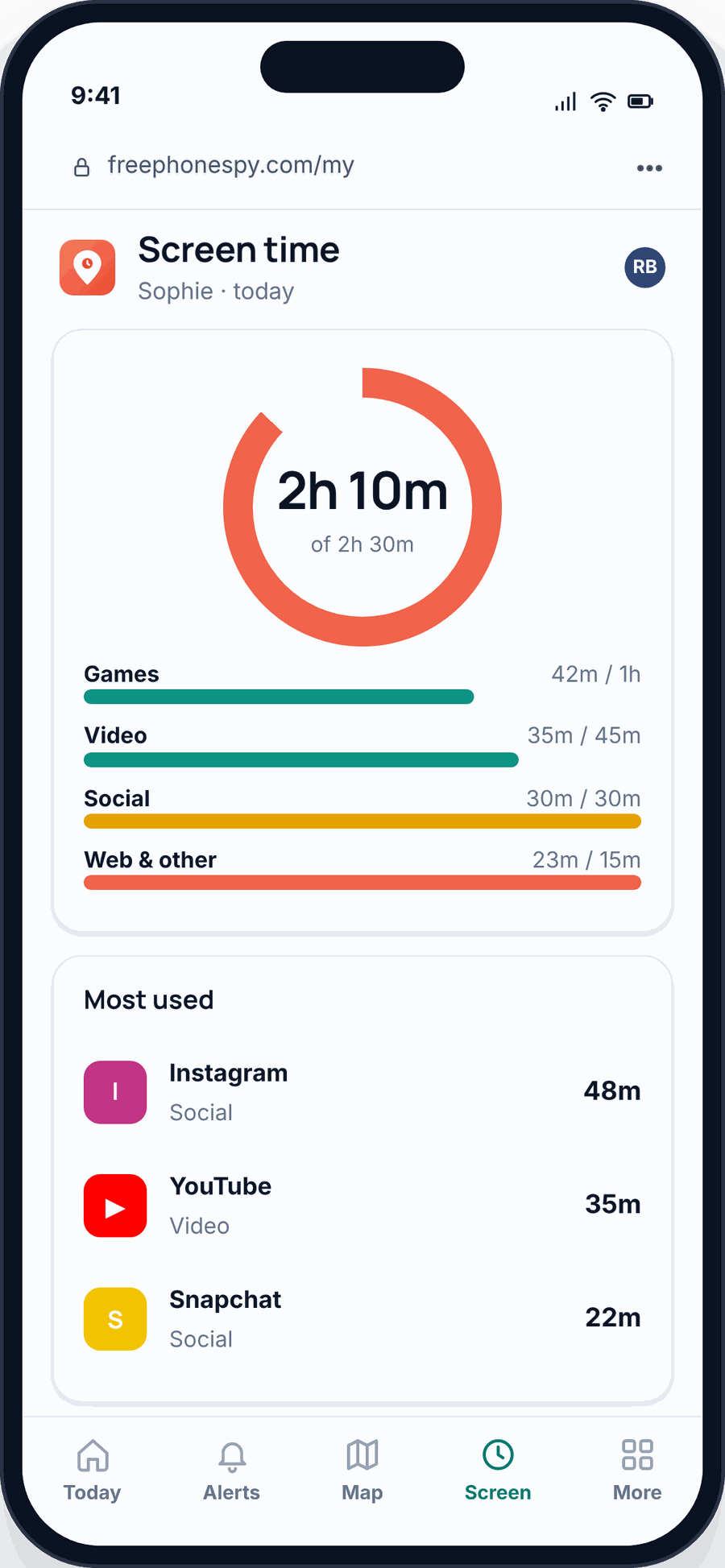
Budgets enforce screen time. You settled on a daily number, so put that number into screen time as a minute budget. When it’s spent, the games pause. It’s not you saying no again — it’s the number you both chose, running on its own.
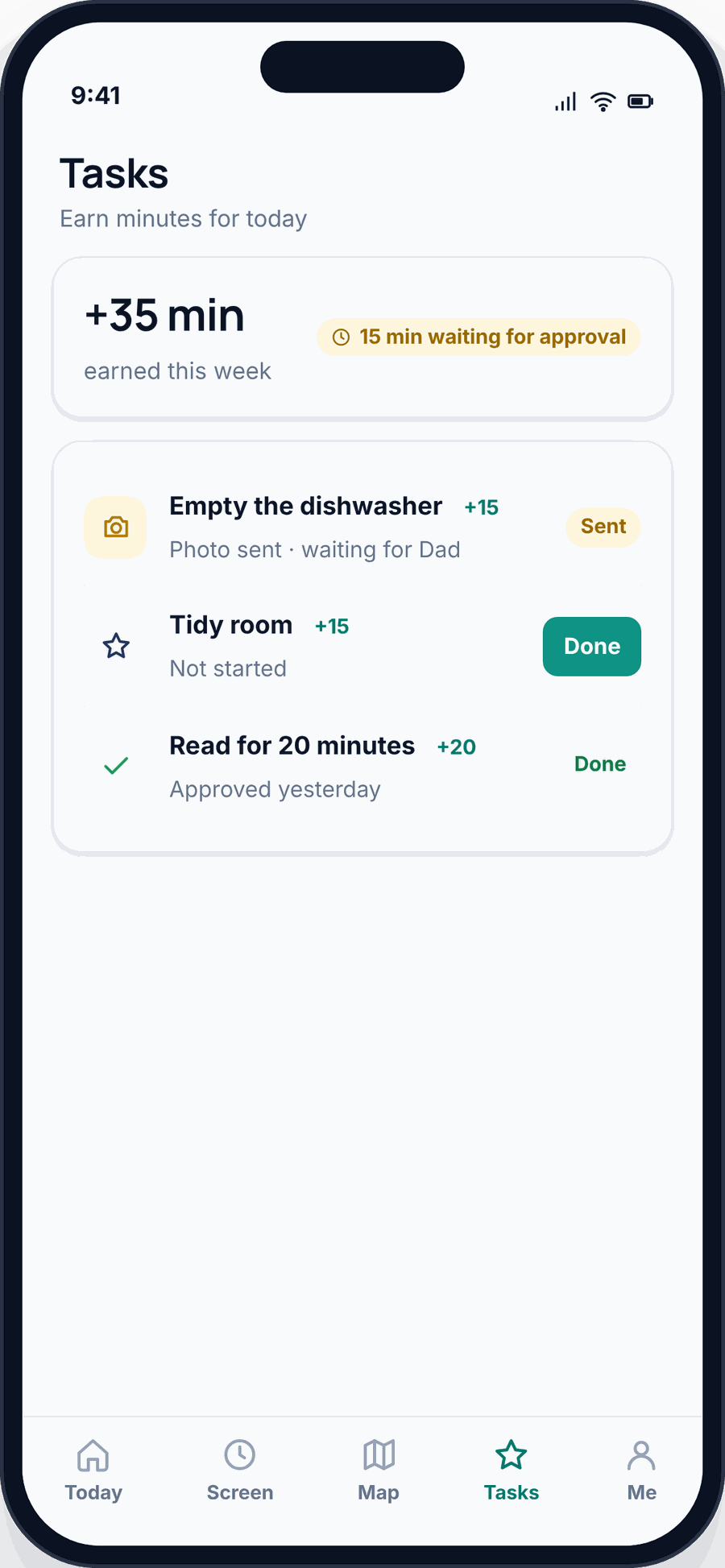
Tasks let them earn time. This is the bit kids love. Set up chores in tasks and rewards — walk the dog, empty the dishwasher — and when they do it and send a photo as proof, they earn extra minutes. Suddenly screen time is something they build, not something you ration. It turns the whole thing from a fight into a deal.
Asks handle the exceptions. Real life doesn’t fit a budget. There’s a group project, or a match to watch. So the child can tap to request more time, with a reason, and you get the request — tap 15, tap 30, or tap No. It’s a two-second yes-or-no instead of a doorway argument, and it teaches them to ask properly rather than sneak.
None of this replaces the conversation. The tool can’t teach kindness or judgement — you do that, face to face. What it does is hold the line you both drew, quietly and fairly, so you’re not the enforcer every waking hour. App limits, a web filter, and gentle location Places sit behind the same idea: enforce what was agreed, in the open.
Make it grow with them
An agreement written for a ten-year-old shouldn’t still be running when they’re fifteen. The whole point is that it loosens as they show they can handle it. Think of it as a ladder: each rung they climb by keeping the deal, and each rung earns a bit more freedom.
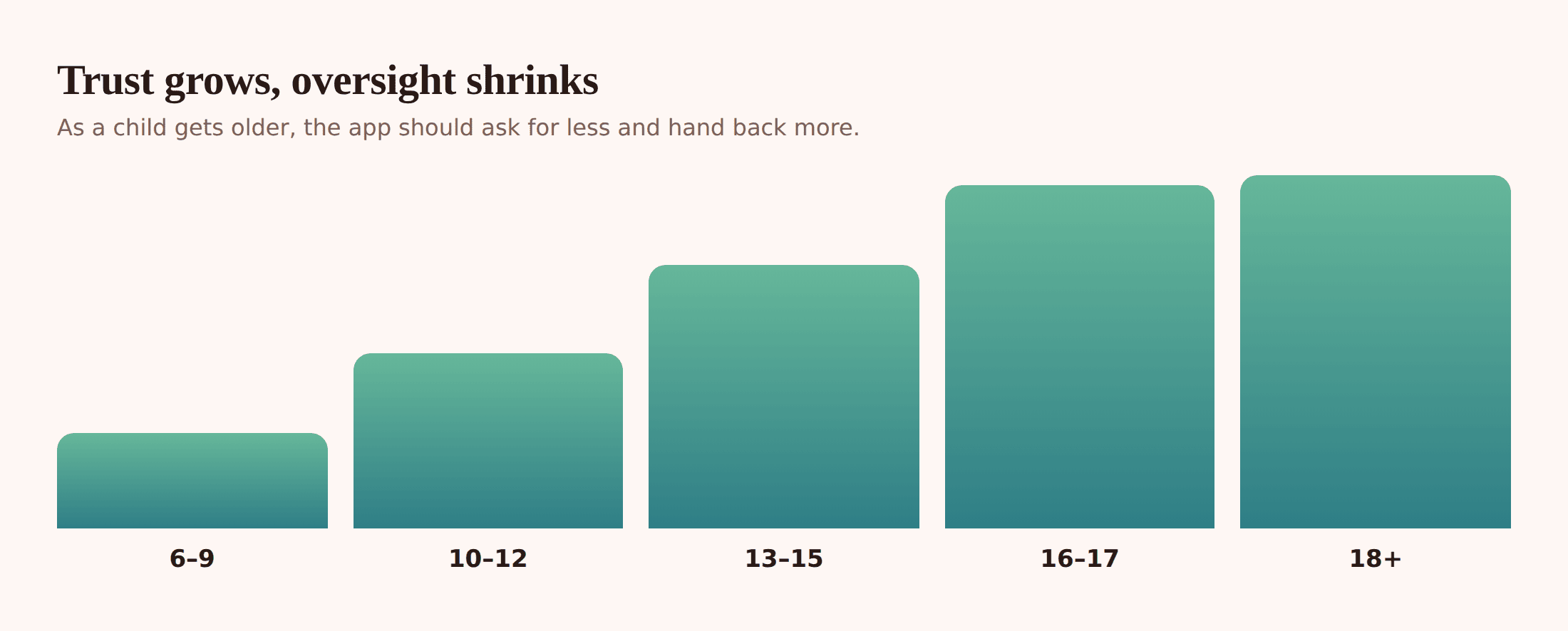
Set a date to review it — every few months, or each birthday. If bedtime’s been kept without a fuss, push it back twenty minutes. If they’ve handled their budget well, hand them a bit more of the app approvals themselves. Say it out loud when you loosen a rule: “You’ve earned this.” That’s the message that makes the ladder work — freedom is something they climb toward, not something they wear you down for. Our screen time by age guide gives sensible starting rungs if you’re not sure where to begin.
The copy-paste template
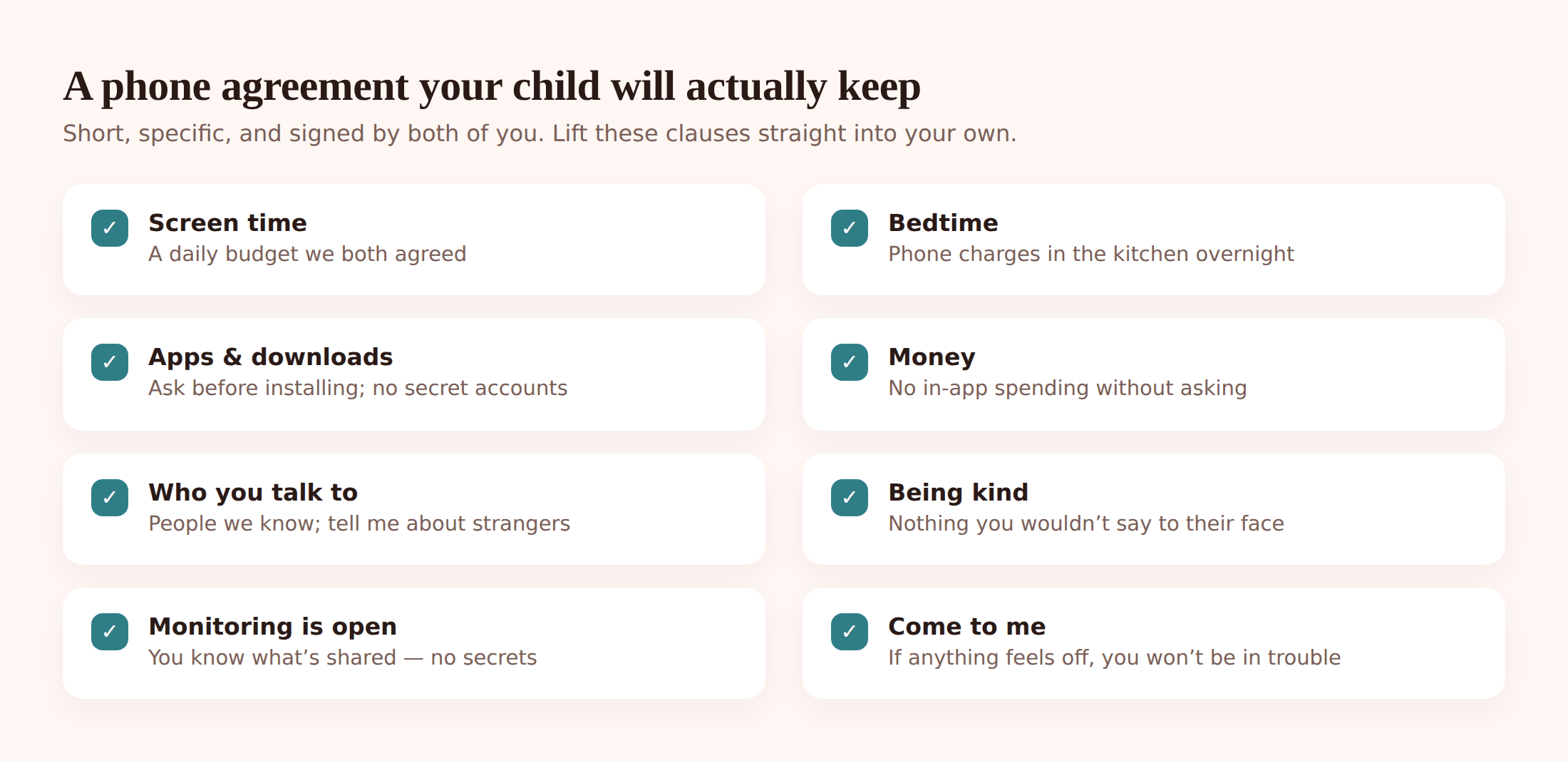
Lift these clauses straight onto a sheet of paper, or into a note, and change the numbers to suit your family. Keep the ones that fit, cut the ones that don’t, and let your child add one or two of their own. Then both of you sign at the bottom.
Our Family Phone Agreement
- Screen time. On school days I get ____ minutes of phone time; at weekends ____ minutes. School work, family calls and audiobooks don’t count against it.
- Bedtime. The phone goes on charge by ____ every night. No phone in the bedroom after that.
- Where it sleeps. It charges in the kitchen (not my room), and this rule is for the whole family, grown-ups included.
- Mornings. No phone until I’m dressed and I’ve had breakfast.
- Apps and downloads. I ask a parent before installing anything new, and we check the age rating together.
- Spending. I never buy anything in an app without asking first, and no card details are saved on the phone.
- Who I talk to. I only message people I actually know. If a stranger tries to chat, I show a parent instead of replying.
- Privacy and being open. My messages are my own. If my parents use a monitoring tool, I know it’s there and what it shows — nothing is hidden either way.
- Being kind. I won’t type anything I wouldn’t say to someone’s face, and I won’t share a photo of someone without their okay.
- If something goes wrong. If anything scary, upsetting or confusing happens, I’ll tell a parent — and I won’t lose my phone for being honest about it.
- Looking after it. I keep the phone charged, in its case, and I don’t lend it to friends.
- When rules are broken. If I go over my time or break a rule, tomorrow’s time is a little shorter — calm and specific, no shouting. I can earn time back with jobs at home.
- This grows. We’ll look at this agreement every ____ months. If I’ve kept to it, the rules loosen.
- We both sign. Child: ____________ Parent: ____________ Date: ______
Print it, sign it, pin it up. The signing matters more than it sounds — it’s the moment it becomes a promise rather than a poster.
Younger kids vs teens
The same agreement bends to fit either end.
Younger kids (roughly 8–11) need it short, concrete and mostly about safety and habits. Fewer clauses. Bigger emphasis on bedtime, who they talk to, and asking before downloading. The tools do more of the holding here — routines and a firm budget — because a nine-year-old genuinely can’t self-regulate a games app yet, and that’s not a character flaw, it’s an age.
Teens (roughly 12+) need a real say and a lot more reasoning. Loosen the enforcement and lean on the trust ladder. Talk about the why behind each rule — sleep, focus, being decent online — because a teenager who understands the reason will keep the rule when you’re not looking, and a teenager who’s just told “because I said so” will find the workaround. Keep bedtime and the “tell me if something goes wrong” clause firm at every age. Those two never expire.
FAQ
At what age should we write one?
The day the phone arrives — or the day before. It’s much easier to set the rules up front than to claw them back after six months of no rules at all. Even a first tablet is worth a simple version.
What if my child won’t agree to a rule?
Ask why. Sometimes their objection is fair and the rule needs softening. Sometimes it doesn’t, and you hold the line — you keep the final say. But a rule they argued and lost fairly still lands better than one dropped on them.
Should I monitor secretly if I’m worried?
No. Secret monitoring blows up trust the moment it’s discovered, and it usually is. Be open about what you check and why — write it into the agreement. If you’d be embarrassed to tell your child what you can see, that’s your answer.
Does this work on an iPhone?
The FreePhoneSpy child app is Android only. If your child has an iPhone, use Apple’s Screen Time and Family Sharing to enforce the same agreement — the paper deal is identical, just enforced with Apple’s tools instead.
Is it really free?
Yes — free to start, and it stays free through a few simple tasks. The core features that back up your agreement don’t sit behind a paywall.
How often should we revisit it?
Every few months, or on each birthday. Kids change fast, and a rule that fit last year can feel babyish now. A scheduled review also gives them something to aim for.