Bluetooth trackers all look similar — a little disc or card that helps you find your stuff — but they differ in ways that really matter once you start using them. The wrong choice means a tracker that can’t find your bag across town, won’t fit your wallet, or doesn’t play nicely with your phone. The right choice quietly does its job for years. This guide cuts through the options to help you choose the best Bluetooth tracker for your needs, based on your phone, what you want to track, and the features that genuinely matter.
The reassuring news is that there’s no single “wrong” tracker among the reputable brands — but there is a right one for you, and picking it saves money and frustration. A few minutes matching a tracker to your phone, your habits, and the item you keep losing means you buy once, use it for years, and never wish you’d chosen differently.
We’ll compare the main players, explain the specs worth caring about, and match trackers to common situations, so you can buy once and buy right.
Start With Your Phone
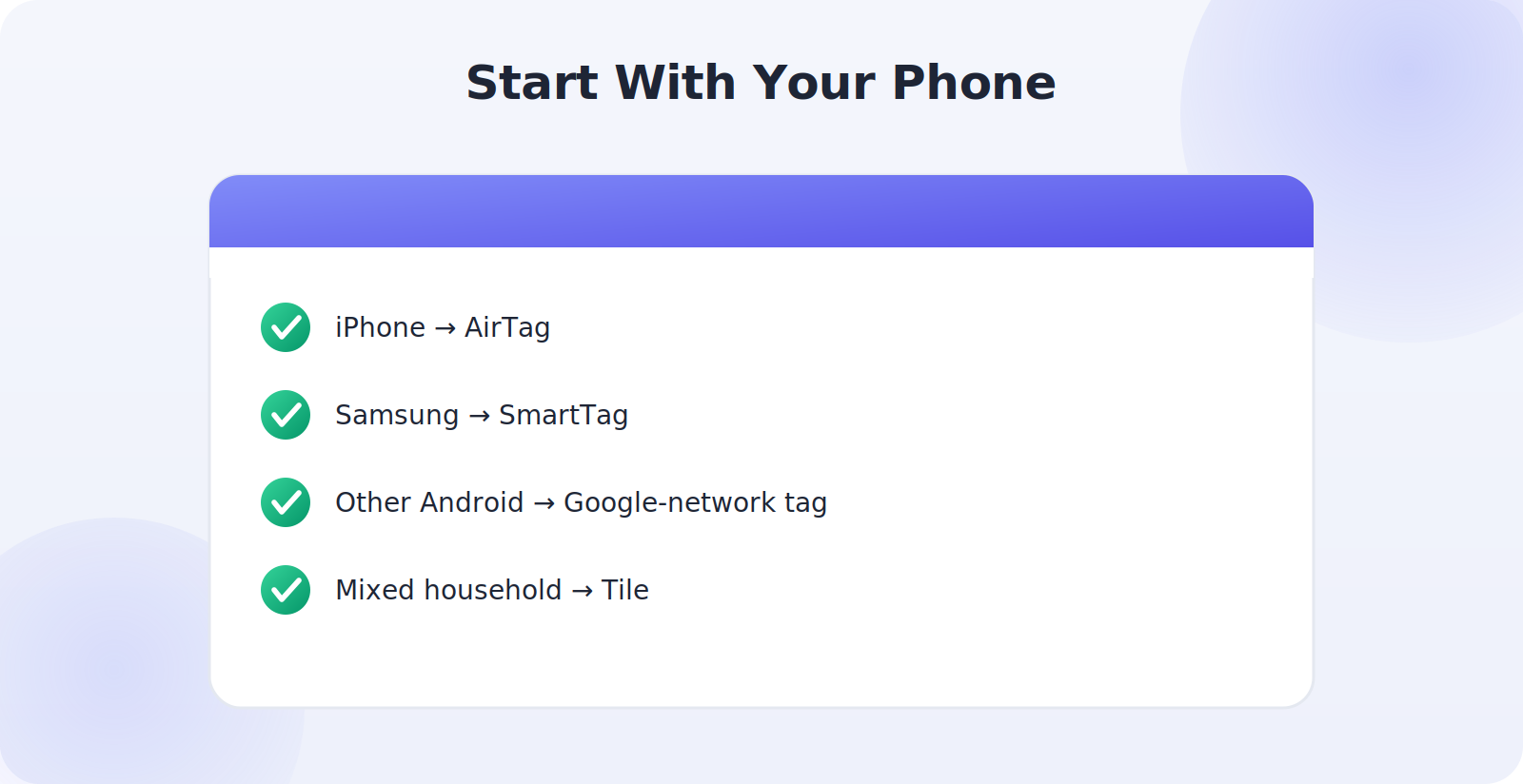
The single most important factor is which phone you use, because a tracker’s finding network is tied to an ecosystem — and the network is what lets you locate items far from home.
- iPhone users: AirTags are the natural choice, tapping into Apple’s enormous Find My network for excellent coverage.
- Samsung Galaxy users: SmartTags integrate tightly with SmartThings Find and the Galaxy network.
- Other Android users: Google-network trackers (from brands like Chipolo and others) use Android’s Find My Device network.
- Mixed households or switchers: Tile works across both platforms, trading some network density for flexibility.
What Do You Want to Track?
The item you’re tracking shapes the ideal form factor. Trackers come in a few shapes, each suited to different things.
Keyring discs
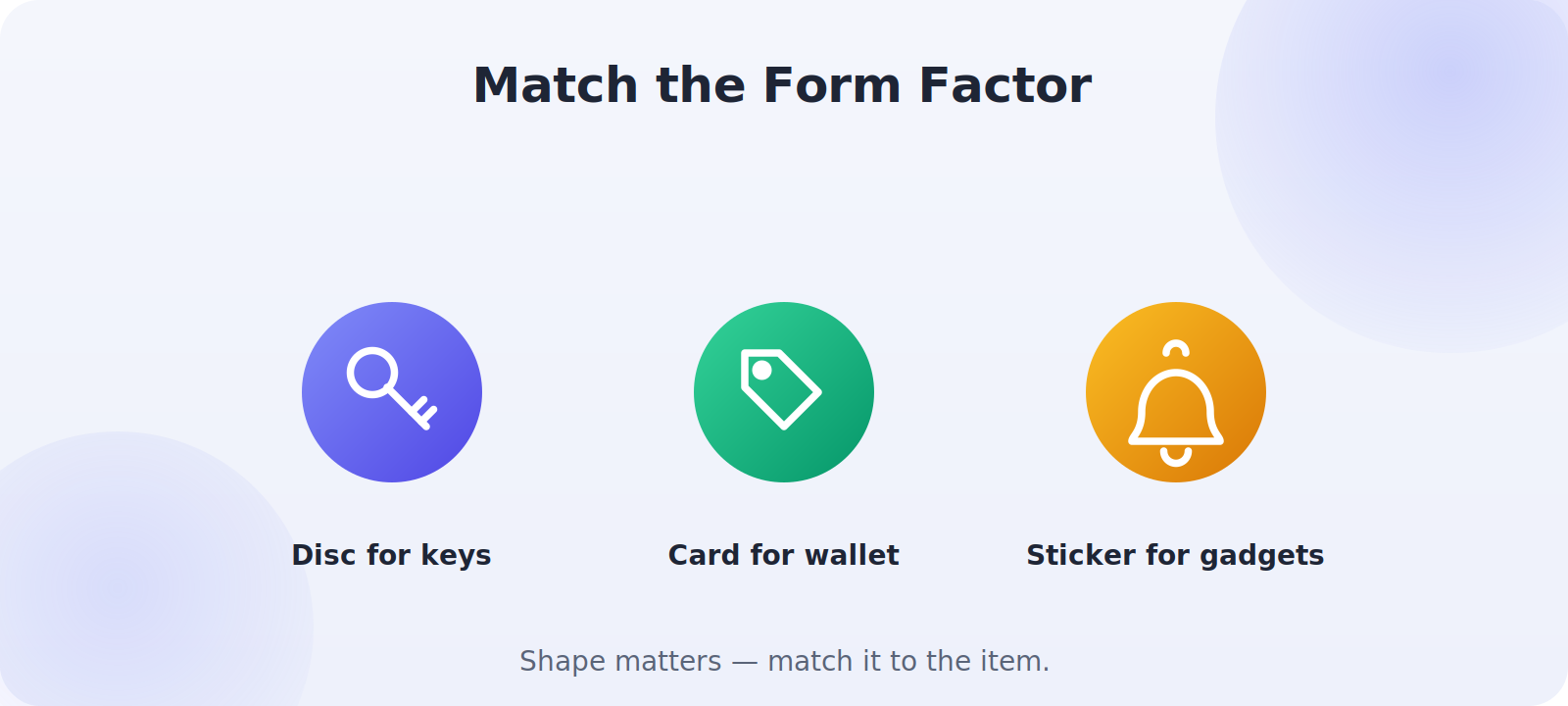
The classic round tracker with a hole or a loop attaches easily to keys and zips. It’s the all-rounder, good for keys, bags, and luggage.
Slim cards
Credit-card-shaped trackers slide into a wallet’s card slot without adding bulk — the obvious pick for wallets and passport holders.
Stickers and adhesive tags
Small stick-on trackers attach to flat items like remotes, laptops, or gadgets that don’t have an obvious place for a keyring.
The Specs That Actually Matter
Ignore the marketing and focus on the handful of specs that shape real-world use.
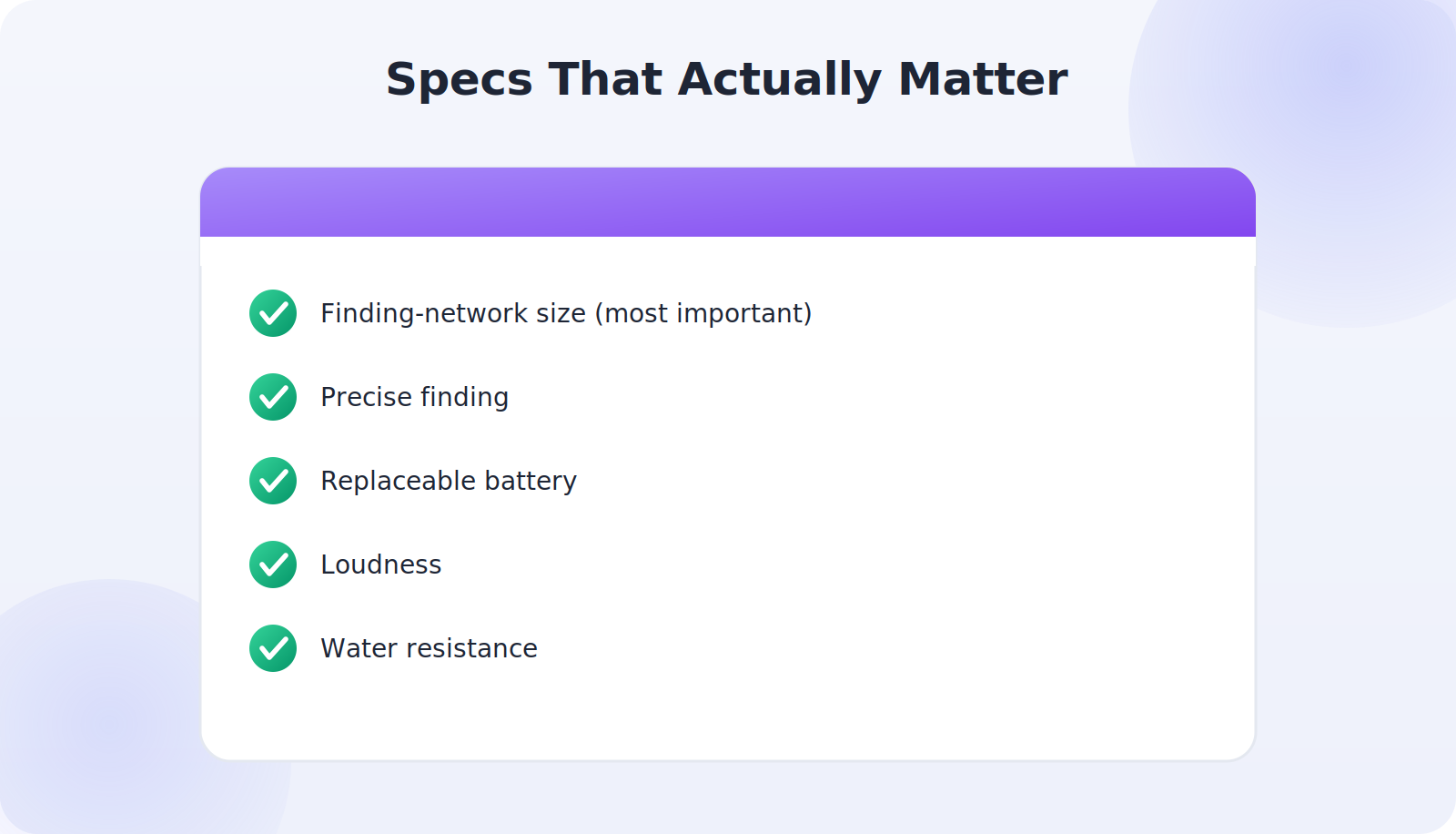
- Finding network size: the most important spec — a bigger network means better out-of-range location. This follows the ecosystem.
- Precise finding: directional arrow-guidance to pinpoint an item, available on some trackers with newer phones.
- Battery type: replaceable coin-cell (preferred) versus sealed; replaceable means years of use.
- Loudness: how easily you can hear the tracker ring in a noisy or cushioned environment.
- Water resistance: useful for keys and luggage that meet the elements.
Privacy and Safety Features
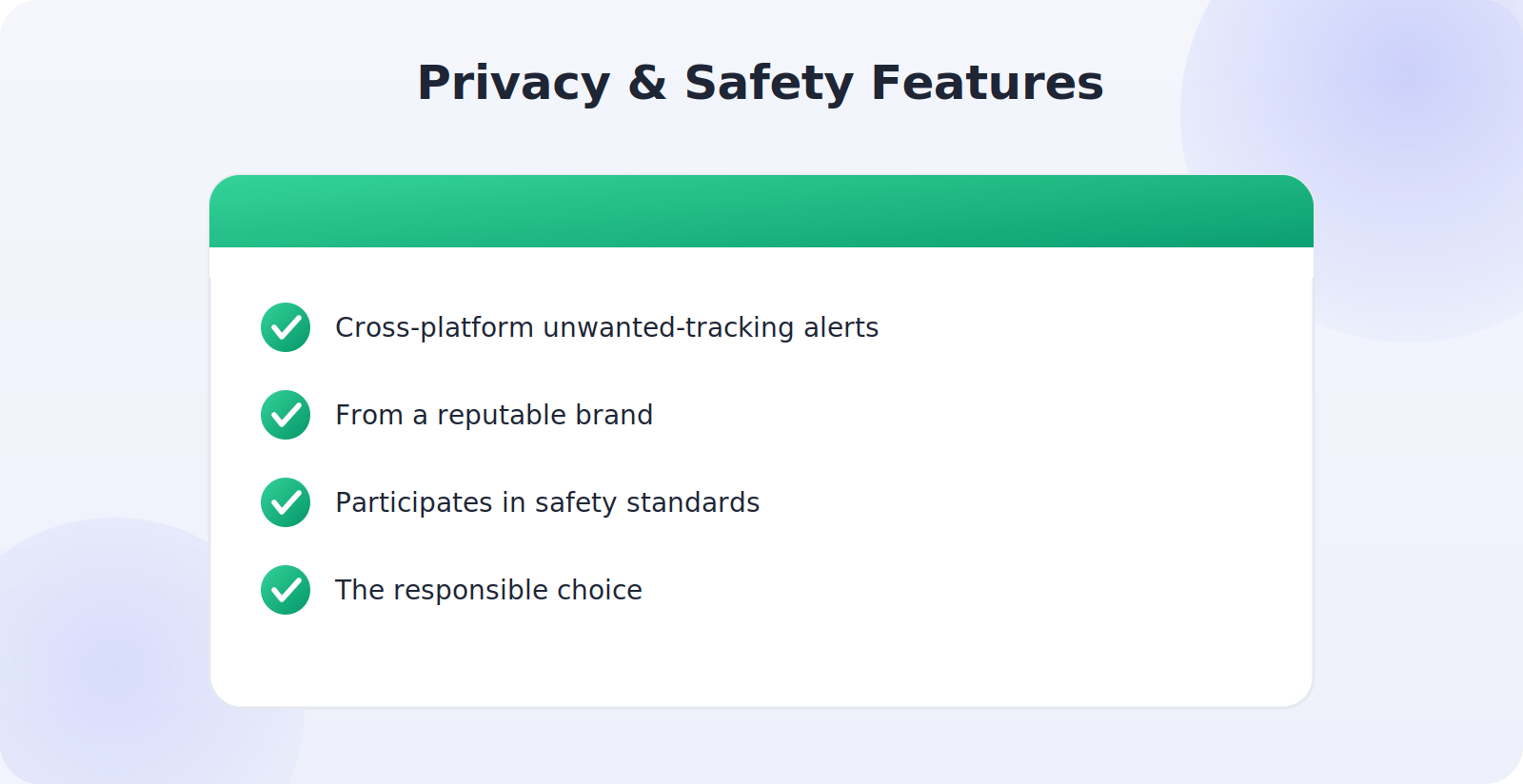
A responsible tracker choice also weighs privacy and anti-stalking protections, both for you and for others. The major networks now build in unwanted-tracking alerts, so a tracker separated from its owner and moving with someone else will trigger a warning on modern phones. Choosing a tracker from a reputable brand that participates in these cross-platform safety standards is the responsible pick — it protects strangers from misuse and reflects a company taking the technology seriously. It’s worth favoring trackers that support these detection standards.
Matching Trackers to Situations
Here’s how the choice shakes out for common needs.
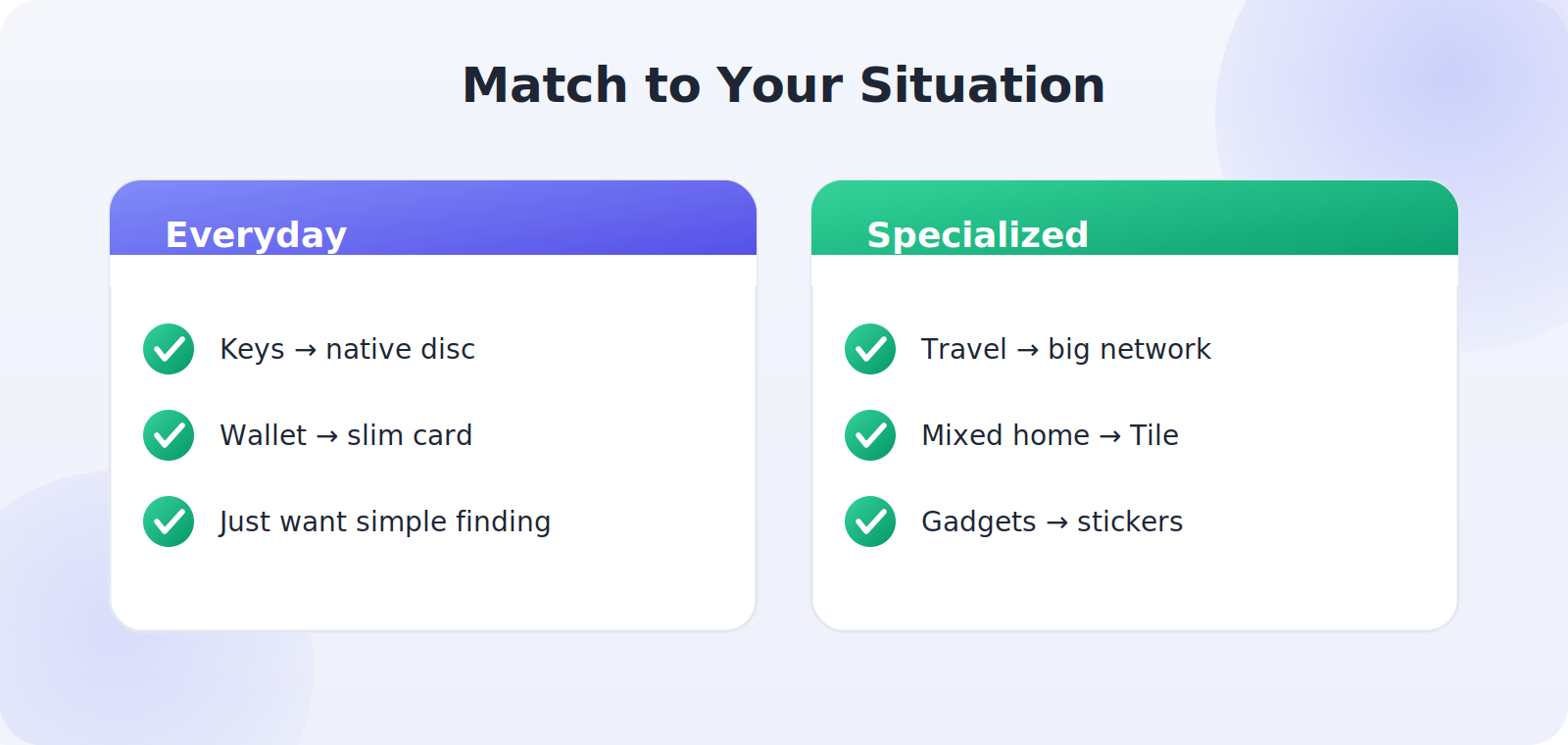
“I just want to find my keys.”
Any keyring-style tracker matched to your phone’s ecosystem will do the job beautifully. Buy the one native to your phone.
“I lose my wallet constantly.”
Get a slim card tracker that fits a wallet slot, ideally with a rechargeable or long-life battery given the tight form factor.
“I travel and want to track luggage.”
Prioritize network coverage and battery life, and pick the tracker with the densest finding network for your phone.
“My household is mixed iPhone and Android.”
Consider Tile for cross-platform flexibility, or simply buy each person the tracker native to their own phone.
How Many Do You Need?
Many trackers are sold in multipacks, which usually work out cheaper per unit and reflect how people actually use them — one for the keys, one for the bag, one for the wallet, and a spare. If you’re just testing the waters, a single tracker on your most-lost item (almost always the keys) is a fine start. Once you experience how useful it is, a multipack to cover your other essentials tends to follow naturally.
Understanding Finding Networks
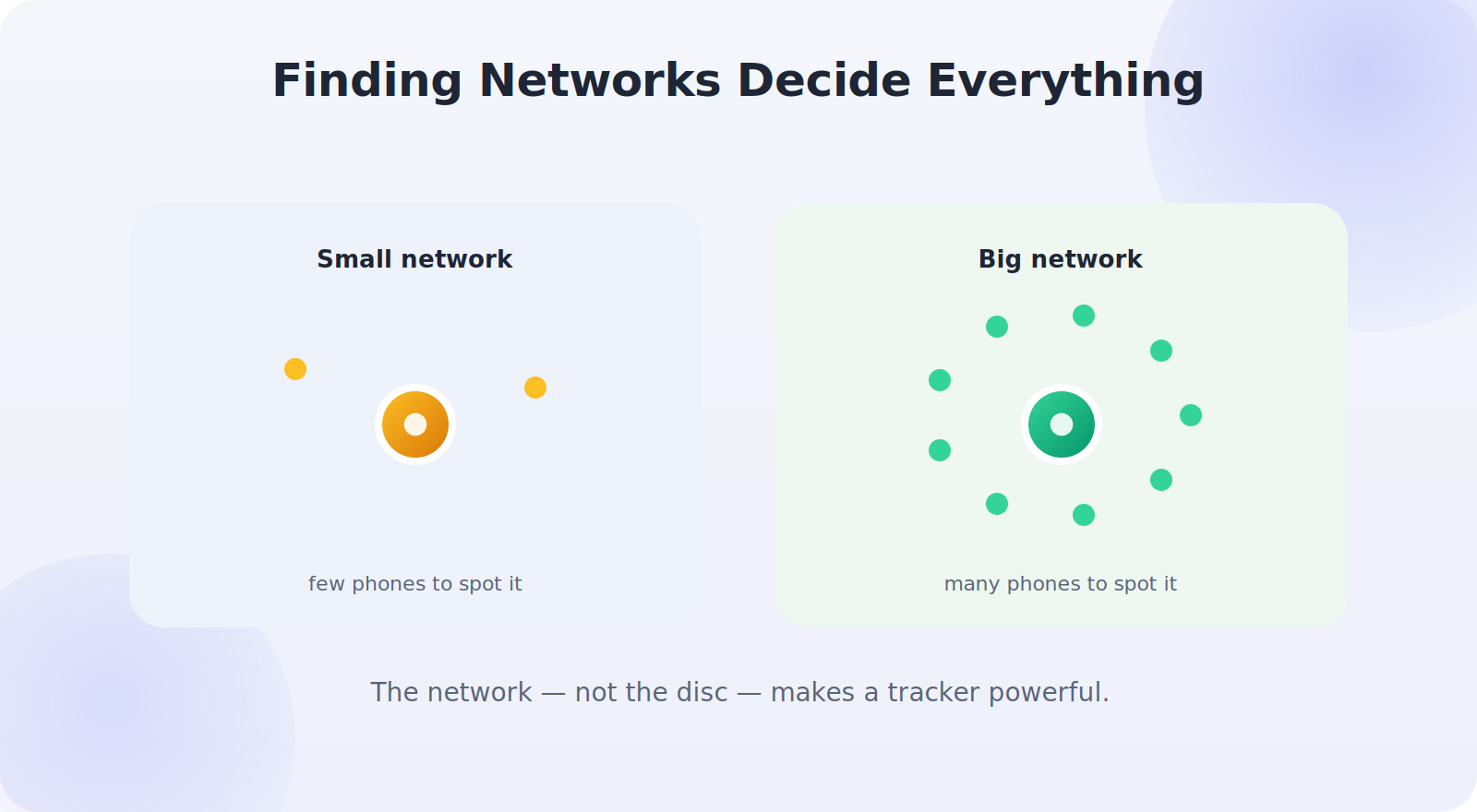
If you take away one concept from this guide, make it this: the finding network is what truly determines how useful a tracker is, far more than the disc itself. A tracker’s own Bluetooth only reaches a room or two; everything beyond that depends on the network of other people’s phones that can anonymously spot your tracker and report its location back to you. The denser that network, the more likely your lost item is to be seen and located, especially in a city, an airport, or anywhere far from home.
This is why matching the tracker to your phone’s ecosystem matters so much: the network is tied to the ecosystem. In practice, the biggest networks belong to the platforms with the most phones in circulation, which is why AirTags perform so well in Apple-heavy regions and Google-network tags benefit from the sheer number of Android devices. When you compare trackers, look past the hardware and ask which network each one uses — that answer predicts real-world finding power better than any other single spec.
Total Cost and Ongoing Value
When weighing trackers, think about the whole cost of ownership rather than just the sticker price. A tracker with a replaceable battery costs a little to maintain — a coin cell once a year — but lasts for many years, making it excellent value over time. A sealed, rechargeable tracker avoids battery-buying but may have a shorter overall lifespan. Multipacks usually lower the per-unit price and reflect how people actually end up using trackers, on several items at once.
Also consider whether a tracker locks any features behind a subscription. The core find-my-item functionality of the major trackers is free and needs no ongoing payment, which is what most people want. Optional premium tiers exist for some brands, but you rarely need them, so factor a subscription in only if a specific premium feature genuinely appeals to you. For the vast majority, a reputable tracker on a big network, with a replaceable battery and no required subscription, delivers the best long-term value.
A Simple Decision Framework
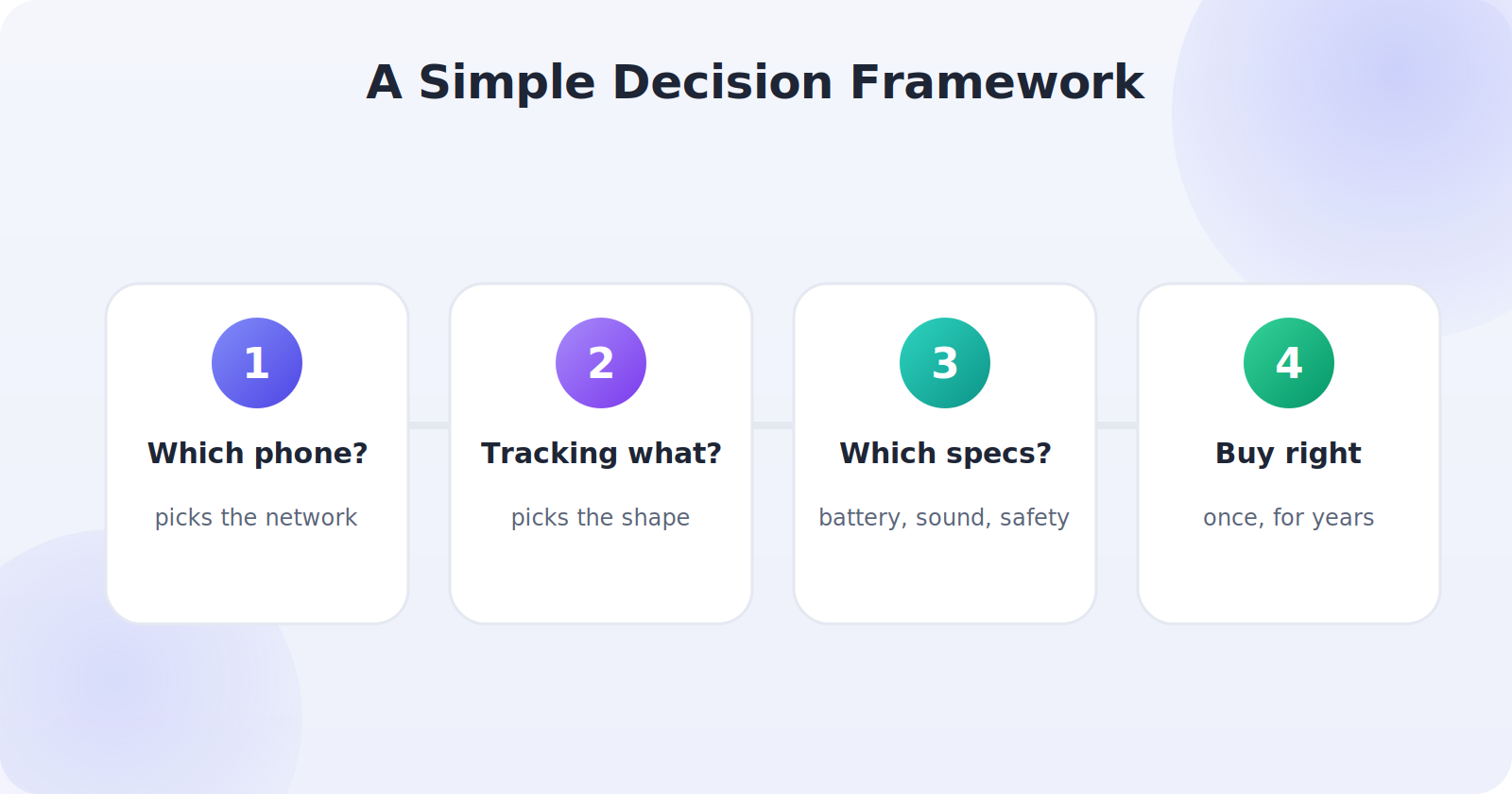
If all the options still feel overwhelming, boil the decision down to three questions asked in order, and the answer usually becomes obvious. First: what phone do I use? That single answer narrows you to the tracker with the best finding network for your ecosystem — AirTag for iPhone, SmartTag for Samsung, a Google-network tag for other Android phones, or Tile if you need cross-platform. Second: what am I tracking, and what shape suits it? That points you to a keyring disc, a slim wallet card, or an adhesive sticker. Third: which handful of specs matter to me? — usually a replaceable battery, good loudness, and solid anti-stalking features. Work through those three questions and you’ll arrive at a confident choice in a couple of minutes, without second-guessing. The truth is that for most people the right tracker is simply the reputable one native to their phone, bought in a multipack for their most-lost items — and this framework confirms that quickly while catching the cases where your particular needs point somewhere slightly different.
Where to Buy and What to Check
When you’re ready to buy, a couple of final checks protect your purchase. Buy from reputable retailers or the manufacturer directly to avoid counterfeit trackers, which perform poorly and may lack the safety features that matter. Check that the tracker explicitly supports your phone’s finding network — the packaging or product page will say so — rather than assuming it does. And glance at recent reviews for real-world reliability, since the finding experience depends on network density in your region. A few minutes confirming these details ensures the tracker you unbox performs exactly as you expected, on the network you need, with the protections everyone should have.
Common Mistakes to Avoid
- Buying a tracker mismatched to your phone, crippling its finding network.
- Ignoring battery type, ending up with a sealed unit you must replace entirely.
- Choosing the wrong form factor for the item you want to track.
- Overlooking anti-stalking features, which matter for everyone’s safety.
- Paying for premium features you’ll never actually use.
Frequently Asked Questions
Can I mix different tracker brands?
You can, but each brand uses its own app and network, so managing several brands means several apps. For simplicity, most people stick to one brand native to their phone and manage all their items in a single app.
Do I need the most expensive tracker?
Rarely. The finding network and a replaceable battery matter far more than price. A reputable tracker on a big network, matched to your phone, gives you nearly all the real-world benefit at a sensible cost.
What’s the best tracker overall?
There isn’t one universal best — it depends on your phone. AirTags excel for iPhone, SmartTags for Samsung, Google-network tags for other Android phones, and Tile for cross-platform needs. Match it to your ecosystem first.
Are cheaper trackers worth it?
Often, yes, if they use a major finding network and a replaceable battery. The network matters far more than brand prestige, so a reputable budget tracker on the right network can be excellent value.
Should I get a rechargeable or replaceable-battery tracker?
Replaceable coin-cell batteries are generally preferable for longevity — a quick swap gives you another year. Rechargeable models suit slim cards where a coin cell won’t fit.
Quick Takeaways
- Choose the tracker native to your phone’s ecosystem for the best network.
- Match the form factor — disc, card, or sticker — to the item.
- Prioritize network size, then battery type and loudness.
- Favor trackers with cross-platform anti-stalking alerts.
- Multipacks suit most people; start with your keys if unsure.
However you decide, remember that the goal isn’t to find the objectively “best” tracker — it’s to find the best one for you. A tracker matched to your phone, your habits, and the item you keep losing will quietly outperform a pricier mismatch every time, and it’ll do so for years on a battery or two. Choose with those three questions in mind and you really can’t go wrong.
The Bottom Line
Choosing the right Bluetooth tracker comes down to three questions: what phone do you have, what do you want to track, and which features genuinely matter to you. Start with your ecosystem, since the finding network is what makes a tracker powerful; pick the form factor that suits your item; and weigh battery, loudness, and — importantly — the anti-stalking safety features. Get those right and you’ll have a tracker that quietly saves you time and stress for years, whether it’s guarding your keys at home or your suitcase across the world. Buy once with these principles in mind, and the tracker disappears into the background of your life, doing its quiet job flawlessly until the day you’re very glad it’s there.