Reporting a stolen phone to your carrier is one of the most important and most overlooked steps in the whole recovery process. It does two powerful things at once: it stops a thief from using your number and running up charges, and it can render the phone itself useless by blacklisting its unique hardware ID. Yet many people skip it or get stuck because they don’t know what information they’ll be asked for. This guide walks you through the entire call, what to have ready, and what to expect afterward.
It’s a step that’s easy to put off in the chaos of losing a phone, but it deserves to be near the top of your list. Locking the phone protects your data and securing your accounts protects your logins — but only your carrier can freeze the line itself and flag the hardware across the mobile network. Skip it, and a thief still has a working phone and access to any text-message codes sent to your number. Make the call, and both of those problems disappear.
Whether you’re with a major network or a smaller prepaid provider, the process is broadly the same. A few minutes on the phone with your carrier can save you from fraudulent charges and turn your stolen handset into a brick that’s barely worth stealing.
Why Calling Your Carrier Matters
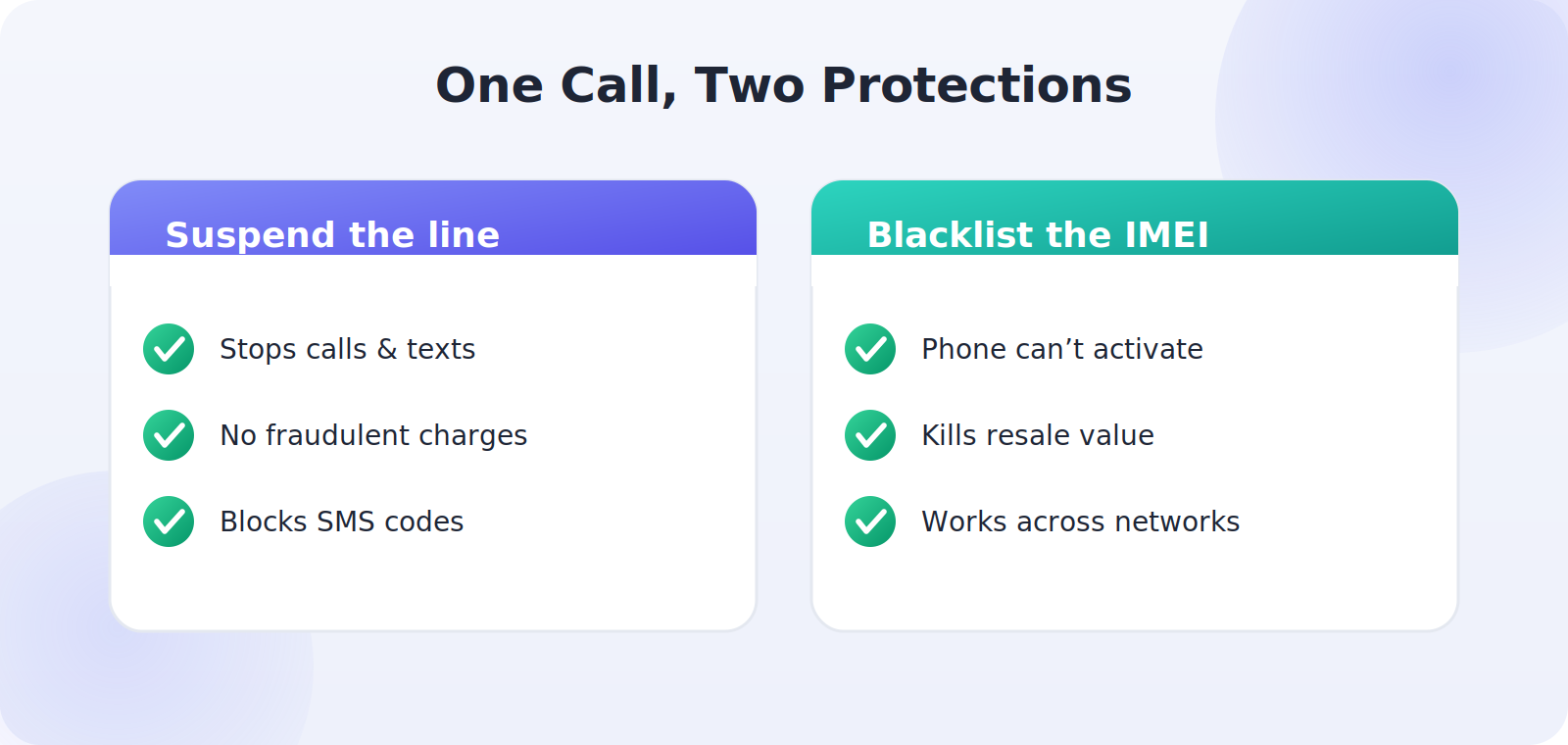
There are two distinct protections your carrier provides, and it helps to understand both.
Suspending your service
Suspending the line stops anyone from making calls, sending texts, or using mobile data on your number. This matters for your bill — you won’t be charged for a thief’s usage — and for your security, because it cuts off any SMS two-factor codes that would otherwise be delivered to the stolen phone.
Blacklisting the IMEI
Every phone has a unique identifier called an IMEI. When you report it stolen, your carrier can add it to a shared blacklist that participating networks check before activating a device. A blacklisted phone generally can’t be used on those networks, even with a new SIM, which is what truly destroys its resale value and deters theft.
What to Have Ready Before You Call
The call goes much faster if you gather a few details first. Don’t worry if you can’t find all of them — your carrier can look up most from your account — but having them speeds things up.
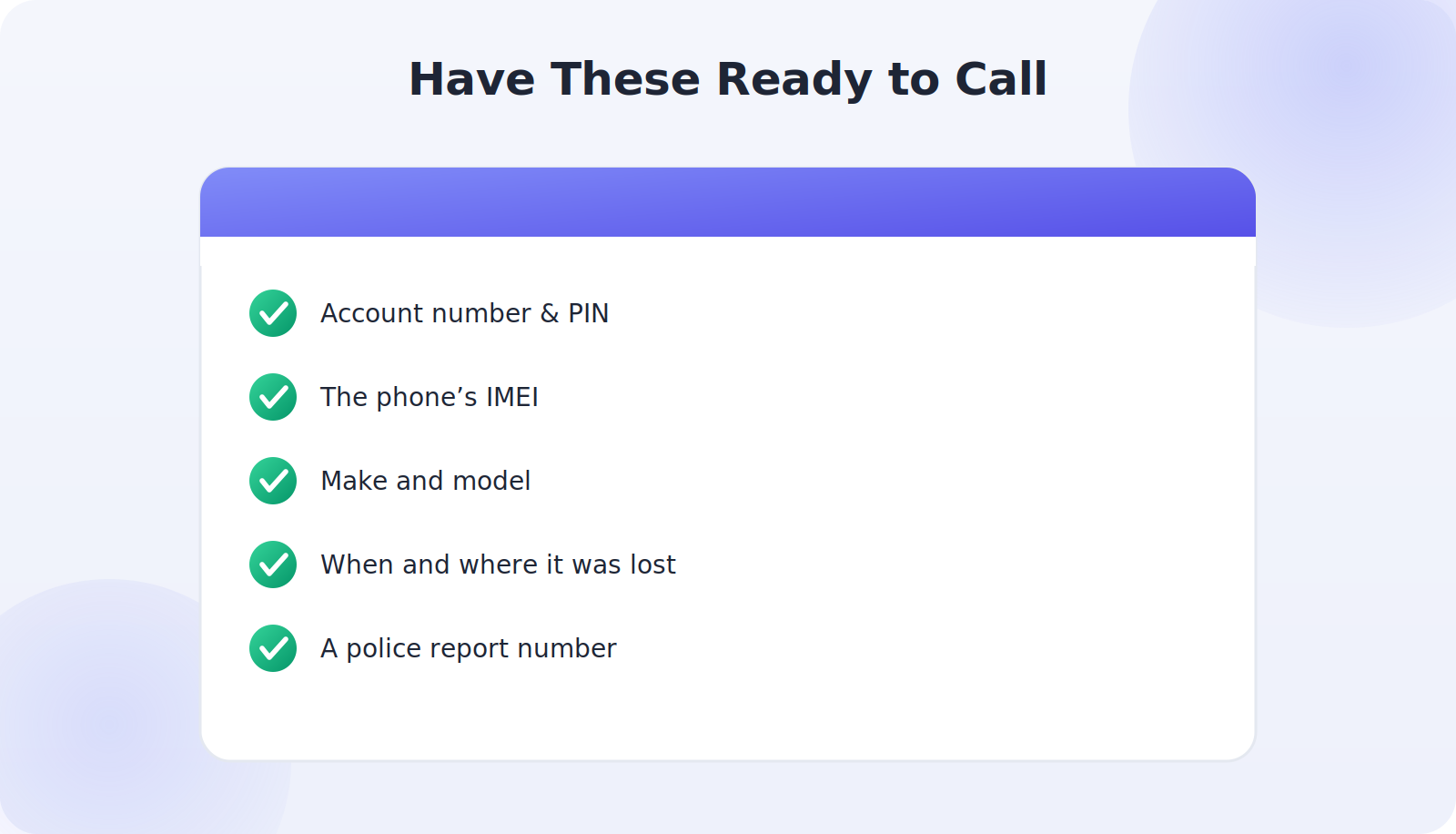
- Your account details: the phone number, account holder name, and any PIN or security word.
- The IMEI: the phone’s unique ID, found on the original box, your online account, or your Google/Apple device list.
- Make and model: e.g. “iPhone 15” or “Samsung Galaxy S24.”
- When and where it was lost: a rough time and place helps with any report.
- A police report number, if you already have one.
Step-by-Step: Making the Report
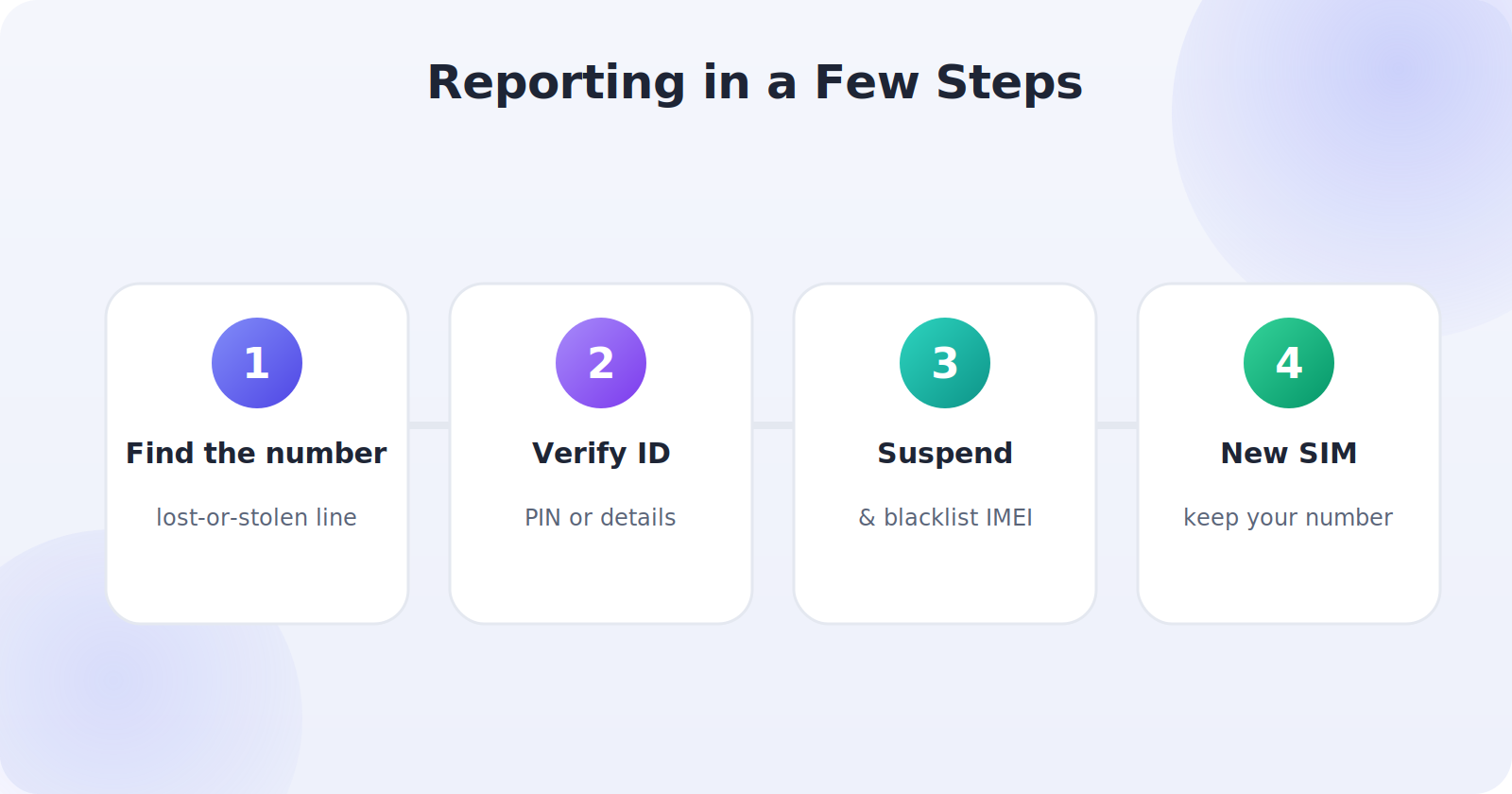
- Find your carrier’s number. Use their official website or a bill. Many have a dedicated lost-or-stolen line that’s faster than general support.
- Verify your identity. You’ll confirm account details or a security PIN.
- Report the phone stolen and ask them to suspend the line.
- Ask them to blacklist the IMEI. Provide it if you have it, or have them look it up.
- Ask about a temporary SIM or eSIM so you can keep your number on a replacement device.
- Note the reference number for the report and ask what happens next.
Keeping Your Number
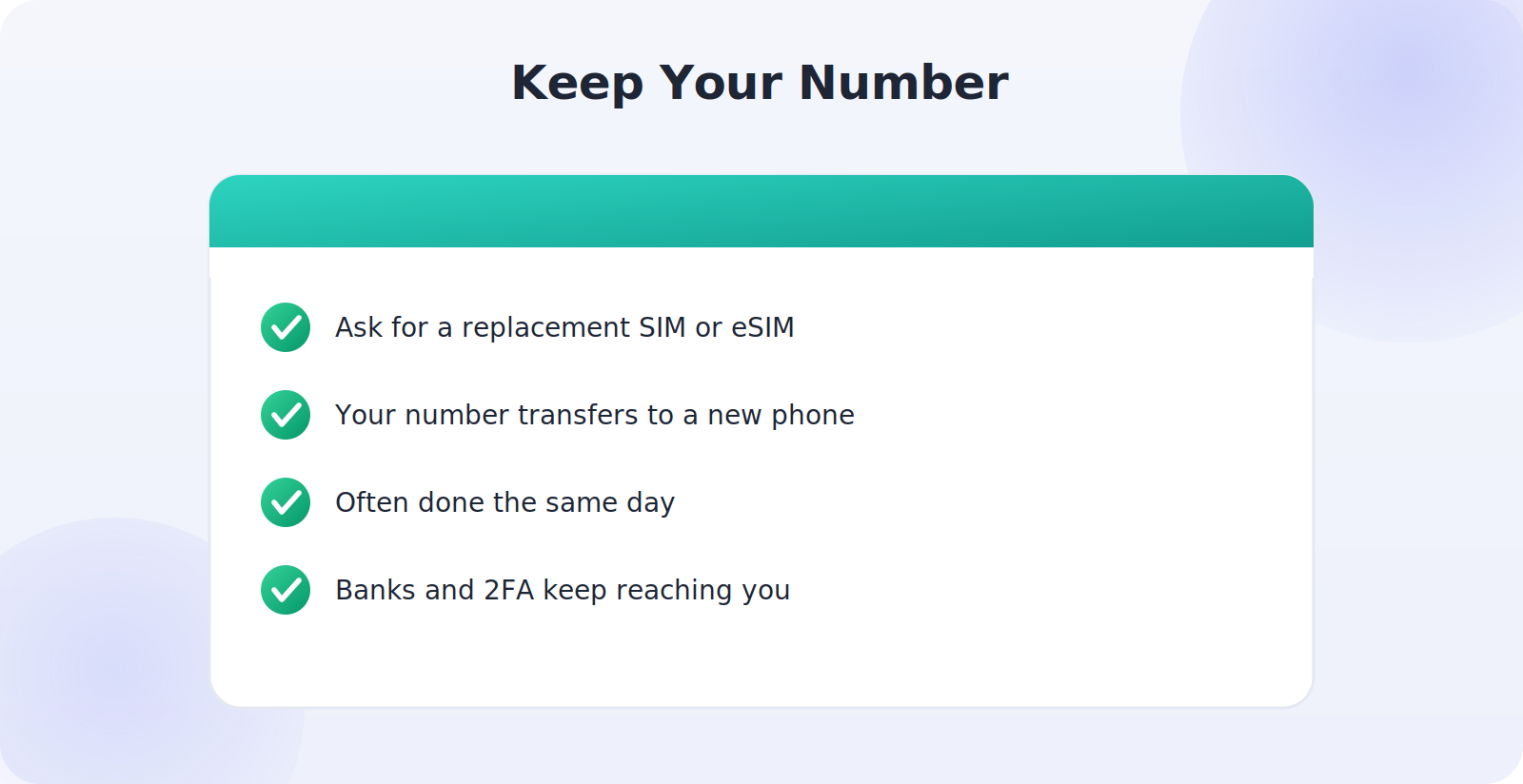
Losing the phone doesn’t mean losing your number. Ask your carrier to move your number to a new SIM or eSIM. On most networks you can keep the same number on a replacement phone within minutes, so friends, banks, and two-factor systems still reach you. If you’re waiting for a new device, some carriers can park your number safely until you’re ready.
What Happens After You Report
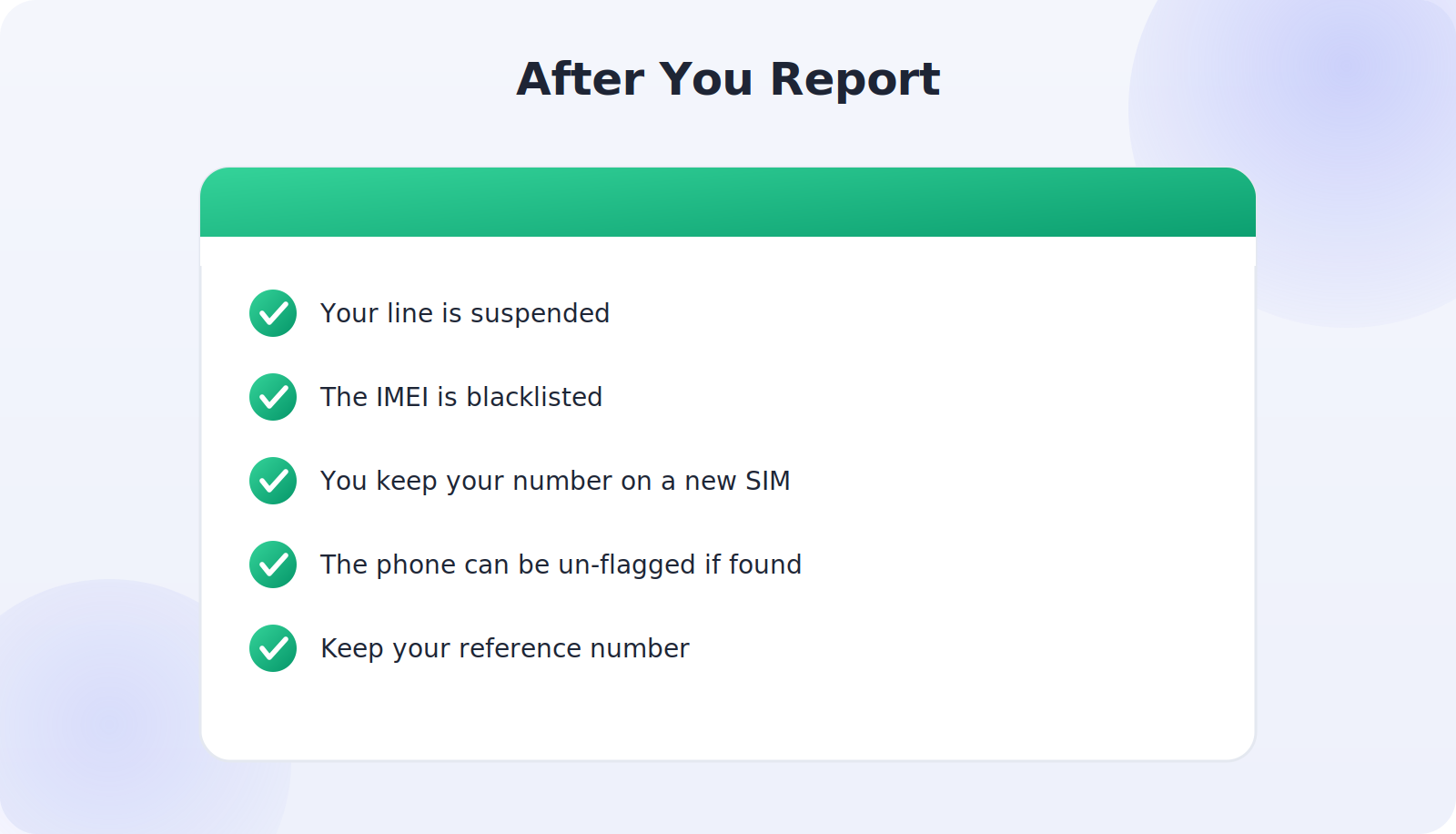
Once the report is filed, a few things follow. Your line is suspended, so no further usage is possible. The IMEI blacklist propagates across participating networks, though it can take a little time. If the phone later turns up — handed in, or recovered by police — you can ask your carrier to un-blacklist it and reactivate it. Keep your reference number somewhere safe for any follow-up.
Prepaid and Smaller Carriers
If you’re on a prepaid plan or a smaller mobile virtual network operator, the process is similar but worth checking in advance. Some prepaid providers handle blacklisting through the larger network they run on, and identity verification may rely on your top-up history rather than a contract. The key actions — suspend the line, blacklist the IMEI, keep your number — are the same; just confirm your provider’s specific steps on their website.
Don’t Forget the Other Steps
Reporting to your carrier is essential, but it’s one piece of a larger response. Make sure you’ve also locked the phone through Find My Device or Find My, secured your email and banking accounts from another device, and filed a police report. The carrier call handles the network and the hardware; those other steps handle your data and your accounts.
Common Mistakes to Avoid
- Delaying the call, which leaves your line open to fraudulent charges and SMS code theft.
- Only suspending the line but forgetting to blacklist the IMEI.
- Not asking to keep your number, then scrambling later.
- Losing the reference number, which you’ll want for insurance or follow-up.
- Assuming the carrier call replaces a police report — you usually need both.
Frequently Asked Questions
What if I find the phone after reporting it?
Call your carrier back. They can usually lift the suspension and remove the IMEI from the blacklist so the phone works normally again. Keep your reference number handy to make that follow-up quick.
Do I have to pay to report a stolen phone?
No. Reporting a theft, suspending your line, and blacklisting the IMEI are standard services your carrier provides at no charge. You may choose to pay for a replacement device or an insurance excess, but the report itself is free.
How long does blacklisting take to work?
Suspension of your line is usually immediate. The IMEI blacklist can take a little time to propagate across participating networks, but it typically takes effect quickly and makes the phone very hard to use legitimately.
Can I report a stolen phone without the IMEI?
Yes. Your carrier can look up the IMEI from your account. Having it ready just speeds things up.
Will blacklisting work across all networks?
It works across participating networks, which covers most major carriers in a given country. A blacklisted phone is very hard to use legitimately, though coverage can vary internationally.
Can I get my number back on a new phone?
Almost always. Ask your carrier for a replacement SIM or eSIM and your existing number can be transferred to a new device, often the same day.
Understanding the Blacklist in Plain Terms
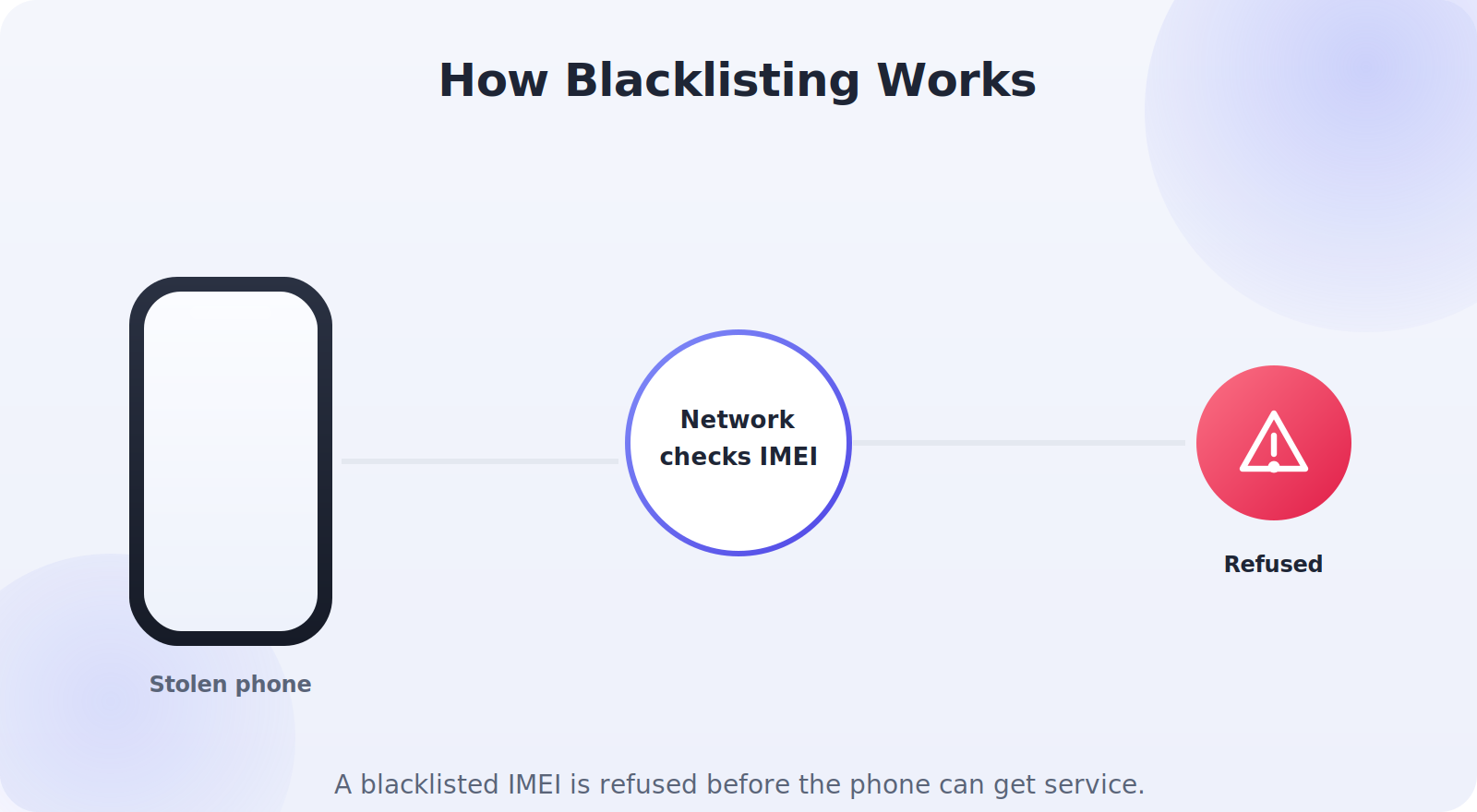
The word “blacklist” sounds dramatic, but the idea is simple. Networks share a database of IMEI numbers that have been reported lost or stolen. When someone tries to activate a phone, the network checks that database; if the IMEI is on it, activation is refused. The practical effect is that a blacklisted phone can’t get service on participating networks, even with a brand-new SIM from a different provider. That’s what collapses the resale value of stolen phones and makes reporting so worthwhile.
It’s worth knowing the limits, too. Blacklisting is most effective within the country and the group of networks that share the database. A determined thief might try to sell a phone abroad where the blacklist has less reach, or strip it for parts. Even so, reporting dramatically reduces what a stolen phone is worth and is always the right thing to do — both for you and to discourage the wider trade in stolen devices.
What to Say on the Call
If you’re not sure how to phrase the request, keep it simple and direct. Tell the agent: “My phone has been stolen. I’d like to suspend the line, blacklist the IMEI, and arrange a replacement SIM so I can keep my number.” Those three asks cover the essentials. If you have a police report number, mention it. If you don’t yet, ask whether they need one and how to add it later.
Be ready for the agent to offer extras — insurance claims, replacement-device deals, or temporary plans. You don’t have to decide on the spot. The priority is the three core actions; everything else can wait until you’ve had time to think.
Timing: Why Speed Matters
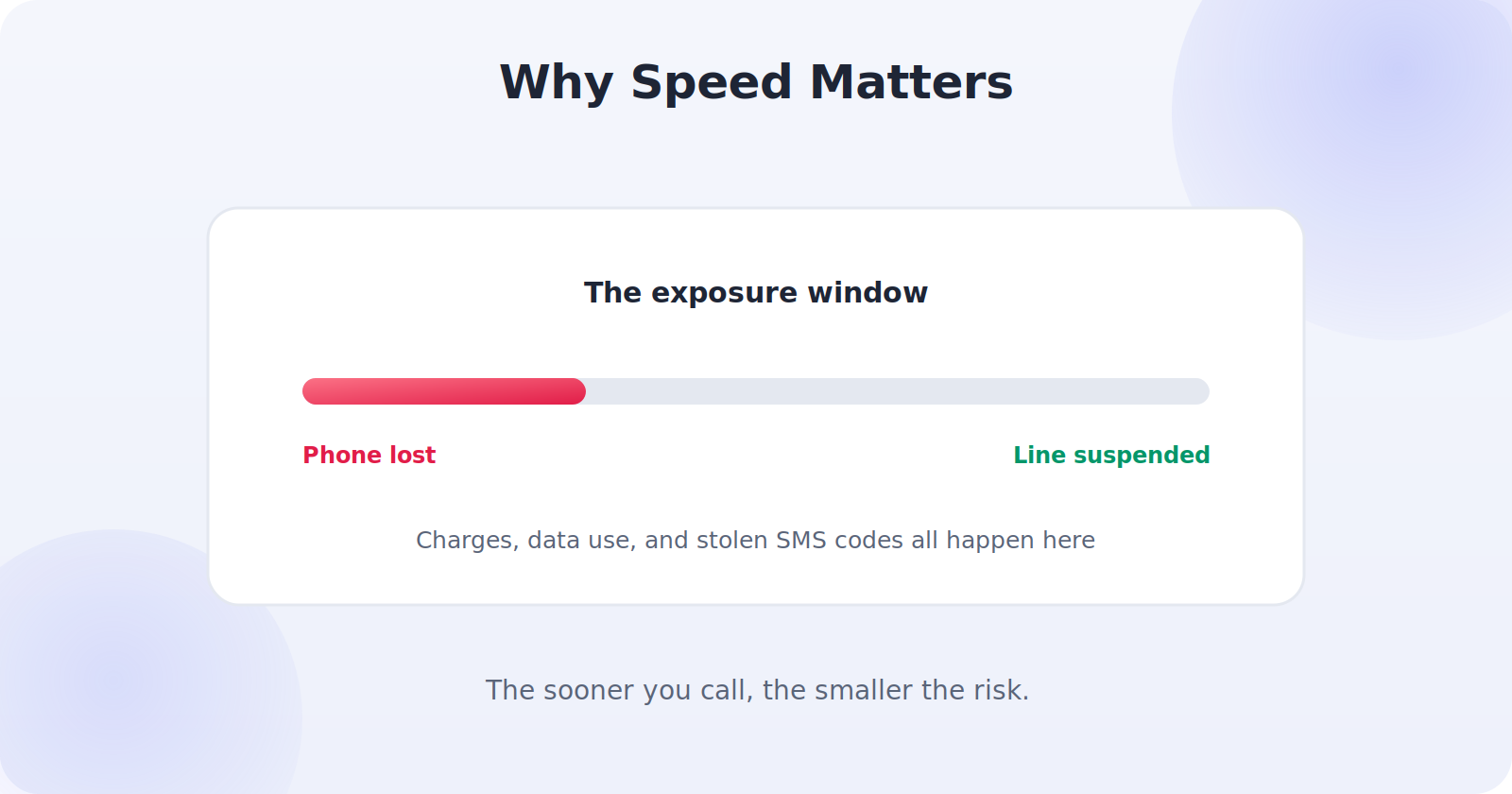
The gap between losing your phone and reporting it is a window of exposure. During that time, a thief could use your number, burn through your data allowance, or — most seriously — receive SMS two-factor codes that help them into your accounts. The sooner you suspend the line, the smaller that window. This is why the carrier call sits so high on the priority list, right alongside locking the phone and securing your email. If you can only do two things in the first ten minutes, lock the phone and suspend the line.
Insurance and Replacement Through Your Carrier
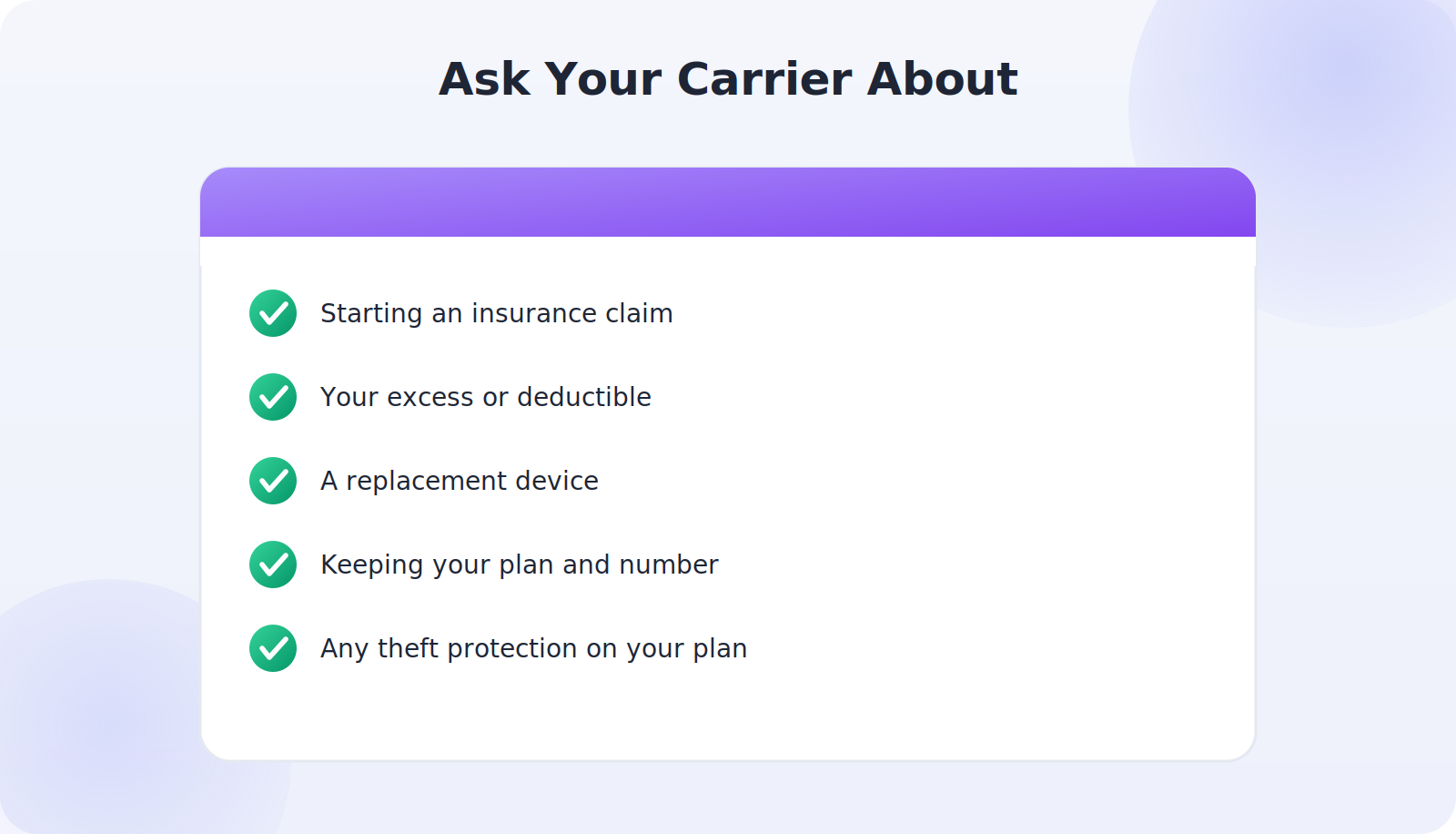
Once the line is suspended and the IMEI is blacklisted, your carrier can often help with what comes next. If you have device insurance — through the carrier, the manufacturer, or a separate policy — ask how to start a claim; most will want your police report number and the IMEI, both of which you’ll already have in hand. Many carriers can also arrange a replacement device and transfer your existing number and plan to it, sometimes the same day.
It pays to ask a few questions while you have an agent on the line: whether your plan includes any theft protection you’d forgotten about, what the excess or deductible on a claim would be, and whether they can expedite a replacement SIM. You don’t have to commit to anything, but gathering the information now saves a second call later. Keep notes of what you’re told, including names and reference numbers, so any follow-up is smooth.
After the Phone Is Reported: A Checklist
To make sure nothing slips through the cracks, run through a short mental checklist once the call ends. Confirm the line is actually suspended by trying to call the number from another phone. Note your reference number somewhere safe. Make sure the IMEI was blacklisted, not just the line suspended. Arrange your replacement SIM or eSIM so you can keep your number. And cross-check that you’ve also handled the non-carrier steps: locking the phone, securing your accounts, and filing a police report. The carrier call is powerful, but it’s one instrument in a small orchestra.
Quick Takeaways
- Calling your carrier suspends your line and can blacklist the phone.
- Gather your account details and IMEI to speed up the call.
- Ask to keep your number on a new SIM or eSIM.
- Note the reference number for insurance and follow-up.
- The carrier call complements — doesn’t replace — a police report.
The Bottom Line
Reporting a stolen phone to your carrier is a five-minute call with outsized payoff: it freezes your line against fraud, blacklists the handset so it’s hard to reuse or resell, and lets you keep your number on a new device. Have your account details and IMEI ready, ask specifically for both suspension and blacklisting, and save the reference number. Pair it with locking your phone, securing your accounts, and a police report, and you’ve covered every angle.