A chores for screen time app: kids earn screen time by doing tasks
Set chores and tasks worth a number of minutes. Your child finishes one, sends a photo as proof, you approve it, and the minutes are handed back. It turns the phone into a kids reward chart — something to work towards instead of something you fight over.
Android child app
Runs in any browser
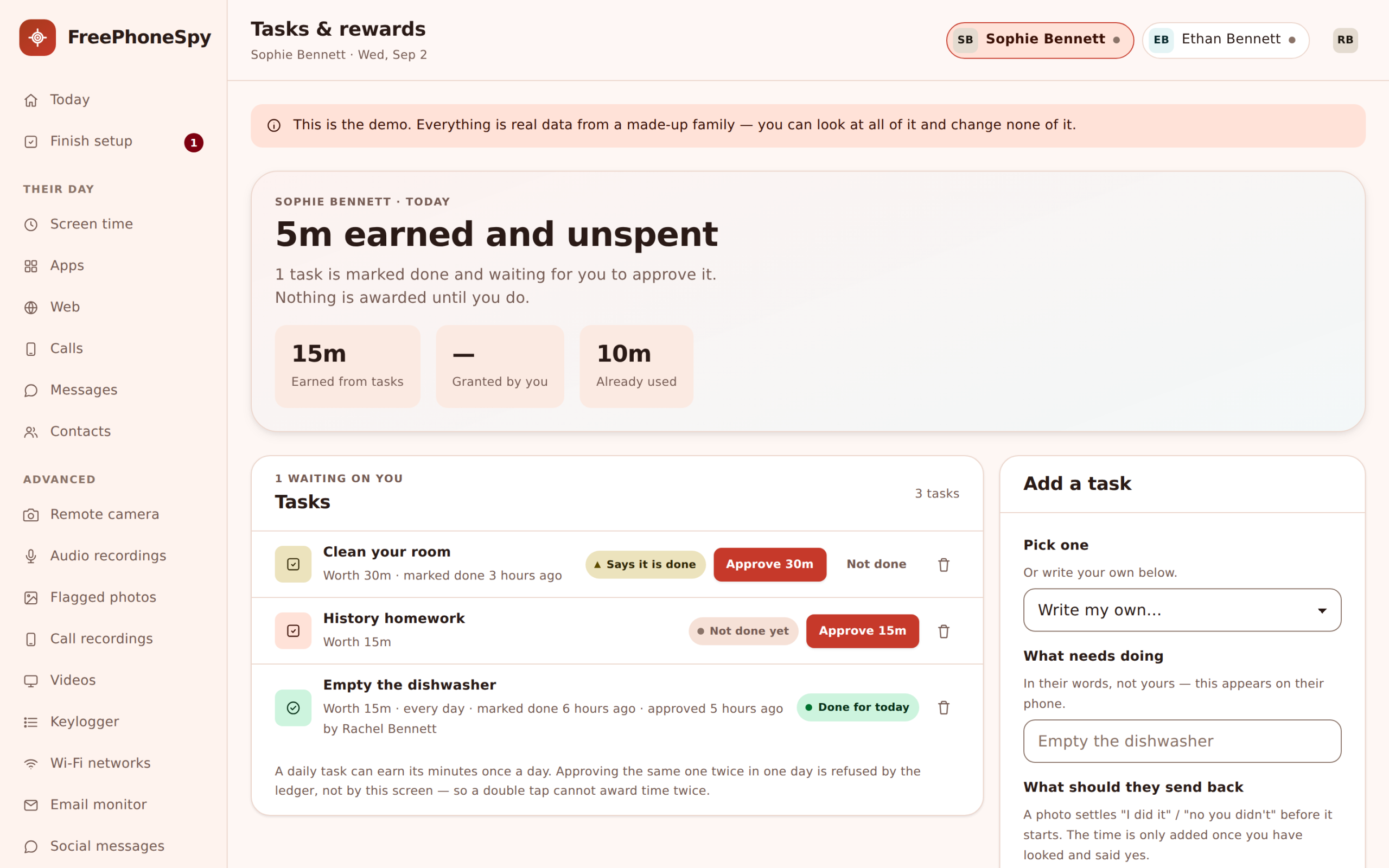

Screen time is usually a thing you take away. Tasks flip it. Instead of only ever losing minutes, your child can earn them — the bins go out because forty minutes of games are on the other side of it. The phone stops being the battleground and becomes the reward.
The flow is simple: you set tasks worth a number of minutes, your child marks one done and sends a photo as proof, you approve it, and the minutes land in their budget. It’s a kids reward chart that lives on the phone, so the reward and the effort are in the same place. And it changes the tone of the whole thing — the phone becomes something they work towards, not the thing you’re always threatening to remove.
Set tasks and chores worth minutes
You build the list in the panel. A task is a small job with a number of minutes attached: take the bins out, twenty minutes of reading, a tidy room, practise an instrument, walk the dog. You decide what counts and what it’s worth, and you can weight the boring jobs higher so they actually get done.
Tasks can be one-offs or the kind that come round every day. Reading might be worth fifteen minutes each evening; a proper room tidy might be worth an hour at the weekend. Each child gets their own list, so an eleven-year-old and a fifteen-year-old aren’t held to the same jobs. You’re not writing a rota — you’re setting a menu of ways to earn.
- Any chore or task, worth the minutes you choose
- Weight the jobs you most want done
- One-off tasks or ones that repeat
- A separate list for each child
The child submits a photo as proof
Here’s what keeps it honest. When your child marks a task done, they can attach a photo — the made bed, the emptied bin, the finished worksheet. It’s not surveillance; it’s the same as showing you the job before they head off. The proof turns “I did it, promise” into something you can actually see, which heads off the argument before it starts.
For younger children the photo is half the fun — they like proving it. For older ones it’s a fair way to settle whether a job really got done to the standard you agreed. Either way, you’re not chasing round the house to inspect anything. The evidence comes to you, and you decide from wherever you are.
- A photo attached to the completed task
- Settles “did you actually do it” without a row
- No need to inspect the job in person
- Works the same at home or away
You approve, and minutes are handed back
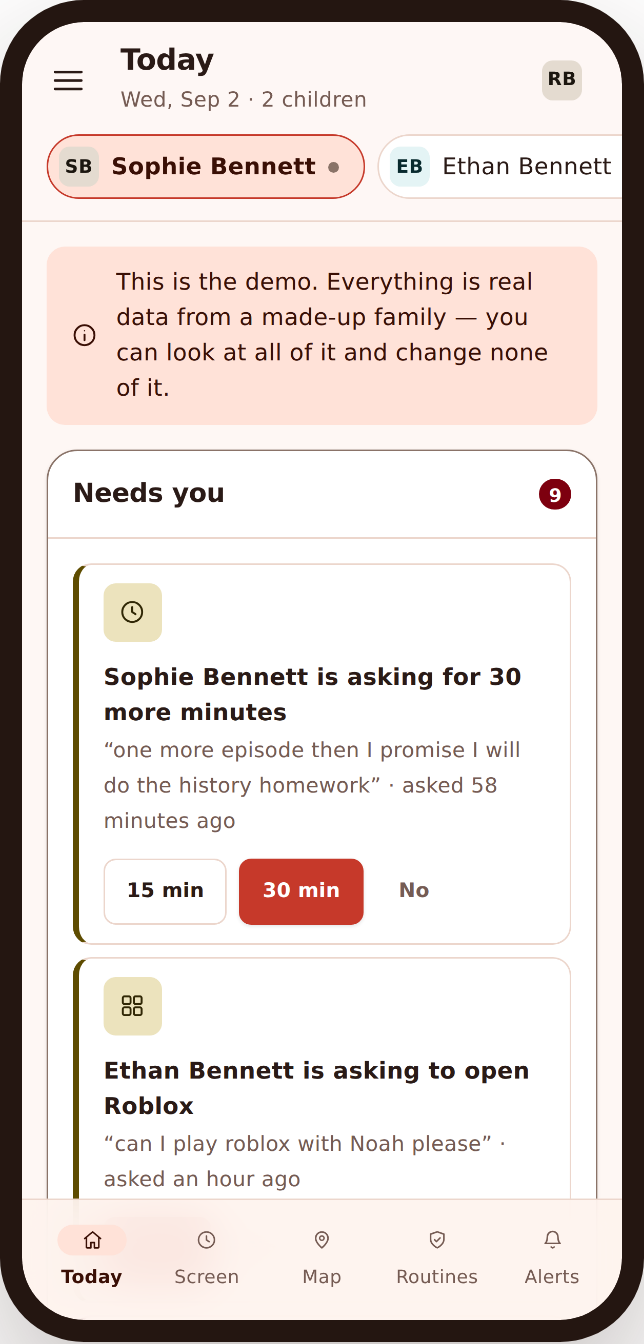
Completed tasks arrive on your Today dashboard, next to everything else that needs you. You look at the photo, and you approve or send it back. Approve it and the minutes are added to your child’s budget straight away — no passcode across the room, no unlocking anything by hand. The reward follows the effort in seconds.
That speed matters. When the minutes land the moment you tap approve, the connection between doing the job and getting the reward is obvious, and that’s what makes it stick. You stay in charge of the standard — a half-hearted tidy can go back with a note — but you’re a single tap in the loop, not a bottleneck. The minutes then spend against the daily screen-time budget like any others.
- Completed tasks land on the Today dashboard
- Approve or return with a note, in one tap
- Minutes are added to the budget immediately
- Approve from any browser, wherever you are
Asks & extra time: when a task isn’t the answer
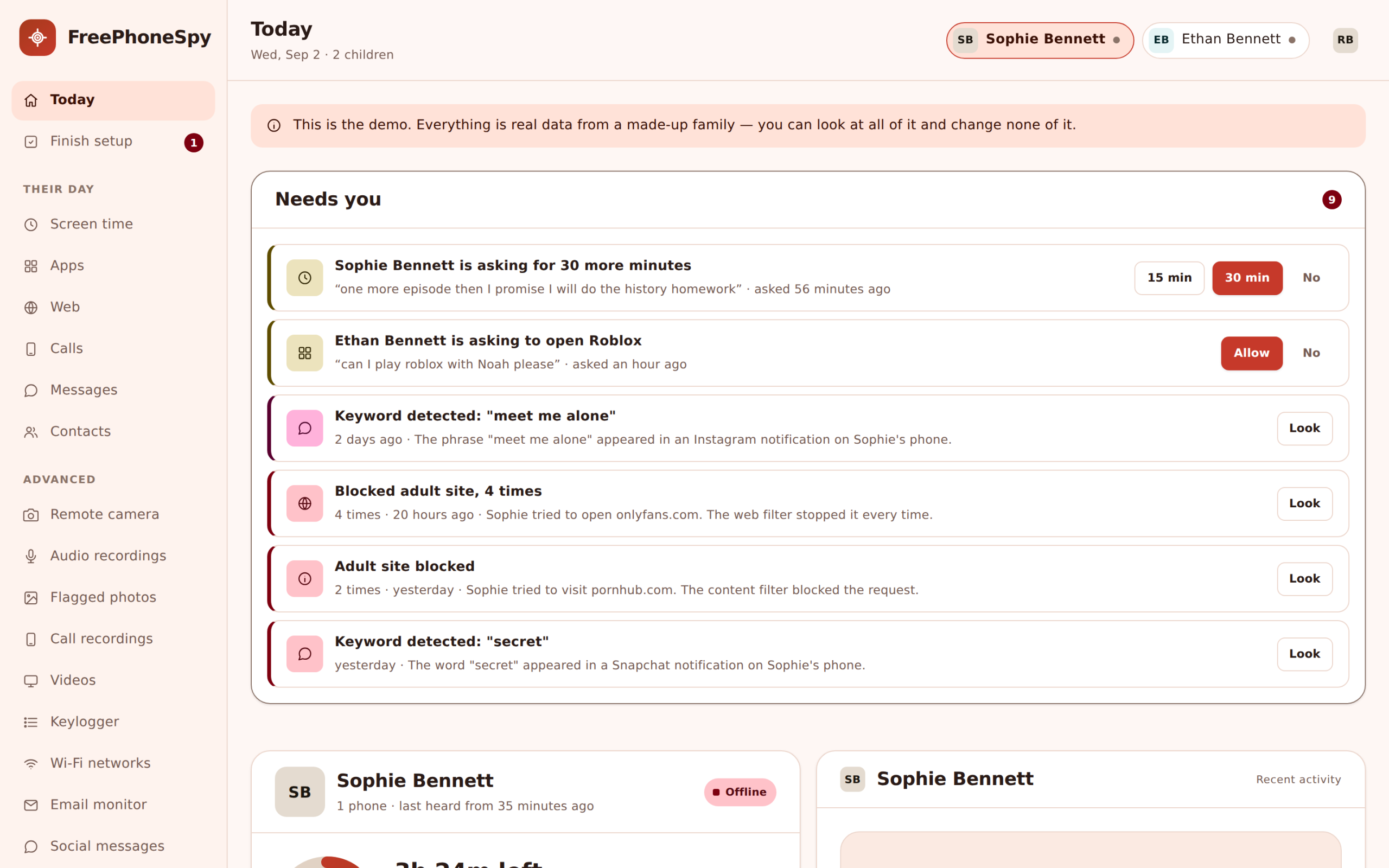
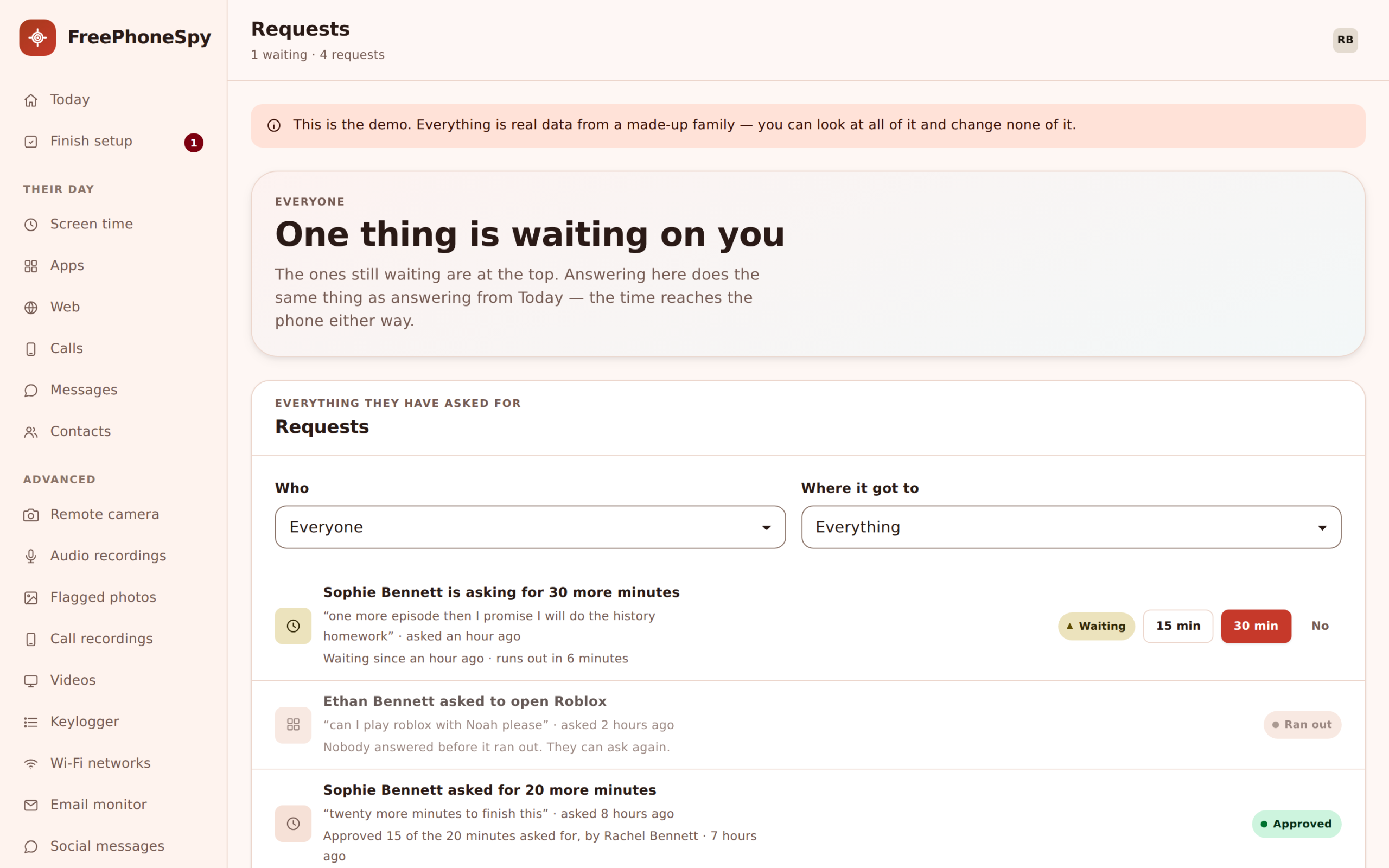
Sometimes there’s no chore to do and the day just runs long — a group project, a rainy Sunday, a film that overruns. For that there’s the Asks flow, which sits right alongside tasks. Your child requests a bit more time with a reason, and you decide. It’s the pressure valve that keeps a fair system from feeling rigid.
The child asks
They request 15 or 30 more minutes and attach a reason — “finishing the history project”, not just “more time”.
You tap 15, 30 or No
The Ask lands on the Today dashboard with the reason. You read it and answer in one tap, from any browser.
A record either way
What was asked and what you said is kept, so patterns are easy to see and a “yes” isn’t forgotten by tomorrow.
Tasks and Asks cover the two honest reasons a child wants more time: they did something to earn it, or the day genuinely needs a little give. Between them you rarely have to be the flat “no”, which is exactly what makes the limits easier to keep.
How tasks power the free-via-tasks model
Tasks aren’t only for kids. The same idea is how FreePhoneSpy stays free for you. There’s no card, no subscription, no auto-renew and no paid “premium” tier. You start with full access, and to keep it going you complete simple tasks yourself — share an honest review, refer a friend, send feedback or a translation, report a bug. It’s the trade instead of money: those tasks help the product grow, so that’s what you give rather than a payment.
Completing tasks unlocks two things. First, more days — they top up your access when the free period runs low or has run out. Second, advanced features — the more powerful tools switch on as you complete tasks. The core stays free either way: location, screen time, app limits, the web filter and alerts keep working regardless. It’s the same honest deal at both ends of the app, and the full picture is on the pricing page.
- Free to start — full access, no card
- Simple tasks add more days when you’re running low
- Tasks also unlock the advanced features
- Core safety tools stay free no matter what
Two children, two lists, one dashboard
Every child gets their own tasks, their own asks and their own earned minutes, but it all rolls up into one place. On the children overview you can see who’s done what and who’s owed an approval, so a household with a couple of kids doesn’t turn into a spreadsheet. An eleven-year-old’s reading and a fifteen-year-old’s weekend jobs sit next to each other, each judged on their own terms.
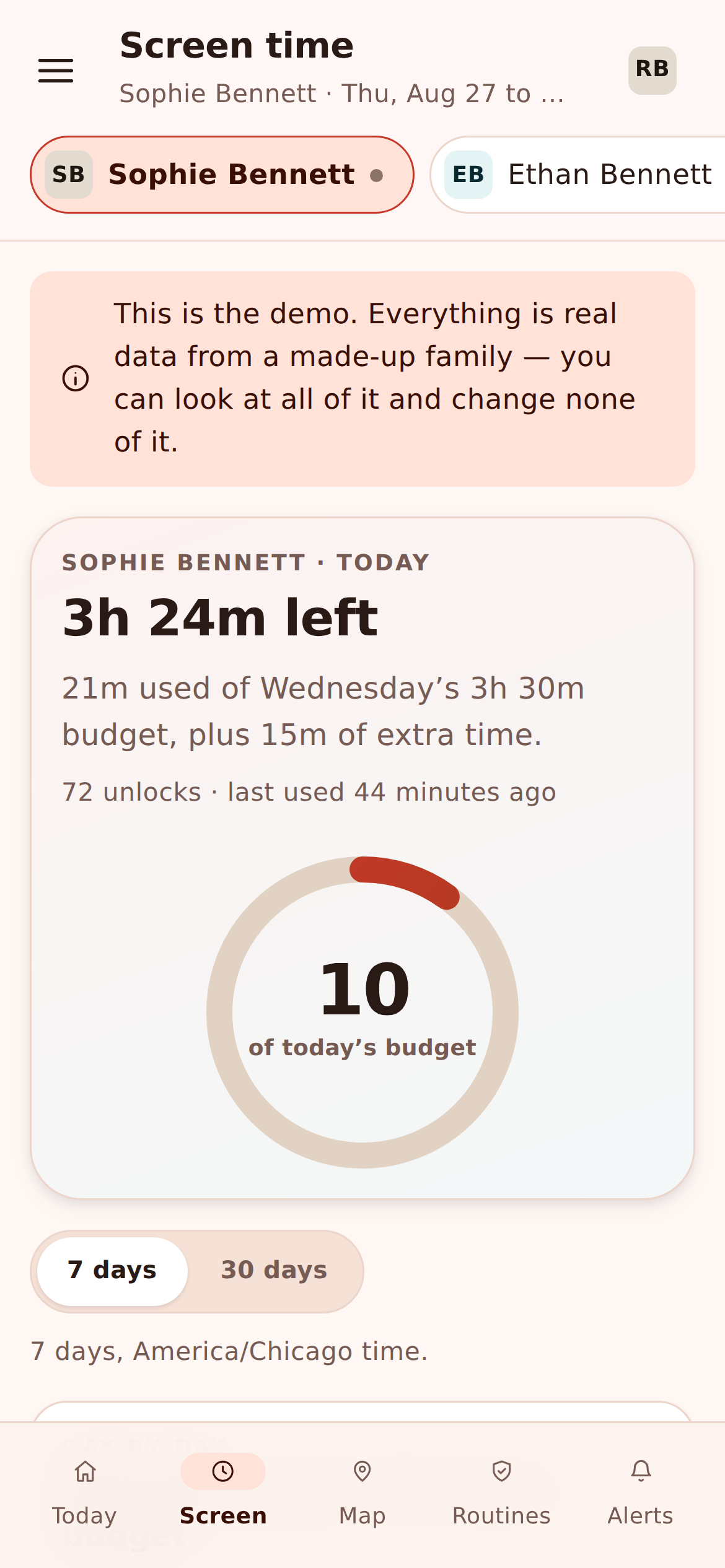
Because everything surfaces on the Today dashboard, a completed chore, an extra-time Ask and a screen-time wind-down all appear together. One glance in the morning tells you what needs a tap. And with unlimited child devices, adding another phone to the same view costs nothing.
- A separate task list and minute balance per child
- See who’s owed an approval at a glance
- Everything rolls onto one Today dashboard
- Unlimited child devices on the same view
How to set up tasks & rewards
A couple of minutes in the panel. Here’s the order that works.
1. Add a few tasks
Start with three or four your child can actually do — reading, the bins, a tidy room. Set what each is worth in minutes.
2. Agree the deal together
Show the list on their phone and explain the photo proof. Let them pick a couple, so it feels like a menu, not a chore rota.
3. Approve the first one fast
When the first task comes in with a photo, approve it quickly so the minutes land and the connection is obvious.
4. Tune the values
If a job never gets done, it’s probably worth too little. Nudge the minutes until the effort and the reward feel fair.
What tasks & rewards look like in practice
The goal isn’t to turn the house into a points economy where nothing happens without a payout. It’s to give screen time a second route in — one that rewards effort — so the phone isn’t only ever a thing you remove. Used lightly, it does a lot of quiet good. Chores get done without three reminders, reading happens because it’s worth fifteen minutes, and “can I have more time” turns into “what can I do to earn it”.
Picture a normal week. Your eleven-year-old reads for twenty minutes and sends a photo of the book; you approve it from the kitchen and the minutes land. Your fifteen-year-old tidies their room on Saturday for a bigger chunk of weekend time. On the night the group project runs long, an Ask comes through with a reason and you tap 30. Nothing was a fight. The phone became the reward, and you spent about four taps all week. See it on the screen-time budget where the earned minutes show up alongside the daily allowance.
Good for
- Turning screen time into a reward, not just a limit
- Getting chores done without endless reminders
- Kids who respond to earning, not losing
- Settling “did you do it” with a photo
- A fair extra-time route on the days that need it
Be realistic about
- It works best used lightly, not for every small thing
- Task values need tuning to feel fair
- Your child sees the whole list and their balance
- It’s an agreement, so both sides have to keep it
Tasks & rewards questions, answered
How does earning screen time actually work?
You set tasks worth a number of minutes. Your child marks one done and attaches a photo as proof. You approve it from the panel, and the minutes are added to their daily budget straight away. It’s a kids reward chart built into the phone.
What stops my child claiming a task they didn’t do?
The proof photo. A completed task comes with a picture — the tidy room, the emptied bin, the finished worksheet — and you approve or send it back. A half-hearted job can go back with a note, so the standard stays yours.
What’s the difference between a task and an Ask?
A task is earned — the child does a chore for minutes. An Ask is a request for extra time with a reason, for the days there’s no chore to do and life just runs long. You tap 15, 30 or No. Both sit on the Today dashboard.
How do tasks make the app free?
The same idea powers the pricing. There’s no card or subscription. You start with full access, and you keep it going by completing simple tasks yourself — a review, a referral, feedback. Tasks add more days and unlock the advanced features, while the core stays free. The pricing page has the full detail.
Can each child have their own tasks?
Yes. Every child gets their own list, their own values and their own minute balance, all rolling up onto one dashboard. Unlimited child devices means adding another phone to the same view costs nothing.
Does my child know tasks are set?
Yes. FreePhoneSpy is transparent by design. Your child sees the task list, what each is worth and the minutes they’ve earned, plus a Transparency screen listing what’s shared. Tasks are meant to be agreed together, openly.