Co-Parenting & Screen Time: Keeping Digital Rules Consistent Across Two Homes
Two homes, one child, and two remote controls for the same childhood. Co-parenting the digital side is hard not because either parent is doing it wrong, but because a child moves between two sets of rules every few days — and notices every gap between them. This guide is about closing those gaps calmly, together, with the child’s wellbeing at the centre rather than either household’s pride.
Why consistency matters more than you’d think
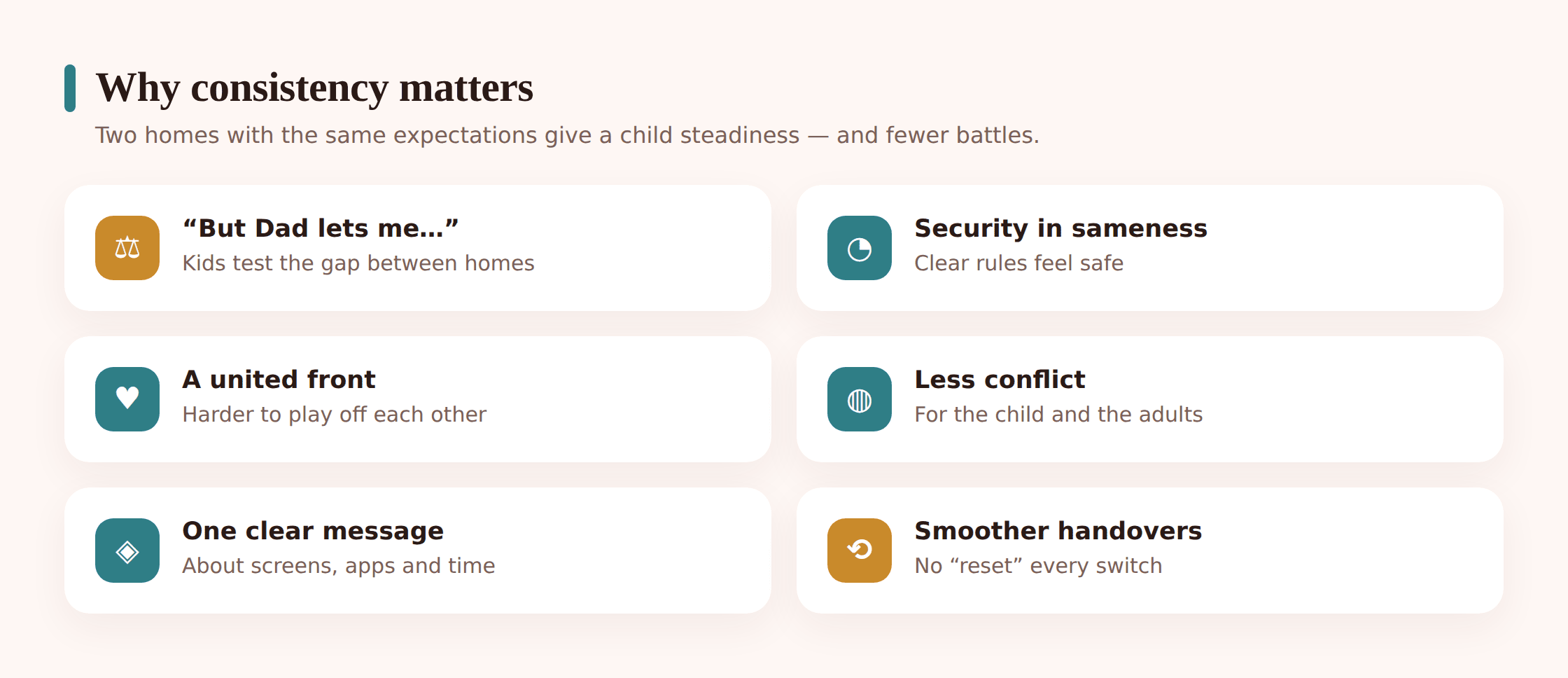
Children are quietly brilliant at spotting a gap between two authorities and stepping into it. It isn’t cunning; it’s how they test where the real limits are. If the phone goes away at 8:30 at one house and there’s no bedtime at all at the other, the child learns something simple and unhelpful: the rule isn’t really a rule. It depends who’s asking.
You’ll hear it out loud eventually. “But Dad lets me.” “Mum says I’m allowed.” Sometimes it’s true, sometimes it’s a hopeful edit of the truth, and the child usually can’t tell you which. Either way, the moment a rule becomes a bargaining chip between two homes, you’ve both lost the calm that a clear boundary is supposed to give.
There’s a deeper reason to care, and it isn’t about winning the argument. Kids draw a lot of security from knowing what to expect. A child living across two homes already carries more change than most — two bedrooms, two routines, sometimes two sets of siblings. When the digital rules are roughly the same in both places, that’s one more thing that stays steady no matter which house they wake up in. Consistency isn’t about control. It’s a kindness. It tells the child that the grown-ups, whatever else has changed, are still on the same side about the things that matter.
None of this needs the two homes to be identical. Bedrooms will differ, dinners will differ, and that’s fine. What helps is agreeing the handful of digital things that stay the same wherever the child is, so the phone stops being a place where the split shows up every single evening.
The friction points nobody warns you about
Most co-parenting clashes over screens aren’t really about screens. They’re about two people who parent differently, meeting at the point where a device makes the difference visible. Naming the common friction points takes some of the heat out of them, because you can see they’re ordinary and shared, not a sign that either of you is failing.
- Different screen-time limits. One home counts minutes carefully; the other takes a looser, “read the room” approach. Neither is wrong, but the child feels the whiplash.
- Different bedtimes and where the phone sleeps. The single biggest one. A phone charging in the kitchen at one house and under the pillow at the other undoes a lot of good sleep habits.
- One parent stricter than the other. Often the stricter parent feels undermined and the more relaxed one feels policed. Both are reacting to the same gap.
- New partners and step-siblings. A step-sibling with a phone at nine reshapes what your seven-year-old thinks is normal, and a new partner may have views of their own about screens.
- Holidays and handover days. Rules loosen on holiday everywhere, but across two homes a loose fortnight can quietly become the new baseline.
- Buying the first phone, and who pays. One parent may feel ready, the other not. Then there’s the bill, the contract, and whose account it sits under.
- Social media age rules. Whether a child joins a platform, and at what age, is a decision that only works if both homes hold the same line.
Read that list and you’ll probably recognise two or three from your own week. The point of writing them down isn’t to assign blame. It’s to move them out of the “we always argue about this” pile and into the “here’s a specific thing we can agree on” pile.
Agreeing a shared family-media plan
The fix for most of the above is a short, shared plan that both homes sign up to. Not a legal document, not a weapon to wave when the other parent slips. A single page, plainly written, that says what the digital rules are for this child, wherever they are. Think of it as one agreement stretched across two roofs.
If you’ve already built a family phone agreement for use inside one home, this is the co-parenting cousin of it — the same spirit, adapted for two households that need to line up. And if you’re juggling several children of different ages between homes, the wider question of managing multiple kids’ devices sits alongside this one.
The trick is to sort every rule into two buckets before you start negotiating: the non-negotiables that must be the same in both homes, and the flexible stuff each home can handle its own way.
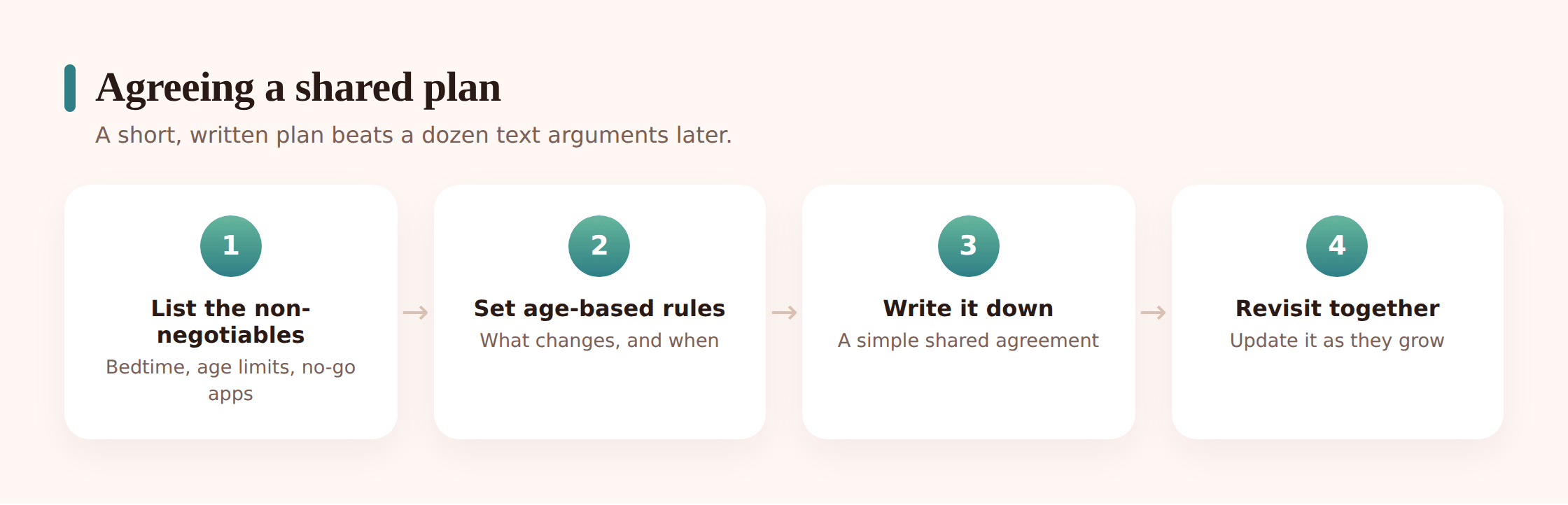
Step 1: Name the non-negotiables together
Pick the handful of things that have to match wherever the child is. For most families that’s the big-ticket safety items: no phone in the bedroom overnight, the age at which social media is allowed, no new apps without a parent’s yes, and a shared line on what counts as unsafe contact. Keep this list short. The shorter it is, the easier it is for both homes to honour it without feeling boxed in.
Step 2: Agree what stays flexible
Everything else can differ, and saying so out loud reduces the friction enormously. Maybe weekday screen minutes are a bit higher at one house because the commute is longer, or one home allows gaming after homework and the other before. When you both accept that some variation is fine, you stop treating every small difference as a betrayal of the plan.
Step 3: Build in age-based rules that grow
Write the plan so it steps up with the child rather than freezing at today’s age. Note what changes at the next birthday, or when they move up a school year — a later phone-down time, a new platform, a longer weekend budget. Agreeing the upgrades in advance means you’re not renegotiating from scratch every few months, and the child sees a clear ladder instead of two parents to lobby.
Step 4: Decide the first-phone plan jointly
Before any phone is bought, agree between you: is the child ready, who buys it, whose account and contract it lives on, and what the ground rules are on day one. A phone that arrives at one home as a surprise, with rules the other parent never agreed, starts the whole thing off on the wrong foot. Decide it together and set it up with the child, not around them.
Step 5: Write it down and both keep a copy
A plan that lives in one parent’s memory isn’t shared. Put it in a note both of you can see, or print a copy for each fridge. When the child says “but at Dad’s I’m allowed,” you can both point at the same page, calmly, and the conversation ends there.
Set the whole thing up with the child, not merely for them. A child who helped decide the weekend budget, and who understands why the phone sleeps outside the bedroom, is far more likely to keep the rule at both houses without being reminded. That buy-in is what makes a plan survive the trip between homes. Involving them also quietly removes the “play one parent off the other” move, because they were in the room when both of you agreed the same thing.
Tools that carry the plan between homes
A written plan sets the intention. A few shared tools are what actually keep it running when you’re not in the same house to compare notes. The aim isn’t to automate parenting — it’s to save both of you from managing two separate systems that quietly drift apart.
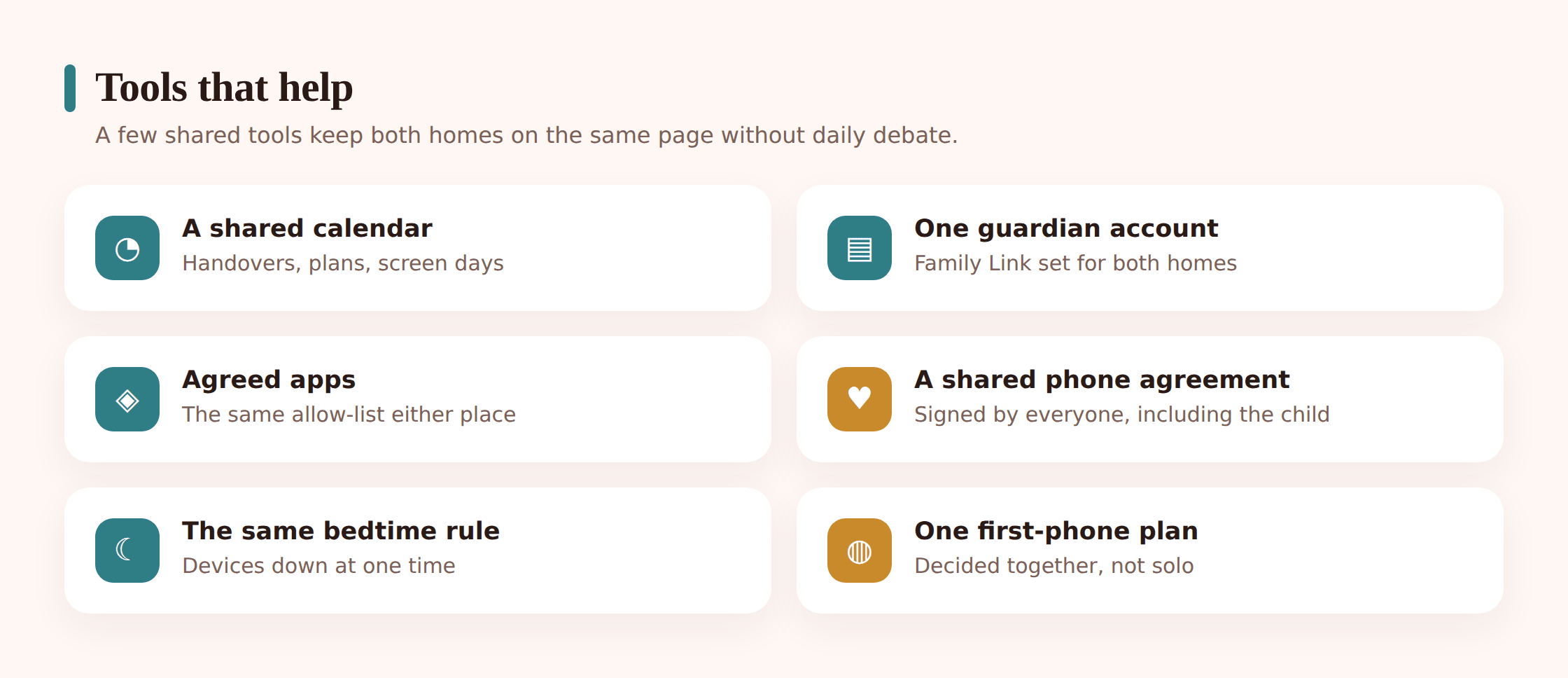
- A shared family calendar. Handover days, screen-free events, holidays, exam weeks. When both homes work from one calendar, the loose “we’ll sort it nearer the time” gaps that breed arguments simply shrink.
- A shared parental-control account. Tools like Google Family Link let both parents be listed as guardians on the same child account, so a limit set in one home applies wherever the child’s phone is. Change the bedtime once and it holds across both houses. Our walkthroughs on digital wellbeing for parents cover the mindset that makes these settings land well rather than feel like a leash.
- Agreed apps and platforms. Keep a shared list of what the child is allowed to use, and add to it by agreement rather than one home unilaterally. That stops the “how did they get TikTok?” surprise on a Sunday pickup.
- One shared note for the plan itself. The plan, the app list, and the current settings, all in a document both parents can open and edit. Visible beats remembered.
Two things matter more than which specific app you pick. First, both parents should have real access — not one parent holding the keys and the other locked out, which breeds exactly the mistrust you’re trying to avoid. Second, the child should know these tools exist and roughly what they do. Shared controls set up openly are a family agreement made practical. The same controls set up in secret are something else, and children can tell the difference.
Handovers and staying in touch
Handover day is where the two systems physically meet, and it’s where small things go wrong. A phone hands over with a game mid-download, a limit that was paused for a birthday and never switched back on, an app installed at one house that the other doesn’t know about. A little routine around the handover catches most of it.
A two-minute handover check
Make it normal, quick, and free of blame. Something like: is the phone charged and are the usual limits back on after any holiday exceptions? Any new app installed this week the other parent should know about? Anything upsetting come up that we should both keep an eye on? Two minutes, adult to adult, and the child’s week continues without a jolt.
- Reset any temporary exceptions before handover, so a relaxed holiday rule doesn’t silently become permanent.
- Give the other parent a quick heads-up on anything worth watching — a fallout in a group chat, a new friend online, a wobble about something they saw.
- Agree how the child contacts the other parent during their stay, so calling Mum from Dad’s or Dad from Mum’s is never a loaded act.
- Keep your adult communication in an adult channel — a shared note, a co-parenting app, a brief message — not routed through the child.
Let the child keep an easy, un-awkward line to whichever parent they’re not with. It matters for the child’s sense of security, and it quietly models that both homes are relaxed about the other. A phone used to say goodnight to the other parent is the phone doing exactly what it should.
When you genuinely disagree
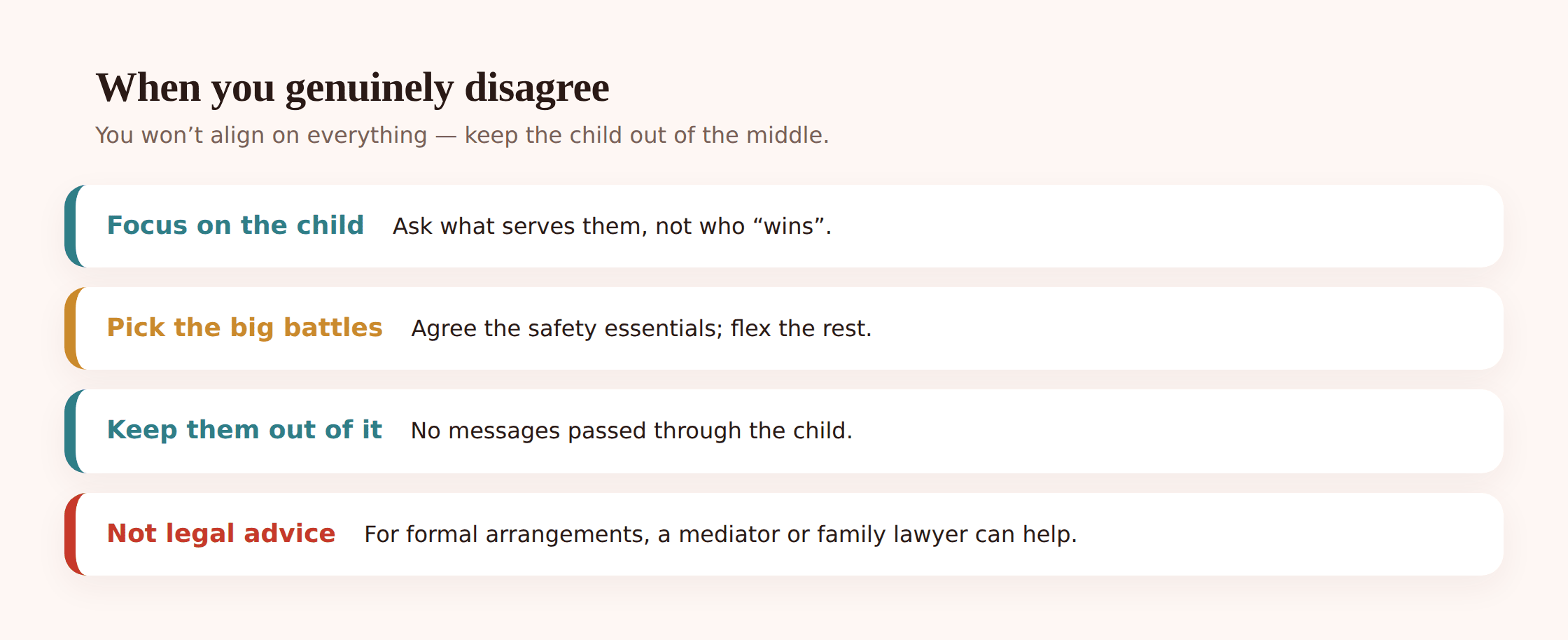
Sometimes you won’t reach the same page, and that’s real. One of you thinks eleven is fine for a first phone; the other wants to wait until thirteen. One counts every minute; the other finds that suffocating. Pretending the disagreement isn’t there doesn’t help the child, but neither does turning every difference into a battle. A few principles keep it manageable.
- Anchor every decision to the child, not to the point. Ask “what’s best for them?” out loud, together. It’s remarkable how often that single question moves a stuck conversation, because it’s the one thing you both genuinely agree matters.
- Pick your biggest battles. You can’t align on everything, so spend your limited goodwill on what actually protects the child — sleep, safety, age-appropriate content — and let the smaller stuff differ between homes without a fight.
- Keep the child out of the middle. Don’t ask them to referee, report on the other house, or carry your case. A child who becomes the battleground pays a price that no screen-time rule is worth.
- Separate your feelings about your co-parent from the decision at hand. The screen-time question deserves to be answered on its own merits, not as the latest round of an older disagreement.
- Look for the overlap, not the clash. You’ll agree on more than you expect once you list it. Start the plan from the shared ground and shrink the disputed patch down to its actual size.
When you’re stuck, come back to the one thing that isn’t in dispute: you both want this child to be safe, rested, and okay. Most digital rules are just different routes to that same destination. Naming the shared destination out loud, before you argue the route, is often enough to lower the temperature and get you both building instead of defending.
Where a monitoring tool fits
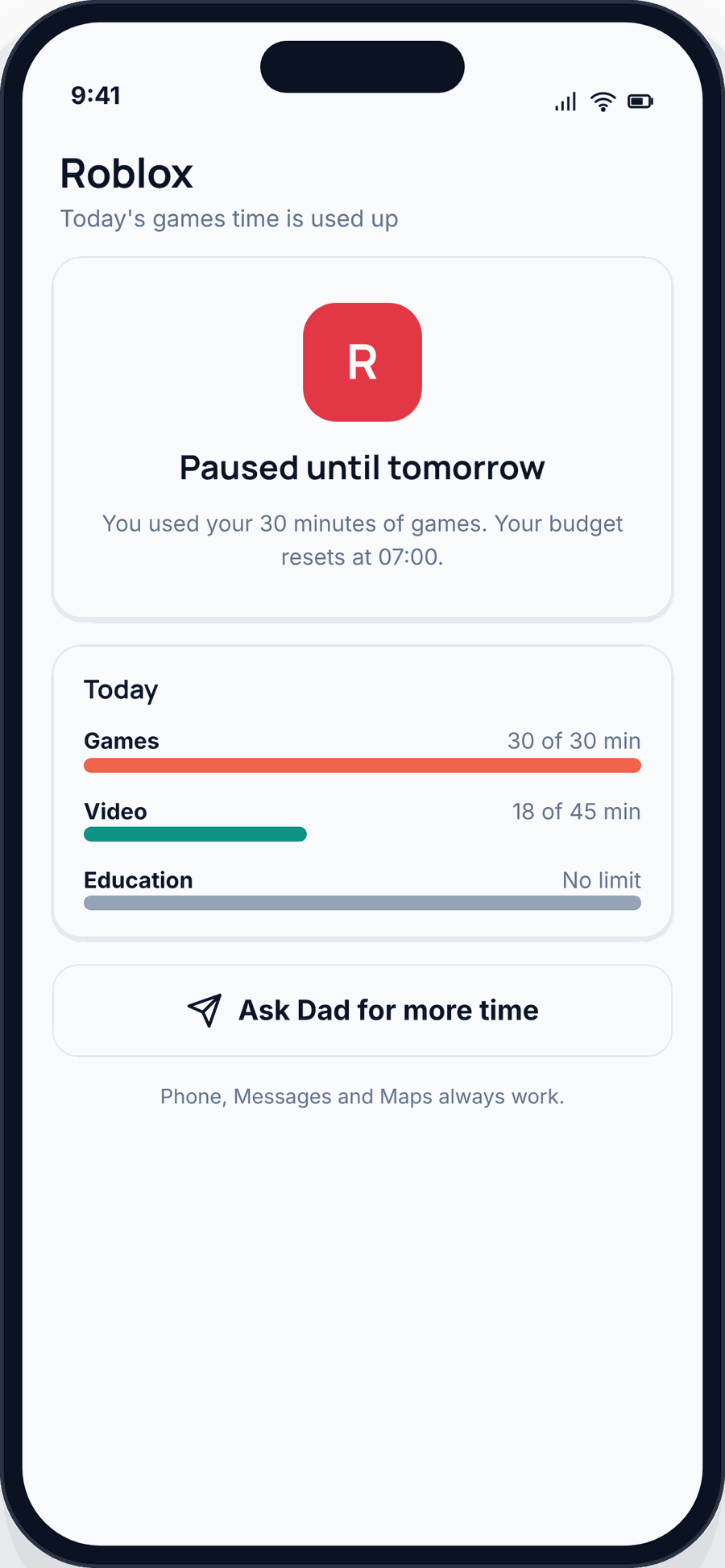
If your family decides a monitoring tool would help, it belongs firmly on the safety side of the plan, and it only works honestly. FreePhoneSpy is consent-based Android monitoring you set up openly with the child, so they know it’s there and roughly what it shows. Used well across two homes, it can carry the shared safety basics with the child — a screen-time limit that holds, a bedtime cut-off, a flag on genuinely worrying contact — so the child gets the same protection wherever they wake up. It runs from any browser and is free to start.
Two lines that don’t move. It should be set up openly with the child, and ideally with both parents aware and on board — a shared family safety tool, not something one household runs quietly. And it is never a way to watch the other home or check up on your co-parent. Point it at the child’s own safety, out in the open, with both of you in the loop, and it supports the plan you’ve built together. Use it any other way and it works against the trust the whole thing depends on.
FAQ
Do the rules really have to be identical in both homes?
No — only the non-negotiables. Agree a short list of things that must match wherever the child is, usually the safety and sleep basics like no phone in the bedroom overnight and a shared line on social media age. Everything else can vary between homes. Naming which is which up front prevents most arguments, because you both know where flexibility is fine and where it isn’t.
My co-parent is much more relaxed about screens than I am. What can I do?
Start from the overlap rather than the clash. List what you already agree on — it’s usually more than it feels like — and build the shared plan from there, keeping the disputed patch as small as possible. For the genuine differences, anchor the conversation to the child’s wellbeing, pick the couple of battles that actually protect them, and let the smaller stuff differ. You’re aiming for good-enough alignment on the things that matter, not a perfect match on everything.
Our child says “but Dad lets me” all the time. How do we handle it?
Write the shared rules down so there’s a single page both homes can point to. When the plan is agreed parent-to-parent and both of you hold the same copy, the “but at Dad’s” move loses its power — the answer is the same at both houses, and the child can see it isn’t up for negotiation. It also helps to agree the plan with the child in the room, so they know it came from both of you together.
Can we share the same parental-control account across two homes?
Yes. Tools like Google Family Link let both parents be added as guardians on the same child account, so a limit set at one home applies to the child’s phone everywhere. Both parents get real access, changes sync between homes, and the child knows it’s there. Set it up openly and together — shared visibility is the whole point, and it stops the situation where only one parent knows what’s actually configured.
Should a monitoring app be used to see what happens at the other parent’s house?
No. A monitoring tool is for the child’s own safety, set up openly with the child and, ideally, with both parents aware. It is never a way to surveil your co-parent or check up on the other household. Used that way it destroys the trust that co-parenting depends on. Keep it pointed at agreed safety basics, out in the open, and it supports the plan rather than undermining it.
Co-parenting the digital side of a childhood isn’t about winning, and it isn’t about matching every rule to the minute. It’s about two homes agreeing on the few things that keep a child safe and steady, writing them down, and holding the line together even when you disagree about the rest. Get the shared basics right and the day-to-day mostly settles — because the child stops crossing a border between two rulebooks and starts living inside one plan that both the people they love agreed on.