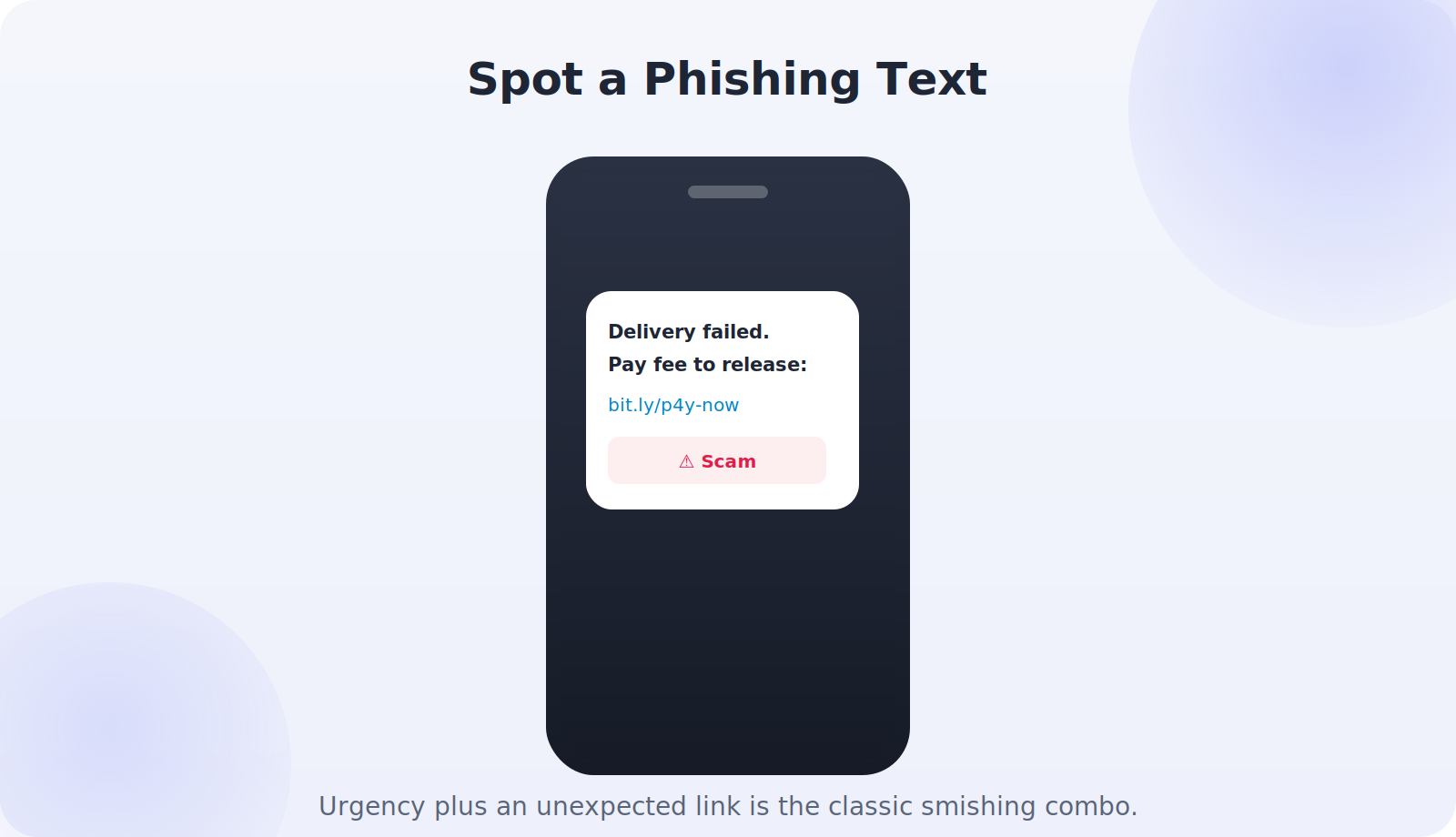
That text saying your package couldn’t be delivered, your bank account is locked, or you’ve won a prize — complete with a link to “fix it” — is one of the most common scams there is. It’s called smishing: phishing carried out over SMS text messages, designed to trick you into clicking a malicious link or handing over personal information. These scams are increasingly slick, but they almost always share telltale signs. This guide teaches you exactly how to spot a phishing or smishing text, what to do when you get one, and how to protect yourself and the people you care about.
The single most powerful protection against these scams isn’t an app or a setting — it’s your own trained eye. Scammers count on you reacting fast and trusting the surface of a message. Learn to pause and read the signs, and you flip the advantage entirely: what was designed to fool you becomes obvious almost at a glance.
Learning to recognize these messages is one of the most valuable digital-safety skills you can have, because the same warning signs apply whether the scam arrives by text, email, or chat. Once you can see the pattern, you can’t unsee it.
What Phishing and Smishing Actually Are
Phishing is any attempt to trick you into revealing sensitive information — passwords, card numbers, login codes — or into installing something harmful, usually by impersonating a organization you trust. Smishing is simply phishing delivered by SMS or messaging apps. The scammer poses as your bank, a delivery company, a government agency, or a well-known brand, and creates a sense of urgency to make you act before you think.
The goal is always the same: get you to click a link, call a number, or reply with information. The moment you understand that every one of these messages is engineered to bypass your judgment with urgency and fear, you’re already most of the way to defeating them.
The Telltale Signs of a Scam Text
Almost every phishing text carries several of these warning signs. Learn them, and you’ll spot scams in seconds.
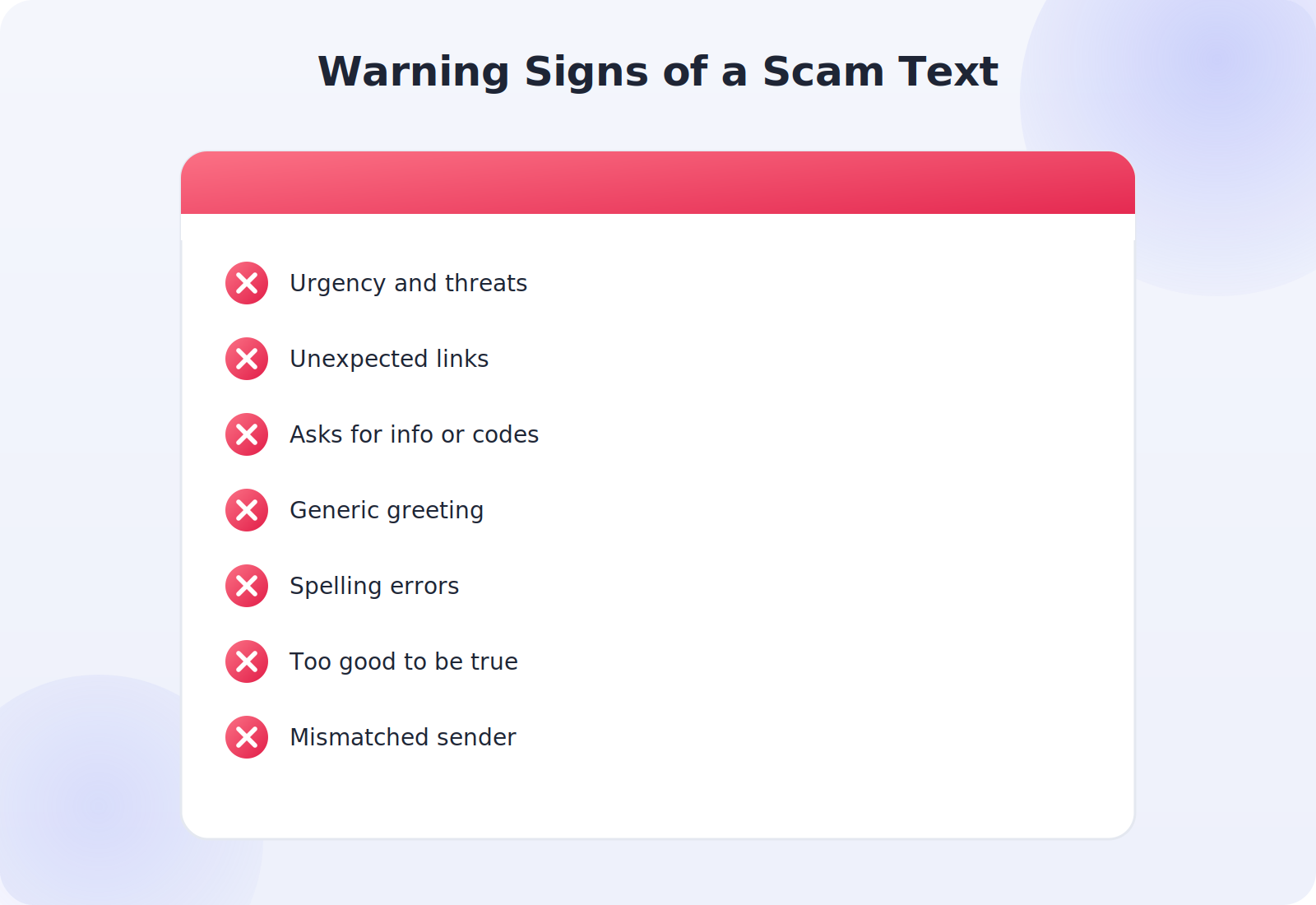
- Urgency and threats: “Act now,” “your account will be closed,” “final notice.” Pressure is the scammer’s main tool.
- Unexpected links: a link you didn’t request, often shortened or to a slightly-wrong web address.
- Requests for personal information: passwords, card details, or verification codes — which legitimate organizations never ask for by text.
- Generic greetings: “Dear customer” rather than your name.
- Spelling and grammar errors, or odd phrasing.
- Too good to be true: prizes, refunds, or offers you never entered into.
- Mismatched sender: a “bank” texting from a random mobile number.
Common Smishing Scenarios
Scammers reuse a handful of reliable scripts. Recognizing the genre helps you see through it instantly.
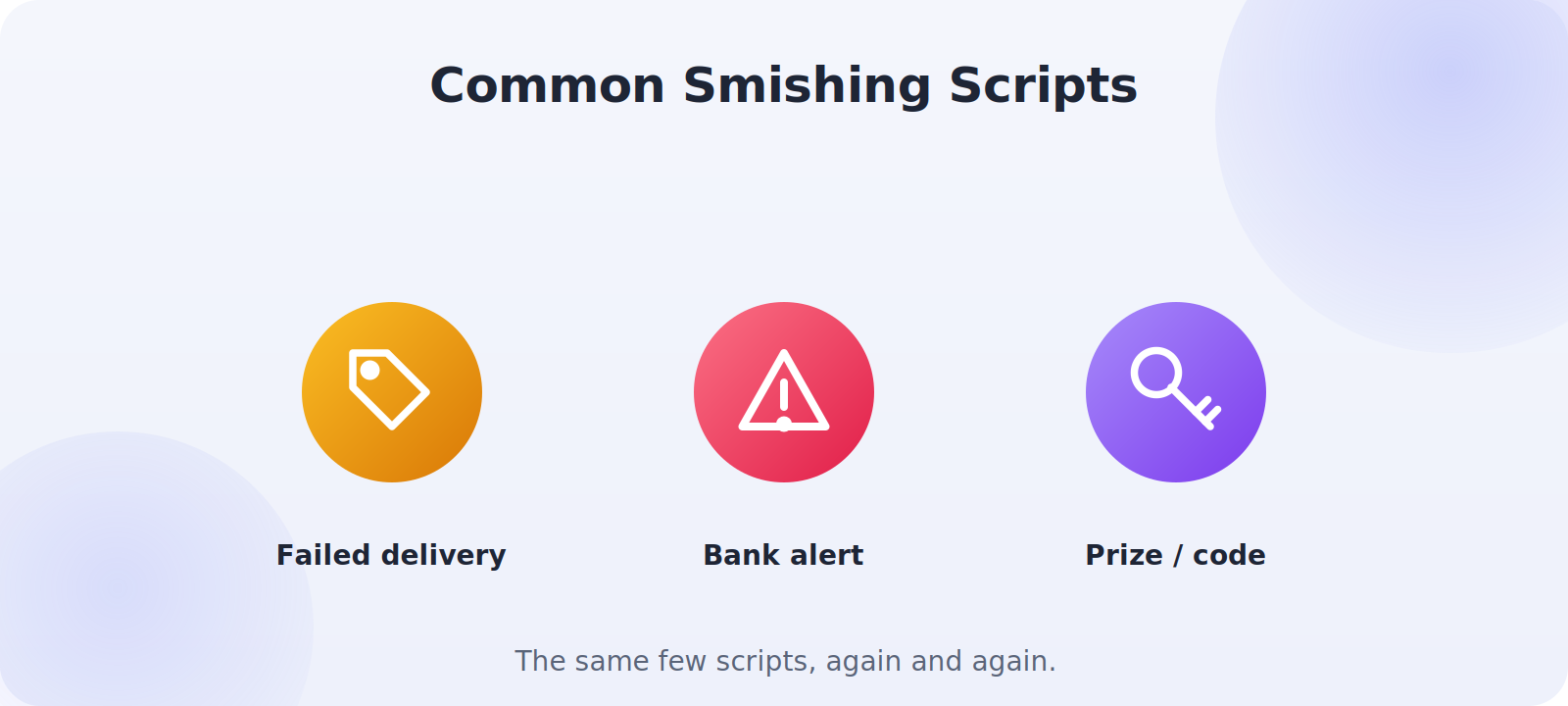
The failed delivery
“Your parcel couldn’t be delivered — pay a small fee / confirm details here.” It preys on the fact that most of us are expecting something. Real couriers don’t ask for payment or logins by text link.
The bank alert
“Suspicious activity on your account — verify immediately.” It impersonates your bank to panic you into entering your login. Banks never ask you to verify via a texted link.
The prize or refund
“You’ve won” or “you’re owed a refund — claim here.” Greed and pleasant surprise lower your guard just like fear does.
The account or code request
A message asking you to share a verification code “to confirm it’s you.” Never share a code — that’s exactly how scammers hijack your accounts.
How to Check a Suspicious Link Safely
The link is usually the trap, so treat every unexpected one with suspicion. Don’t tap it. Instead, inspect it from a safe distance:
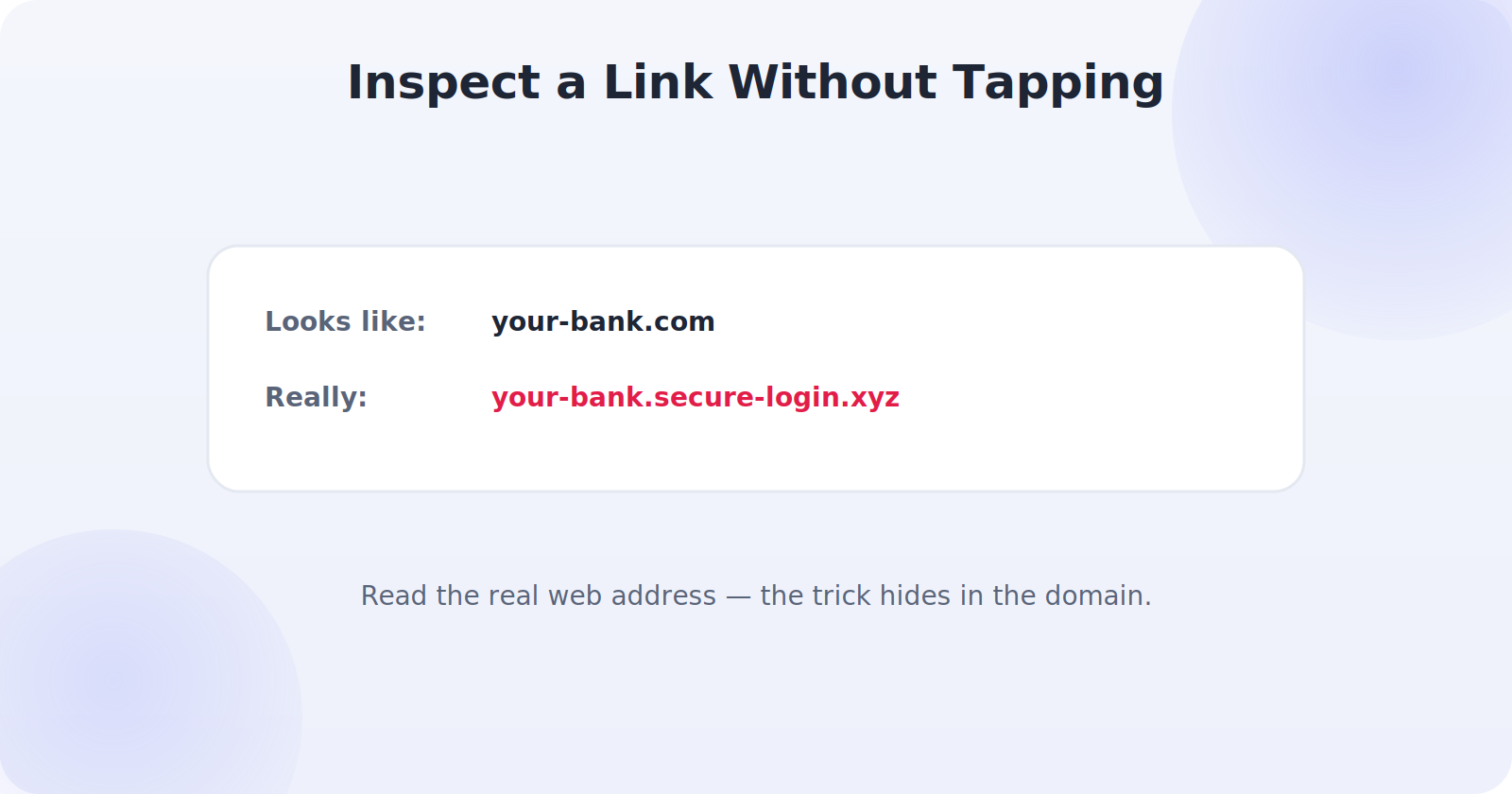
- Look at the actual web address. Scam links often use slightly-wrong spellings or extra words around a real brand name.
- Be wary of link shorteners that hide the true destination.
- Never enter credentials on a page you reached from a texted link.
- Go direct instead. If you’re unsure, open the organization’s official app or type its known web address yourself.
What to Do When You Get a Smishing Text
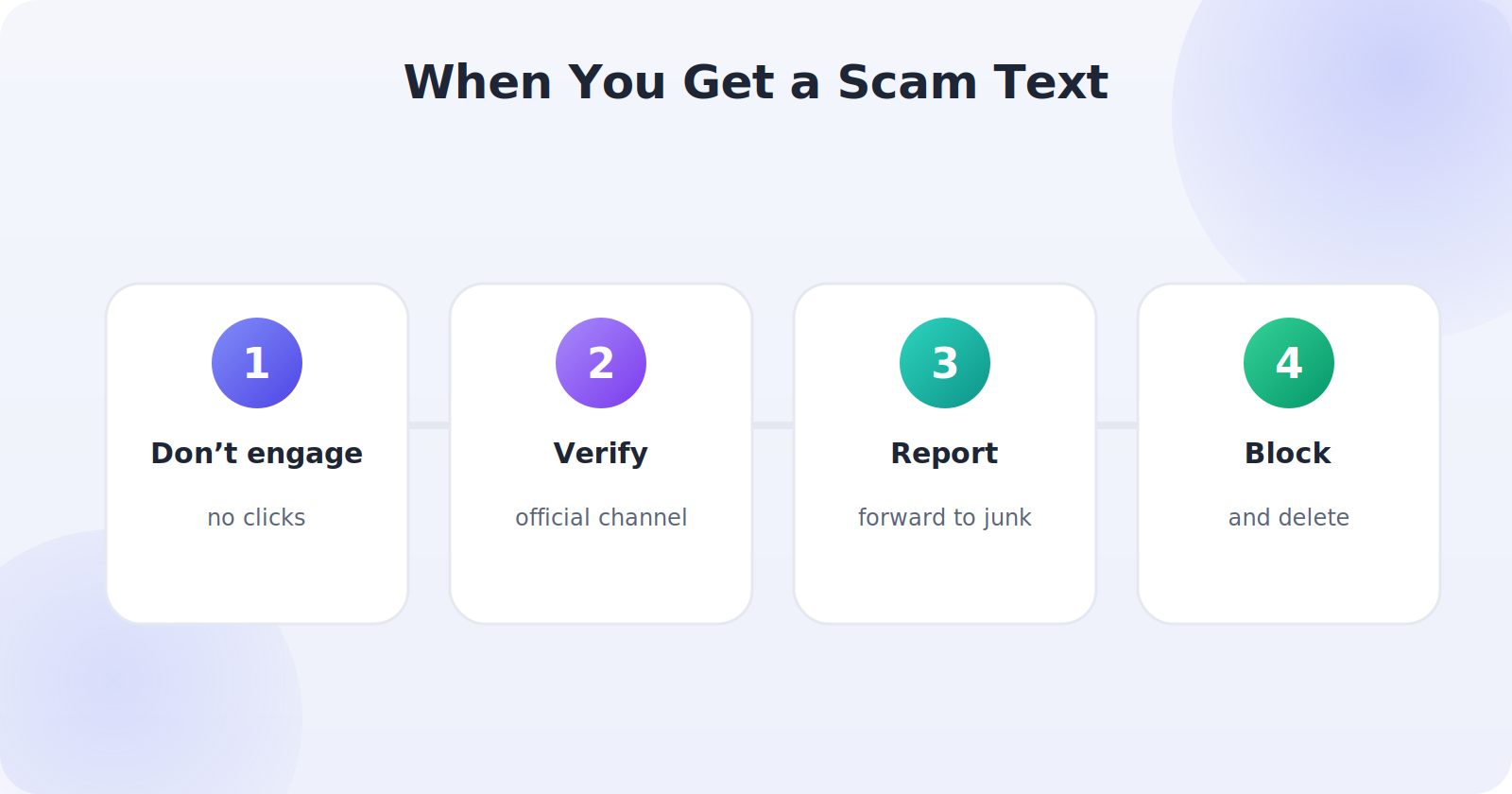
Your response is simple and powerful. Don’t click, don’t reply, don’t call the number it gives. If it claims to be from an organization you use, contact that organization directly through their official app or website to check — never through the message. Then report and delete it.
- Don’t engage: no clicks, no replies, no calling back.
- Verify independently if you’re worried it might be real, using official contact details you find yourself.
- Report it: most countries and carriers let you forward scam texts to a reporting number, and your phone can mark it as junk.
- Block the sender and delete the message.
Protecting Yourself and Others
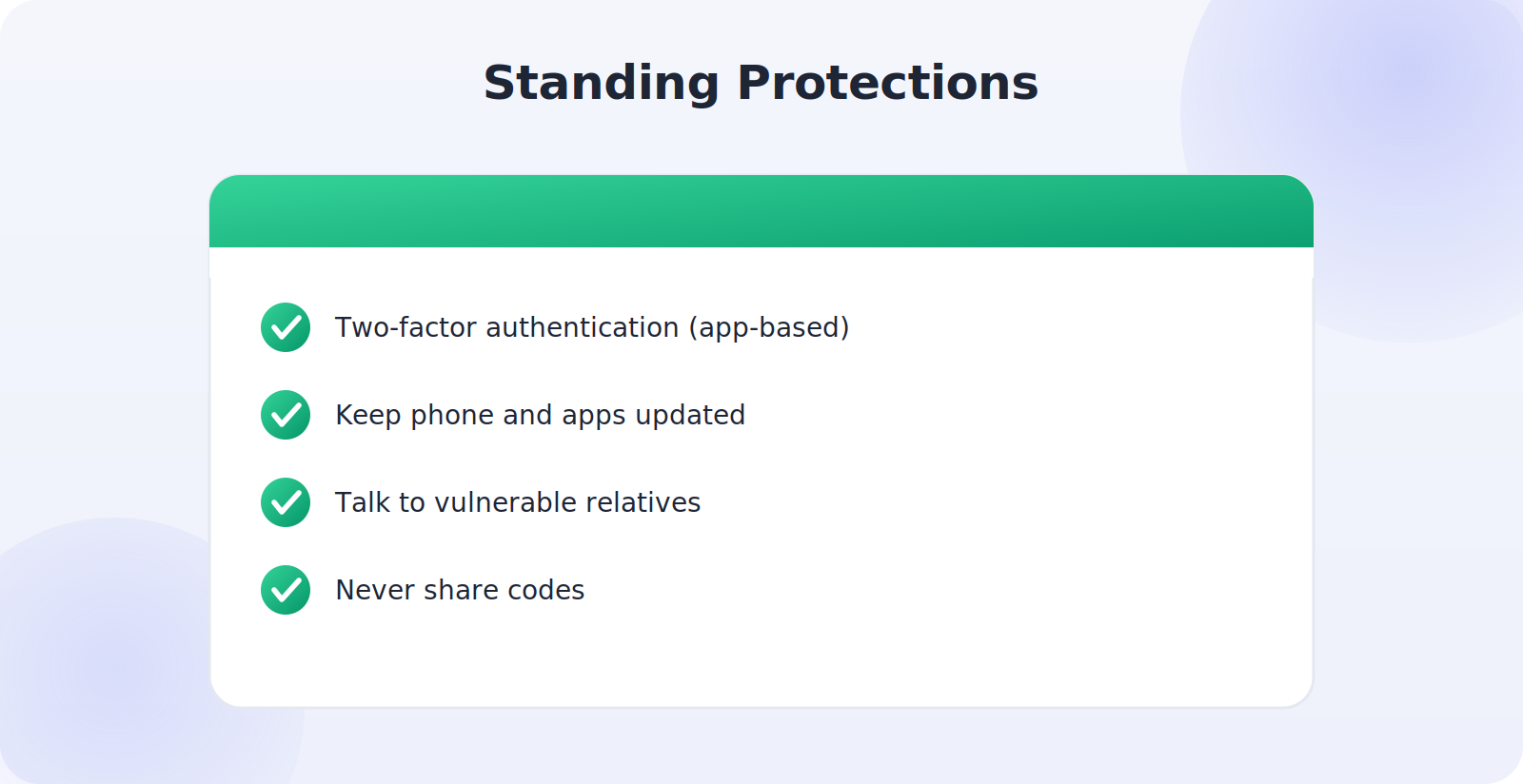
A few standing protections make smishing far less dangerous. Enable two-factor authentication on your important accounts, ideally using an authenticator app rather than SMS, so a stolen password isn’t enough to get in. Keep your phone and apps updated. And talk to the people in your life who may be more vulnerable to these scams — older relatives, younger family members — since awareness is the single best defense. A quick conversation about “never click links or share codes from unexpected texts” can save someone real money and stress.
If You’ve Already Clicked or Shared Information
If you realize too late that you tapped a link or entered details, act quickly but calmly. Change the password for any account whose details you entered, starting with your email. If you shared card details, contact your bank immediately to flag potential fraud. Turn on two-factor authentication where you haven’t already. And watch your accounts for unusual activity over the following weeks. Acting fast limits the damage, and it’s far better to assume the worst and secure things than to hope it was nothing.
Why These Scams Work on Smart People
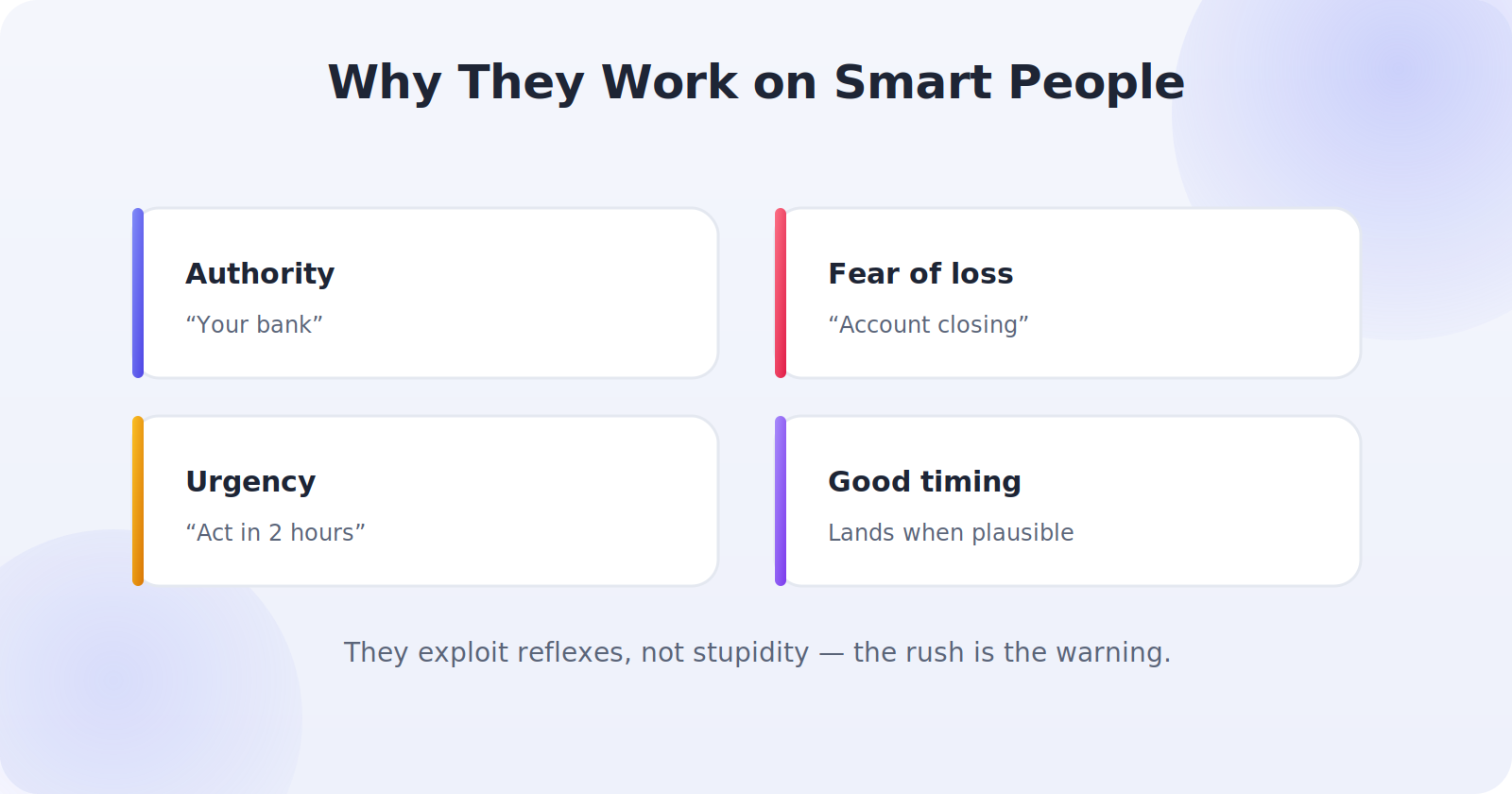
It’s a mistake to think only the careless fall for phishing. These scams are engineered by professionals to exploit universal human reflexes, not stupidity. They hijack your instinct to respond to authority (a message from “your bank”), your fear of loss (“your account will be closed”), and your response to urgency (“act within two hours”). Under time pressure, even careful people act before they analyze — which is exactly the state the scammer is trying to induce. Recognizing this is itself a defense: the very feeling of being rushed should trigger suspicion rather than action.
Scammers also exploit timing and plausibility. A fake delivery text lands when you actually are expecting a parcel; a fake bank alert arrives looking like the dozens of real notifications you receive. They cast a wide net knowing that, for some recipients, the lie will happen to align with reality. Understanding that you’re being targeted by probability, not by someone who knows your life, helps you stay skeptical of even a well-timed, convincing message.
Phishing Beyond Text: Email and Calls
The same playbook shows up across every channel, so the skills you build here protect you broadly. Email phishing uses the identical tricks — urgent subject lines, spoofed senders, malicious links and attachments. Voice phishing, or “vishing,” brings it to phone calls, with a caller posing as your bank or a government agency and pressuring you for information or payment. The medium changes; the manipulation doesn’t.
Because the warning signs are consistent — unexpected contact, urgency, requests for sensitive information, pressure to bypass official channels — learning to spot smishing makes you better at spotting all of it. Whenever any message or call pushes you to act fast and share something sensitive, the safest response is always the same: stop, don’t engage, and verify independently through a channel you trust. That single habit defeats the whole family of scams.
Teaching the Skill to Others
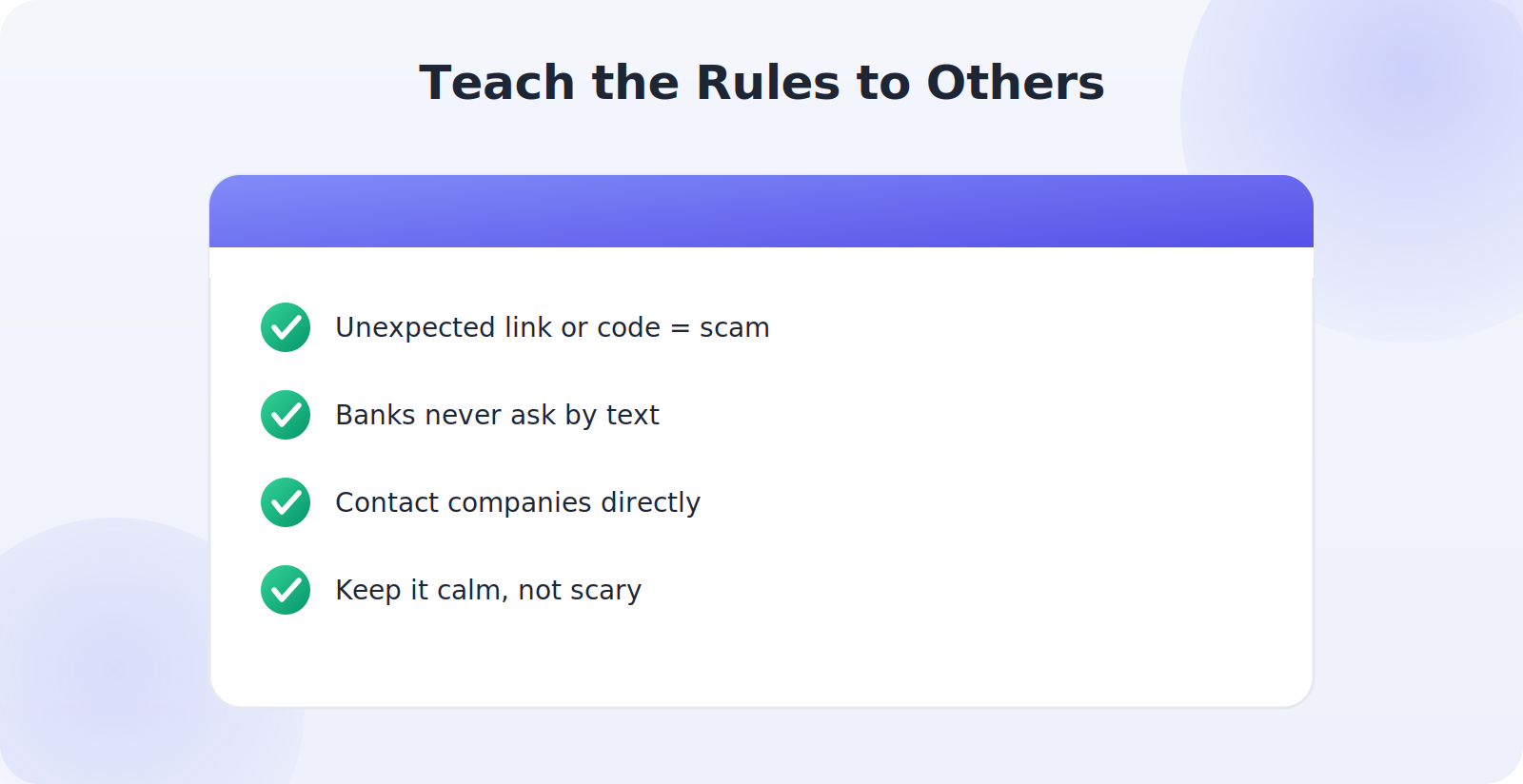
One of the most valuable things you can do with this knowledge is pass it on, because scammers deliberately target those least familiar with the tricks. Have a relaxed conversation with older relatives and younger family members about the golden rules: unexpected texts asking you to click a link or share a code are almost always scams; legitimate organizations never ask for passwords or verification codes by text; and when in doubt, contact the company directly rather than through the message. Keep it simple and non-alarming — the goal is confidence, not fear. A single such conversation can spare someone you love a genuinely costly mistake, and it spreads the one defense that scammers can’t engineer around: an informed, slightly skeptical human on the other end.
Common Mistakes to Avoid
- Clicking the link “just to check” — that’s the trap.
- Replying, even to say “stop”, which confirms your number is active.
- Sharing a verification code with anyone, ever.
- Trusting the sender name when the message itself is suspicious.
- Acting on urgency instead of verifying through official channels.
Frequently Asked Questions
Can I get hacked just by receiving a text?
Receiving and reading a text is generally safe. The risk comes from clicking links, replying, or sharing information. Don’t interact — report and delete instead.
How can I report a smishing text?
Most countries and carriers let you forward scam texts to a dedicated reporting number, and your phone can mark a message as junk. Reporting helps shut the operations down for everyone.
What is the difference between phishing and smishing?
Phishing is any attempt to trick you into giving up information or installing something harmful, usually by impersonating a trusted organization. Smishing is phishing delivered specifically by SMS text message.
Is it dangerous to just open a scam text?
Simply reading a text is generally safe — the danger comes from clicking links, replying, or sharing information. Don’t interact with it; report and delete it instead.
Should I reply “STOP” to a spam text?
No. Replying, even to opt out, confirms your number is active to scammers. Just block, report, and delete.
Quick Takeaways
- Smishing is phishing by text — designed to rush you into clicking or sharing.
- Watch for urgency, unexpected links, and requests for info or codes.
- Never tap the link or share a verification code.
- Verify with the organization directly through official channels.
- Report, block, and delete — and enable two-factor authentication.
Trust Your Instincts
Above all the specific signs, learn to trust the small voice that says something feels off. That instinct — the flicker of doubt when a message is unexpectedly urgent, oddly worded, or asks for something it shouldn’t — is often faster than conscious analysis, and it’s rarely wrong. When you feel it, stop. Don’t tap, don’t reply, don’t call the number. Take a breath and verify through a channel you already trust. Scammers engineer their messages to override exactly that hesitation, so honoring it — treating your own doubt as reason enough to disengage — is one of the most reliable defenses you have.
The Bottom Line
Phishing and smishing texts rely on catching you off guard with urgency and fear, but once you know the warning signs — unexpected links, pressure, requests for information or codes, mismatched senders — they become easy to spot. The golden rule is simple: don’t click, don’t reply, and verify anything important through the organization’s official channels rather than the message. Report and delete the rest, enable two-factor authentication, and share what you know with the people you care about. Stay calm, stay skeptical, and these scams lose their power.