Few travel moments are as sinking as standing at the baggage carousel watching the last suitcase go by — and it isn’t yours. Lost and delayed luggage is one of travel’s most common headaches, but a cheap Bluetooth tracker tucked in your bag can transform the experience. Suddenly you can see where your suitcase actually is, prove to the airline it’s sitting in another city, and often recover it far faster. This guide shows you how to track your luggage while traveling, from choosing and placing a tracker to using it effectively at the airport and beyond.
What makes this such a smart upgrade is the asymmetry: a tracker costs very little, yet the problem it solves — a lost bag full of your clothes, gear, and essentials far from home — is one of travel’s most stressful and expensive. Spending a few dollars to take that worry off the table is the kind of trade experienced travelers make without a second thought.
Whether you’re a nervous flyer who checks a bag once a year or a frequent traveler tired of delayed-baggage roulette, a tracker is one of the highest-value travel upgrades you can make for the price.
Why Track Your Luggage
A tracker gives you information the airline often can’t or won’t provide quickly, and that information is powerful:
- Peace of mind: you can confirm your bag was loaded and is traveling with you.
- Proof for the airline: if your bag is delayed, you can show exactly where it is, which speeds up recovery.
- Faster reunions: travelers routinely find their “lost” bag before the airline does.
- Less anxiety: knowing where your belongings are removes a big source of travel stress.
Choosing the Right Tracker for Travel
For luggage, a few tracker qualities matter more than usual. You want strong network coverage so your bag can be located in airports and cities worldwide, decent battery life so it lasts a long trip, and a slim shape that tucks into a bag without taking space. AirTags are popular with travelers for Apple’s dense finding network; Samsung SmartTags suit Galaxy users; and cross-platform or Google-network tags work well for Android. Whichever you pick, make sure it’s set up and tested before you leave home.
Where to Place the Tracker
Placement matters for both reception and security. Put the tracker somewhere inside the bag where it won’t be crushed or fall out, but not so buried that its signal is heavily muffled by dense contents. A good spot is an inner pocket near the top, or clipped to an internal strap. Avoid attaching it visibly to the outside, where it could be removed. Slip it in, zip up, and it travels quietly with your belongings.
Before You Fly: A Checklist
A little preparation makes the tracker genuinely useful when it counts.
- Charge or check the battery so it lasts the whole trip.
- Confirm it’s paired and appears in your tracker app.
- Test the location before you leave for the airport.
- Note your bag’s appearance and add a luggage tag as backup.
- Keep your phone charged so you can check the tracker on arrival.
Using the Tracker at the Airport
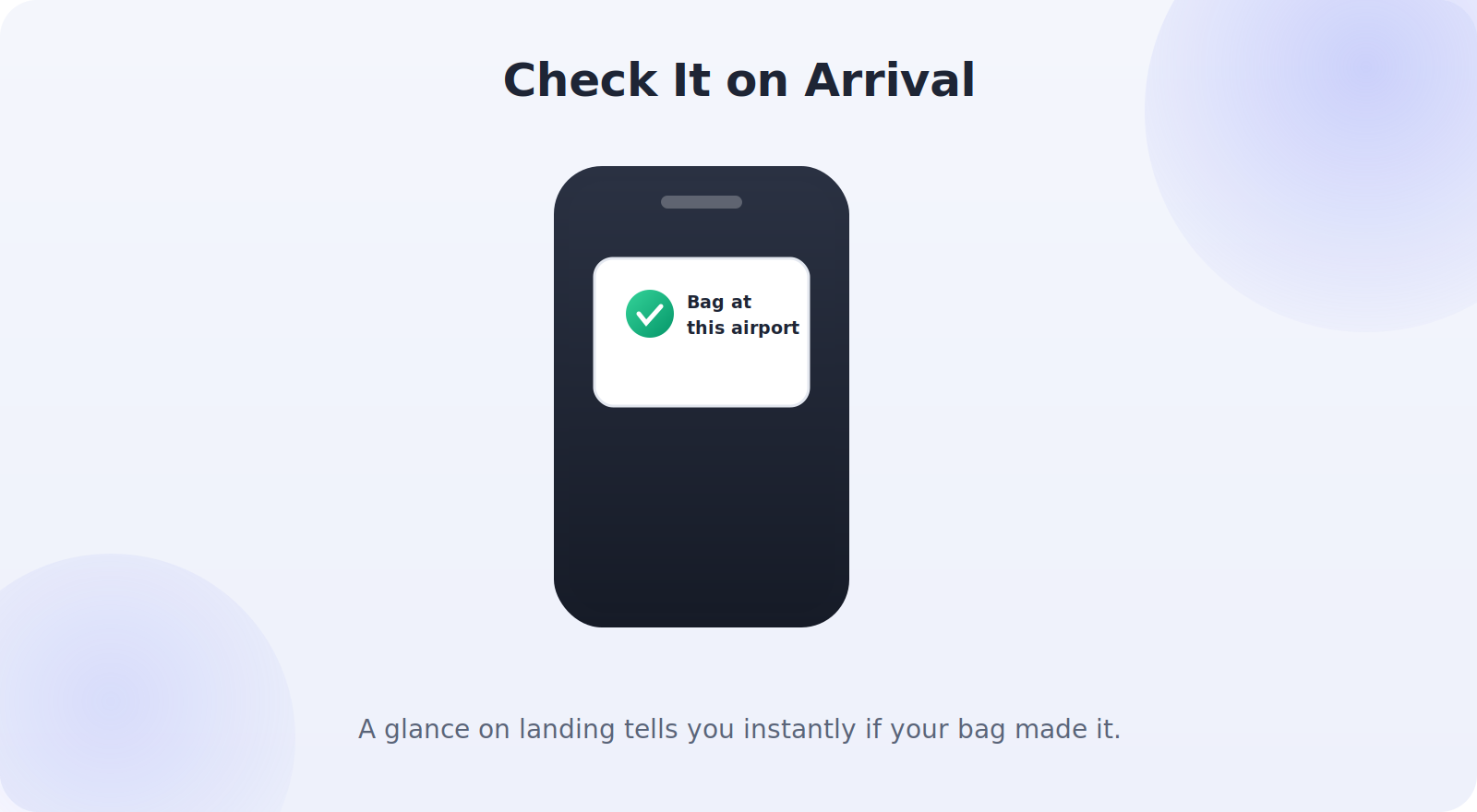
Once you’re traveling, the tracker becomes your private baggage-status system. After you check your bag, you can glance at your phone to confirm it’s moving with the aircraft. On landing, check the tracker as you head to the carousel — if it shows your bag is still at the origin airport or somewhere unexpected, you know immediately, before you’ve wasted an hour waiting. That head start is exactly what helps travelers resolve baggage problems quickly.
If Your Bag Goes Missing
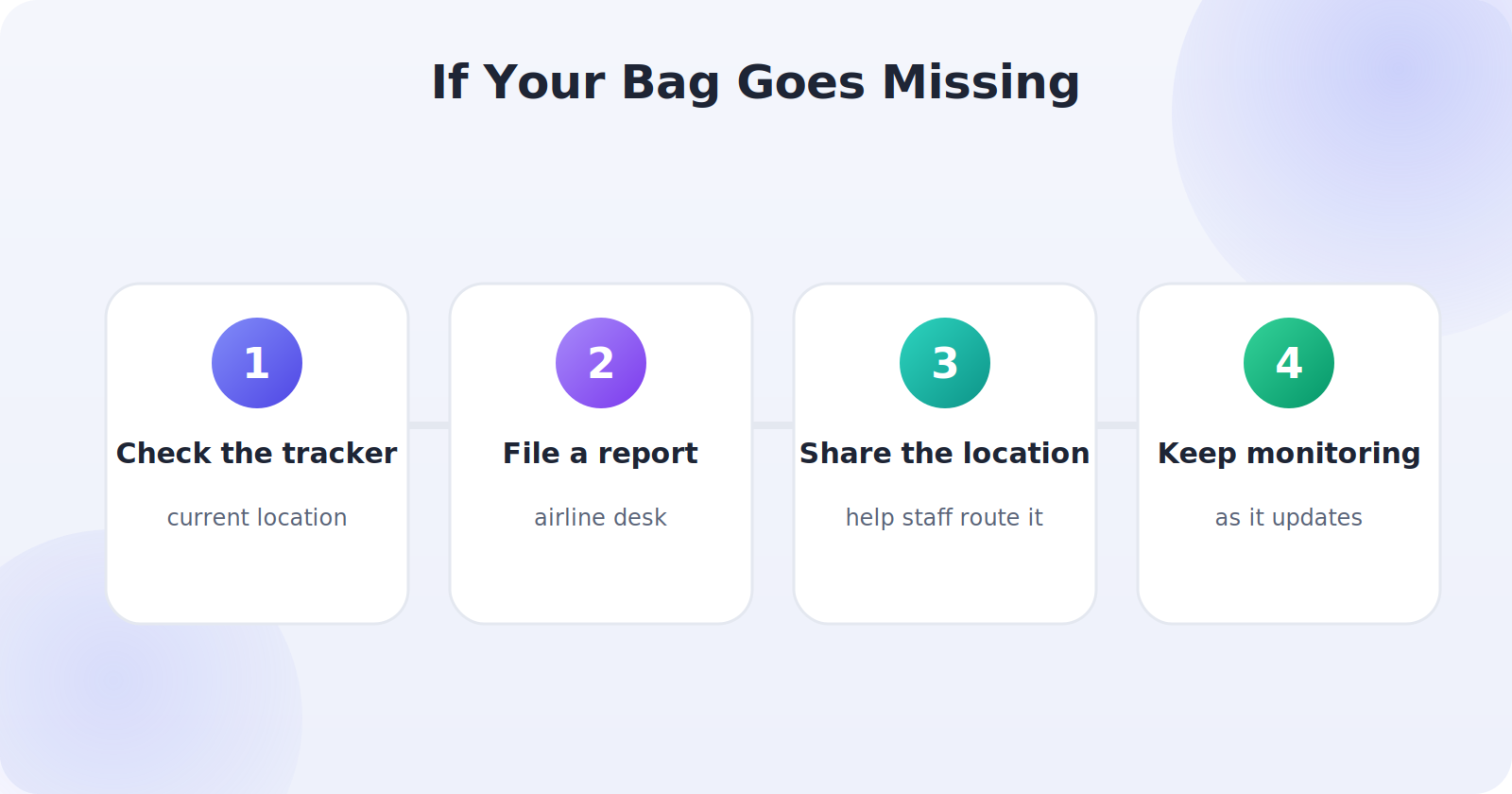
If your luggage doesn’t arrive, the tracker changes the whole conversation with the airline. Instead of a vague “we’ll look into it,” you can calmly show baggage staff exactly where your bag is on the map.
- Check the tracker to see your bag’s current or last known location.
- File a report with the airline’s baggage desk right away, as required for any claim.
- Share the location information you have, which can help staff locate and route your bag.
- Keep monitoring the tracker as the network updates the bag’s position.
Airline Rules and Batteries
A quick practical note: Bluetooth trackers use small coin-cell batteries that are generally permitted in checked luggage, and airlines have broadly accepted their use. Rules can vary and occasionally change, so if you’re flying somewhere with strict regulations, it’s worth a quick check of your airline’s current guidance. For virtually all travelers, though, a standard coin-cell tracker in a checked bag is both allowed and hugely useful.
Beyond the Airport
Luggage trackers aren’t just for flights. They’re equally handy for a checked bag on a long train journey, a suitcase handed to a hotel porter, or bags loaded onto a tour coach. Anytime your belongings leave your hands and travel separately, a tracker lets you keep a quiet eye on them. For frequent travelers, leaving a tracker permanently in each regularly-used bag means you’re always covered without a second thought.
Real Scenarios Where a Tracker Saves the Day
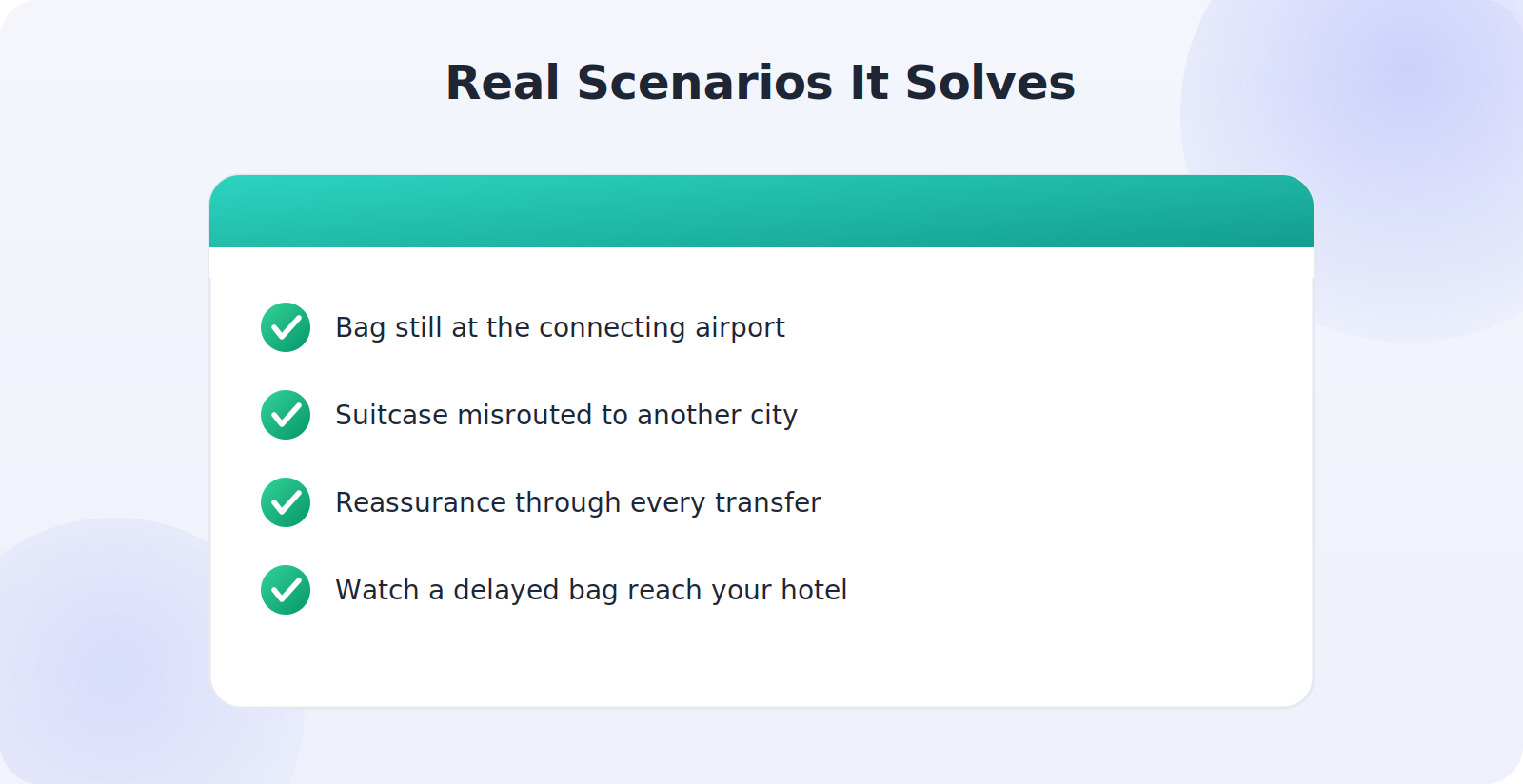
It helps to picture the specific moments a luggage tracker earns its keep, because they’re more common than you might hope. Imagine landing after a connecting flight and, while everyone else waits hopefully at the carousel, you glance at your phone and see your bag is still sitting at the airport you connected through — you head straight to the baggage desk with proof, ahead of the crowd. Or picture a bag misrouted to the wrong city: the tracker shows you exactly where it went, turning a vague airline investigation into a specific, solvable problem.
There are gentler wins too. On a long trip with multiple transfers, simply confirming at each stage that your bag is traveling with you removes a low hum of anxiety that would otherwise follow you the whole journey. And if a bag is ever delayed and then delivered to your hotel, you can watch it make its way to you rather than waiting blindly. In each case, the tracker doesn’t just help recover a bag — it replaces uncertainty with calm, which is worth a great deal when you’re far from home.
Tracking Carry-On and Valuables Too
Checked luggage gets the attention, but trackers are just as valuable for carry-on bags and the valuables inside them. A tracker in your day bag or laptop bag means that if you leave it at a security checkpoint, in a lounge, or on the plane, you can locate it quickly. Given how easy it is to set a bag down and walk off in the bustle of travel, this quiet backup can save you from losing expensive electronics or important documents.
The same goes for items you carry loose, like a camera bag or a child’s backpack on a family trip. Slipping an inexpensive tracker into each one means the whole family’s belongings are accounted for, and a misplaced bag becomes a quick find rather than a trip-ruining loss. For the small cost involved, covering your carry-ons and valuables as well as your checked luggage is an easy call for anyone who travels with things they’d hate to lose.
Building Tracking Into Your Travel Habits
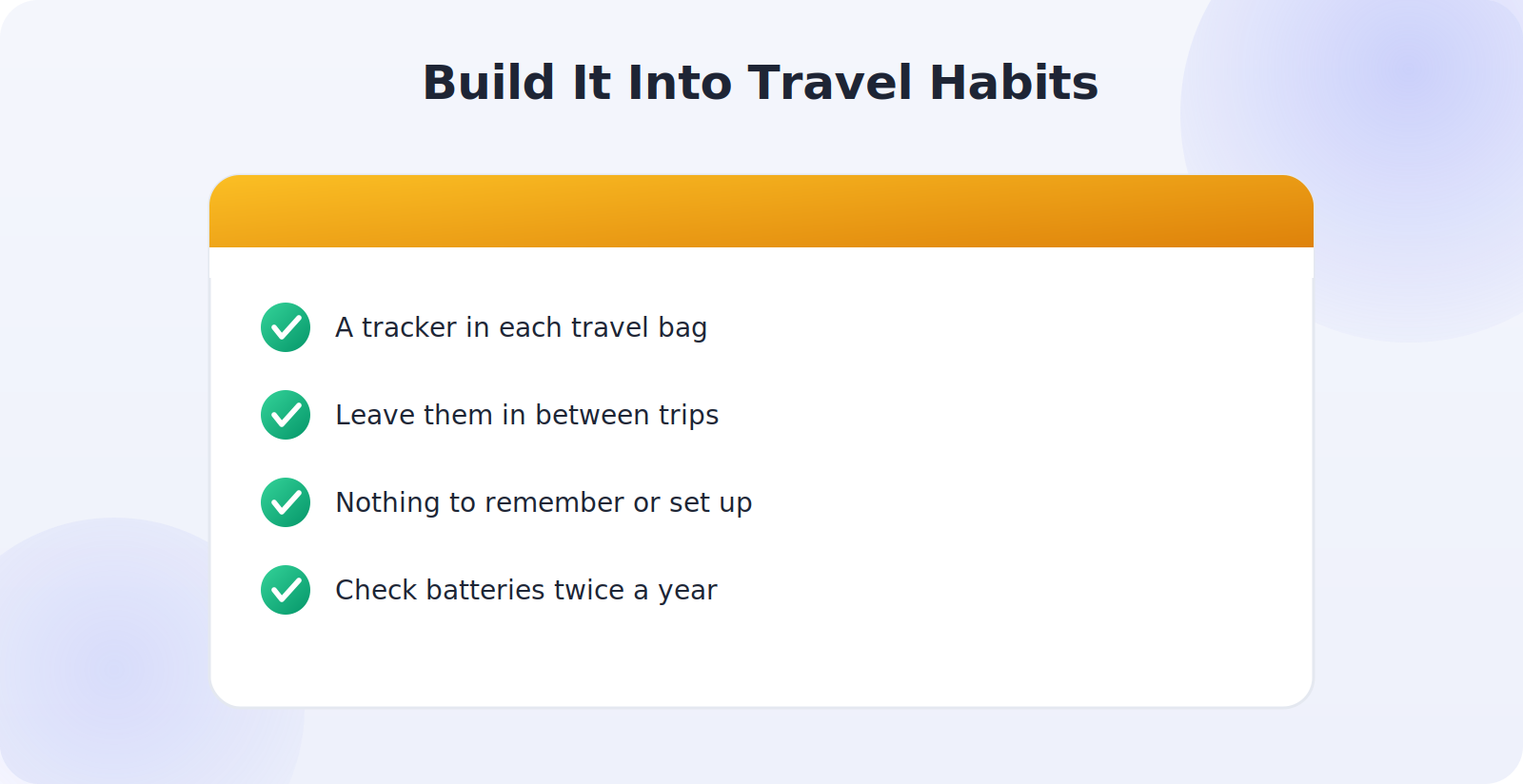
For anyone who travels more than occasionally, the smartest move is to make tracking a permanent, effortless habit rather than a per-trip task. Buy a tracker for each bag you regularly travel with — your main suitcase, your carry-on, perhaps a garment bag — and simply leave it there between trips. That way there’s nothing to remember and no last-minute setup; every bag is always covered the moment you pack it. Check the batteries a couple of times a year, perhaps when the seasons change, and you’re set. This “fit and forget” approach means the one time you’d otherwise have forgotten to add a tracker — a spontaneous trip, a last-minute packing scramble — is exactly the time you’re still protected. Frequent travelers who adopt this habit find that lost-luggage anxiety, once a regular companion of air travel, quietly disappears from their lives. The bags simply travel with an invisible safety net, and the traveler gets to relax and enjoy the journey instead of watching the carousel with dread.
Common Mistakes to Avoid
- Forgetting to test the tracker before the trip.
- Letting the battery run low right before travel.
- Attaching it visibly outside the bag where it can be removed.
- Burying it so deep that the signal is heavily muffled.
- Relying on the tracker alone instead of also filing an airline report.
Frequently Asked Questions
Will the tracker interfere with the plane?
No — Bluetooth trackers are low-power devices, and airlines have broadly accepted their use in luggage. They’re designed to coexist with aircraft systems, similar to the many other Bluetooth devices passengers carry.
How do I know if my bag was actually loaded?
Check the tracker after boarding and again on landing. If it moved with the aircraft and shows at your destination, it was loaded; if it’s still at the origin, you’ll know immediately and can act before wasting time at the carousel.
Are Bluetooth trackers allowed in checked luggage?
Generally yes — their small coin-cell batteries are typically permitted, and airlines have broadly accepted them. Rules can vary, so check your airline’s current guidance if you’re unsure.
Will a tracker work at an airport in another country?
If it uses a large finding network like Apple’s or Google’s, yes — other travelers’ phones passing nearby can relay your bag’s location, which works well in busy international airports.
Does a tracker replace filing a lost-baggage report?
No — always file the airline’s report too, as it’s required for claims. The tracker complements it by showing where your bag actually is, speeding up recovery.
Quick Takeaways
- A tracker gives you proof and peace of mind the airline often can’t.
- Choose one with strong network coverage and good battery life.
- Place it inside the bag, secure but not deeply buried.
- Check it on landing to know instantly if your bag made it.
- If a bag goes missing, show staff the location and file a report.
Think of a luggage tracker as cheap insurance against one of travel’s most reliable frustrations. It doesn’t stop a bag from being misrouted, but it hands you the one thing that resolves the problem fast: knowing exactly where your belongings are. That knowledge, at the moment you most need it, is what makes the small purchase feel enormous. Seasoned travelers rarely regret adding one to their bags; the only regret tends to be the trip they took before they started.
The Bottom Line
For the price of a takeaway meal, a Bluetooth tracker in your suitcase transforms the anxiety of checked luggage into calm confidence. Choose one with good network coverage, place it securely inside, and test it before you leave. On arrival, a glance at your phone tells you whether your bag made it — and if it didn’t, you can show the airline exactly where it is and get it back faster. It’s one of the smartest, cheapest travel upgrades there is, and after your first delayed bag, you’ll never fly without one again. For the cost of a coffee and a coin-cell battery, you buy yourself calm at the one moment of travel that reliably ruins trips — a trade worth making on every journey.