How to Talk to Your Teen About Sexting
It’s one of those subjects that makes most parents go quiet. But your teen is far safer knowing they can talk to you about intimate images than learning about it alone, from friends, or the hard way. You don’t need to be an expert. You need to be someone they’ll come to.
What sexting actually means
Sexting is sending or receiving intimate images or sexual messages, usually by phone. Sometimes it’s a photo. Sometimes it’s words. It can happen between two people in a relationship, between people who’ve only ever met online, or in a group chat where an image gets passed around.
You don’t need graphic detail to talk about this well, and neither does your teen. The point isn’t to describe it. The point is that they understand what it is, why it carries real risk, and that they can bring any of it to you.
It also helps to name it plainly rather than in whispers. When a subject is treated as unspeakable at home, teens learn to keep it away from home. A calm, matter-of-fact tone tells them the opposite: this is something we can talk about like adults.
Why teens do it
It rarely comes from nowhere. Teens send images for reasons that make sense from the inside, even when the risk is real. Understanding those reasons helps you talk without judging.
- Someone they like asked, and saying no felt like it might cost them the relationship.
- It felt flirty, exciting, or like a way to feel wanted.
- Everyone seemed to be doing it, so it felt normal.
- They were pressured, worn down, or told “if you trusted me you would.”
- They wanted to feel grown-up, or to hold someone’s attention.
Notice how many of those are about connection and pressure, not recklessness. A teen who sends an image is usually not being foolish. They’re being human, in a situation adults find hard too. Keep that in mind, because it changes how the conversation goes.
The law, in plain terms
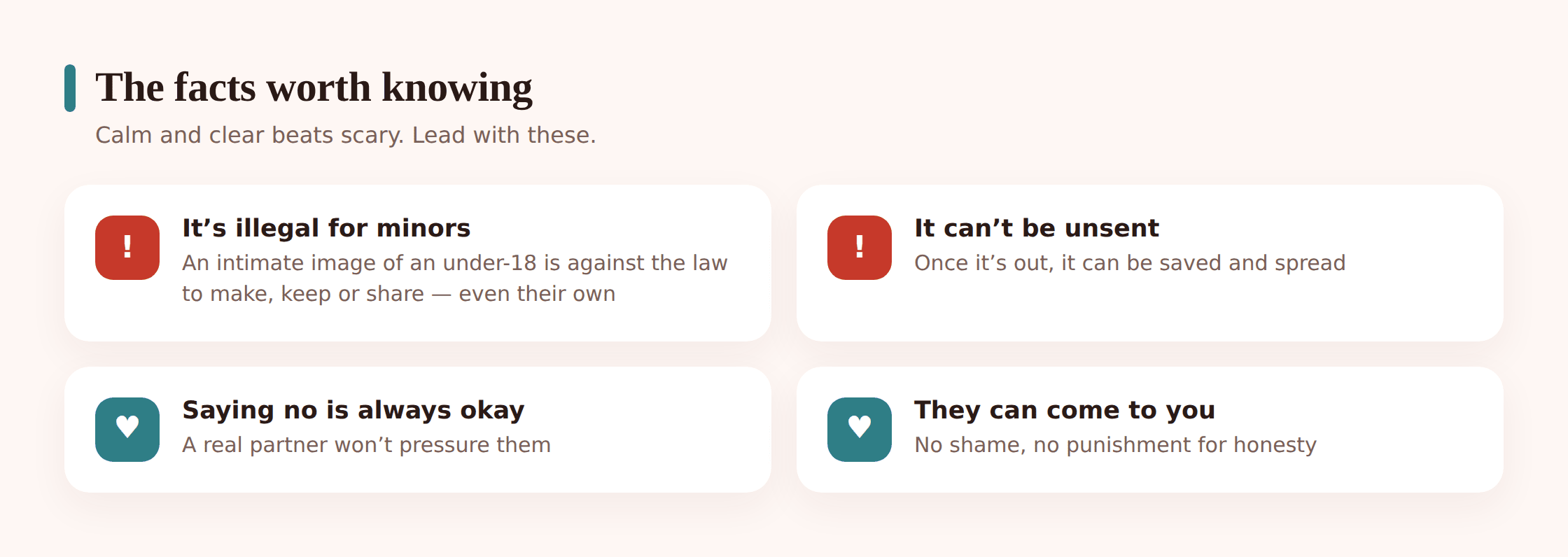
Here’s the part many teens genuinely don’t know, and it’s worth saying clearly. An intimate image of anyone under 18 is treated as child sexual abuse material under the law in many countries. That means it can be illegal to make it, to keep it, or to share it.
The hard part for teens to grasp: this can apply even when the image is of themselves, even when it was shared willingly, and even when both people are the same age. The law was written to protect children from exploitation, and it doesn’t carve out an exception because two 16-year-olds trusted each other.
Consequences vary a lot by country and even by region, and enforcement against teens differs widely — many places focus on protecting young people rather than prosecuting them, especially when there was no coercion. This isn’t legal advice, and it isn’t meant to terrify anyone. The aim is simpler: your teen should know that an intimate image of a minor is a serious thing in the eyes of the law, so the decision feels weightier than a passing message.
This section is general information, not legal advice. Laws differ between countries and states, and how they’re applied to young people varies. If you’re facing a specific situation, a local lawyer or a child-protection helpline can give guidance for where you live.
What really happens once an image exists
Set the law aside for a moment. The most useful thing a teen can understand is this: the second an image leaves their hands, they no longer control it.
A photo sent to one trusted person can be screenshotted. It can be saved, forwarded, or shown to friends. A relationship that felt safe can end badly, and an image can become a weapon. In the worst cases, an image is used to threaten someone — pay up, send more, or do what I say, or I’ll share this. That’s sextortion, and it’s more common than most parents realise.
If your teen is ever in that situation, the response matters enormously, and there’s a full guide to it here: what parents need to know about sextortion. The short version is calm and firm: don’t pay, don’t panic, keep the evidence, and get help. We’ll come back to the steps below.
The other quiet risk is time. An image doesn’t expire. Something sent at 15 can resurface later, in a new friendship group, a new school, or years on. Teens live very much in the present, so it helps to gently make the future real: this doesn’t disappear the way a spoken word does.
Prevention: consent, confidence, and “no image, no leverage”
Prevention isn’t a list of bans. It’s building a teen who feels able to say no and knows why it’s a reasonable thing to say. A few ideas do most of the work.
- No image, no leverage. If an image never gets made, it can never be shared, screenshotted, or used against them. It’s the one guaranteed protection, and it’s worth naming plainly.
- Saying no is always okay. Not “no, because you’ll get in trouble,” but “no, because you don’t owe anyone your body, ever, for any reason.” A no needs no justification.
- A real partner won’t pressure you. Anyone who keeps pushing after a no, or who frames it as a test of love or trust, is telling you something important about themselves. Pressure is the warning sign, not the compliment it pretends to be.
- Be careful even with someone you trust. This is the gentle one. Most images are shared with someone the teen genuinely trusted at the time. Trust is real, and it can also change.
Frame all of this around confidence rather than fear. A teen who feels sure of their own right to say no is far better protected than one who’s simply scared of getting caught.
How to talk about it without shame
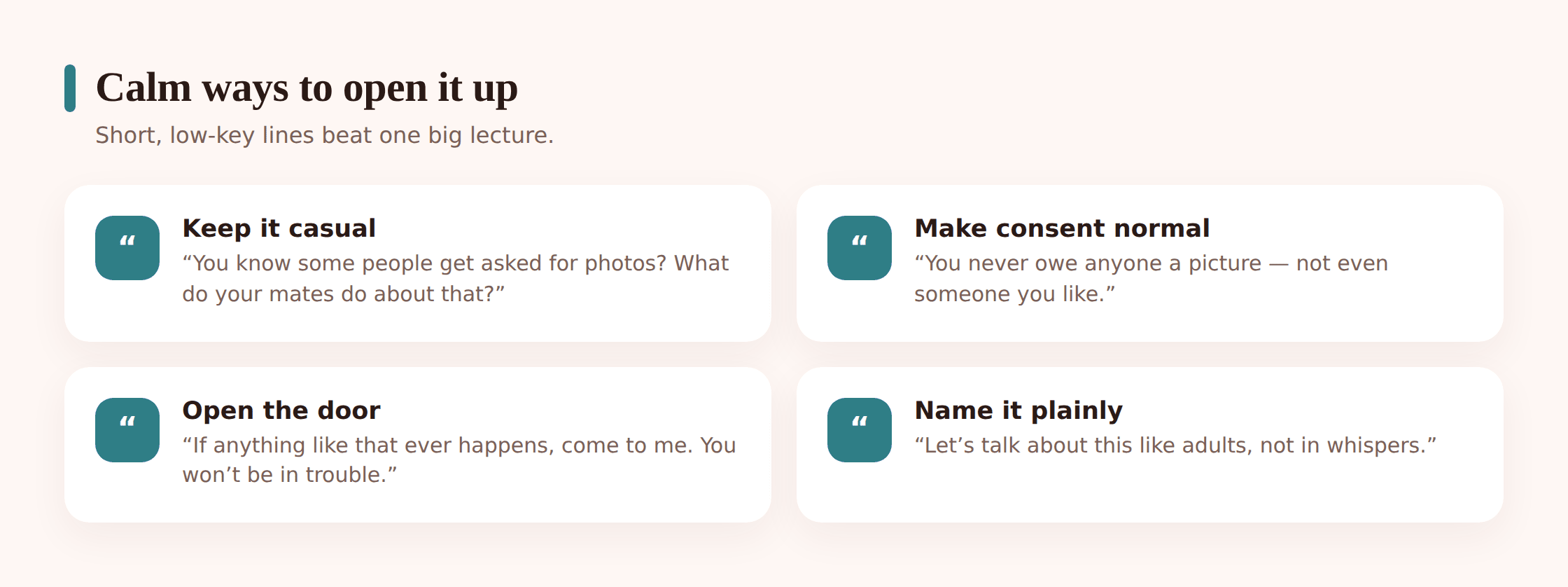
This is the heart of it. The goal isn’t one big, dramatic talk. It’s a series of small, low-stakes moments that add up to a teen who knows the subject is safe to raise with you.
Start early and keep it casual. A news story, a plot in a show, or a friend’s situation all give you a sideways way in that doesn’t put your teen on the spot. Ask what they think. Listen more than you talk.
Ask, don’t accuse. “Has anyone ever asked you for a photo?” lands very differently from “You’d better not be sending photos.” The first invites an answer. The second guarantees silence.
And make the promise that matters most: if something ever goes wrong, they can come to you, and they won’t be punished for being honest. Say it out loud. Say it more than once. A teen weighing whether to tell you something frightening is doing quiet maths about how you’ll react, and your calm reputation is what tips the balance.
Ways to open the door
“There was a thing in the news about photos getting shared around a school. Does stuff like that happen where you are?”
“If someone ever pressured you for a picture, you can always say no — and you can always tell me, even if you’d already sent something. You would never be in trouble with me for being honest.”
“I’m not going to freak out about this stuff. I’d just rather you heard the real facts from me than figured it out on your own.”
If your teen does disclose something, the first few seconds decide whether they ever will again. Keep your voice steady. Thank them for telling you. Save the problem-solving for after they feel safe. A parent who reacts with anger or panic, however understandable, teaches a teen to handle the next crisis alone.
If it happens: calm steps
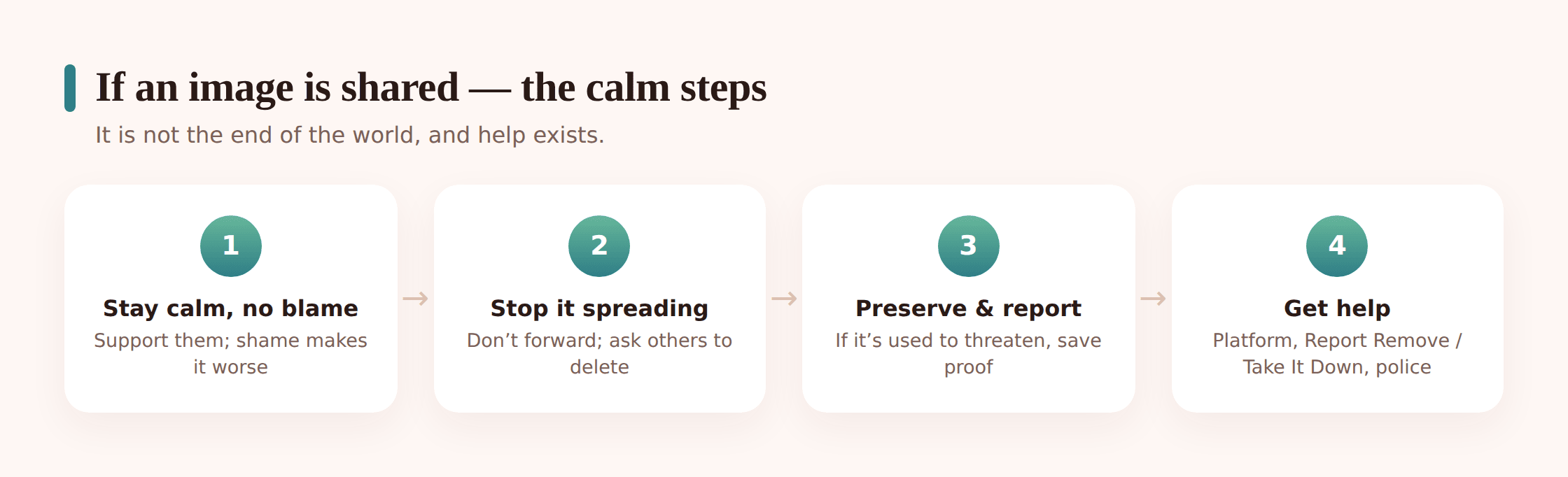
If an image has been sent, or worse, has been shared or is being used to threaten your teen, your steadiness is the most valuable thing in the room. Here’s the shape of a calm response.
- Don’t shame or rage. Your teen is likely terrified already. Lead with “we’ll get through this together,” not “how could you.” The relationship is what protects them next time.
- Stop it spreading. Don’t forward the image, not even to show someone. Ask anyone who has it to delete it. The fewer copies exist, the better.
- Preserve evidence if it’s being used to threaten. If someone is extorting your teen, don’t delete the messages. Screenshots of threats, usernames, and profiles help the platforms and the authorities act. Don’t pay, and don’t send anything more — paying rarely ends it.
- Report it. Report to the platform where it happened. If the image has been shared or used to extort, report to the authorities too.
- Get support for your teen. A school counsellor, a therapist, or a helpline can help them process it. Shame is heavy, and they shouldn’t carry it alone.
If an image of a minor is out there, it can be reported for removal
In the US: NCMEC’s CyberTipline (report.cybertip.org) and Take It Down (takeitdown.ncmec.org), a free service that helps remove intimate images of minors from participating platforms.
In the UK: CEOP for reporting exploitation, and Report Remove from Childline and the IWF, which helps get images of under-18s taken down.
Anywhere: contact your local police if your teen is being threatened or coerced. And read the sextortion guide for the full response.
Hold onto this: it feels like the end of the world in the moment, and it isn’t. Images of minors can be reported and removed, help exists, and teens come through these situations, especially the ones who have a calm adult beside them.
Why trust beats surveillance
It’s tempting, when you’re worried, to want to read everything. But secretly going through a teen’s private messages usually does the opposite of what you hope. If they find out, the message they take away isn’t “my parent cares.” It’s “I can’t tell my parent anything, and now I can’t trust them either.” That pushes the very problems you’re worried about further underground, exactly where you can’t help.
The safest teen isn’t the most-watched one. It’s the one who’ll tell you when something’s gone wrong. There’s more on where that line sits in monitoring vs spying, and it’s worth reading before you reach for anyone’s phone.
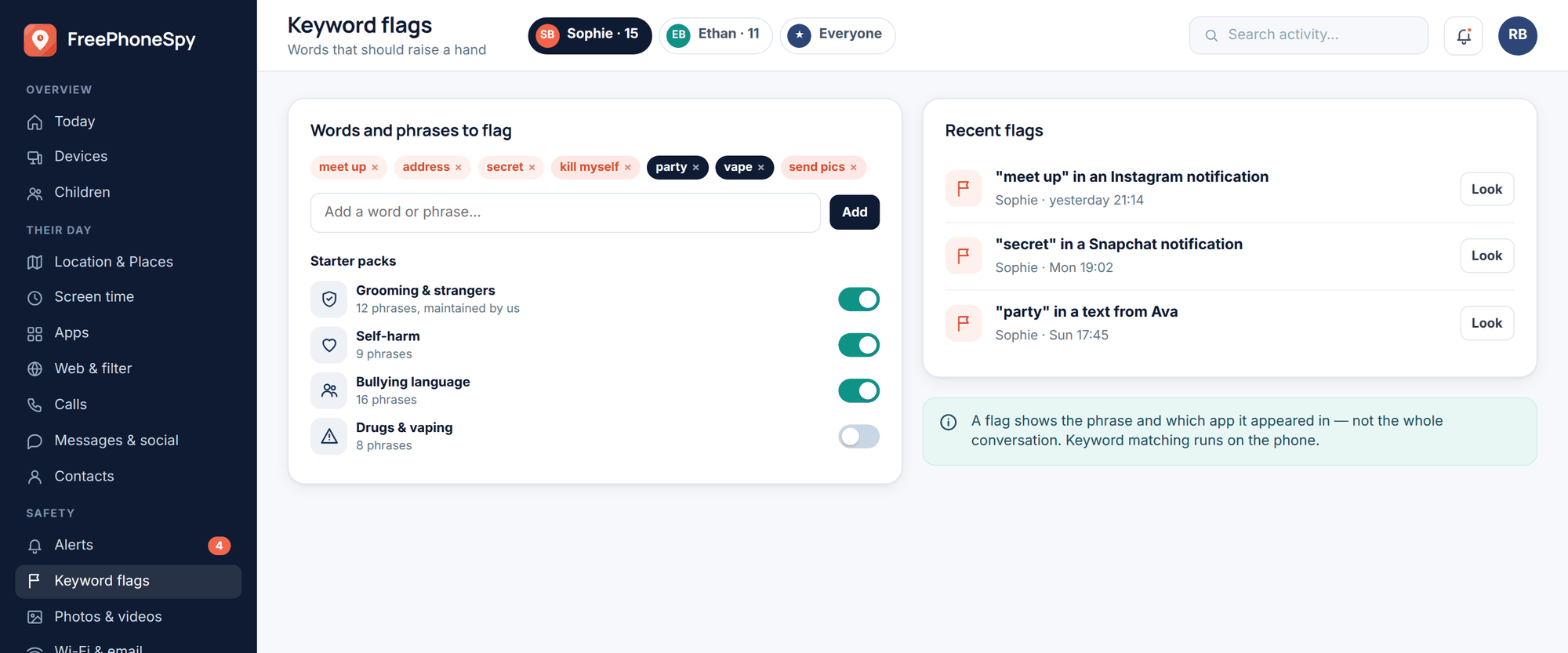
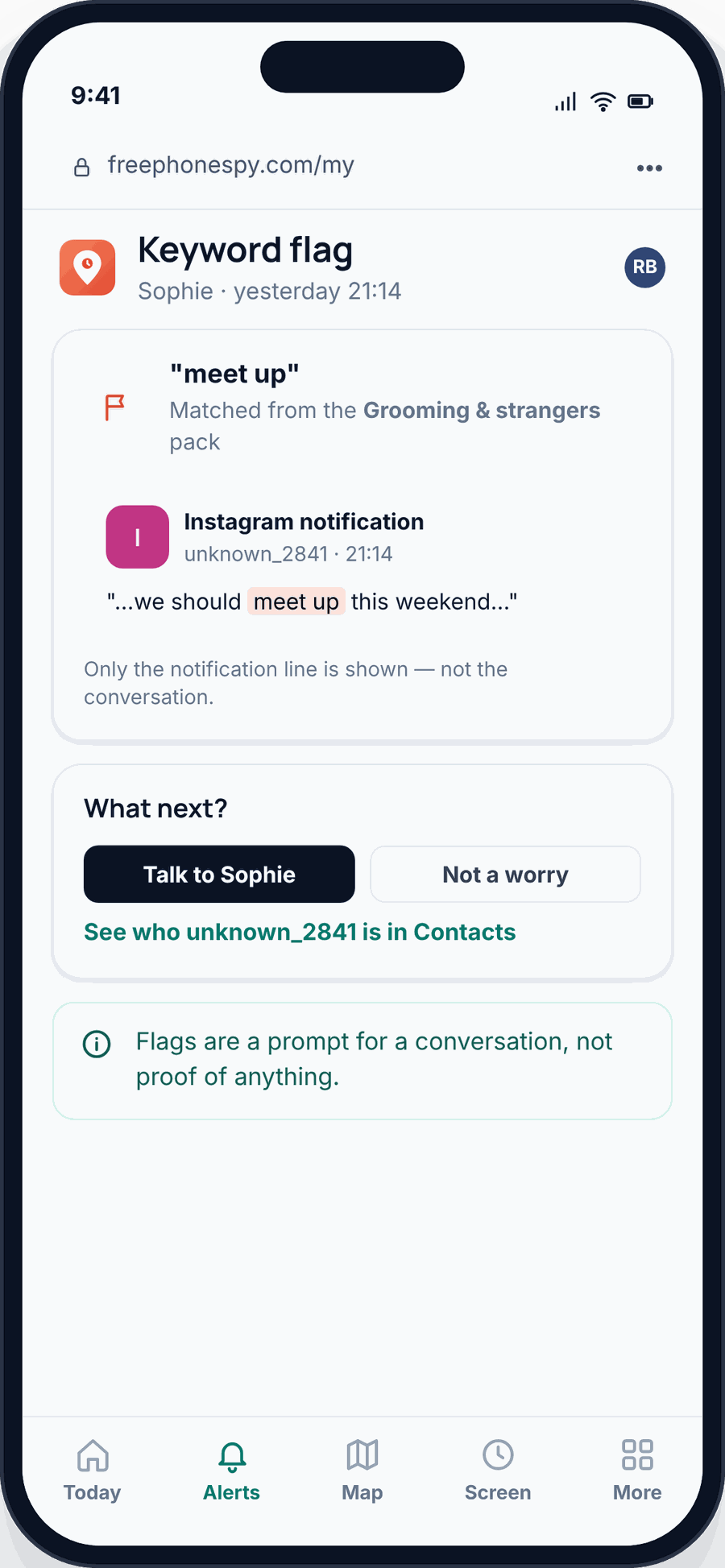
If you do use tools, keep them out in the open. FreePhoneSpy is transparent, consent-first parental monitoring for Android child phones. Keyword alerts can flag worrying words so a conversation can start sooner — but they’re a prompt to talk, not a substitute for it. Set it up together, tell your teen what it does, and let it support trust rather than replace it. The real protection here is the conversation, not the software.
Alongside this topic, it’s worth thinking about the wider picture: how you talk to kids about online safety generally, and how to protect kids from online predators, since the same open, calm relationship protects them across all of it.
Common questions
At what age should I bring this up?
Earlier and lighter than you’d expect. You don’t need to discuss anything graphic with a younger child. But by the time they have a phone and friends with phones, they can understand “you never have to send a photo of yourself, and you can always tell me if something feels wrong.” Adjust the depth as they grow.
My teen already sent something. Are they going to be in legal trouble?
Try not to jump to the worst case. How the law treats young people varies a lot by country and region, and many places focus on protecting teens rather than prosecuting them, particularly where there was no coercion. Your immediate job is to stop the image spreading, report it if it’s been shared, and support your teen. For a specific situation, a local lawyer or child-protection helpline can advise.
What if the image is already being shared around?
Act calmly and quickly. Ask anyone with it to delete it, report it to the platform, and use a removal service — Take It Down in the US, Report Remove in the UK — which are built to get images of under-18s taken down. If your teen is being threatened, keep the evidence and involve the police. The sextortion guide covers this step by step.
Should I just check their phone to be sure?
Reading their messages in secret tends to backfire — it can break the trust that makes them tell you things. If you use monitoring, keep it open and agreed. See monitoring vs spying for where the healthy line sits.
How do I stay calm if my teen tells me something awful?
Remember that their telling you is the good outcome, even when the news is bad. Take a breath, thank them, and deal with the problem afterward. Your steadiness in that moment is what keeps the door open for the next thing they need to tell you.