Signs Your Child’s Phone Needs a Closer Look
Most of the time a withdrawn child is a tired teenager, not a warning sign. But there are moments when a change in how your child acts around their phone is telling you something, and it helps to know in advance which signs matter and what to do about them that is not a raid on their bedroom. This guide walks through the signs your child’s phone might need a closer look, what each one tends to mean, and the next steps that keep a small problem from becoming a large one.
First, a word about proportion
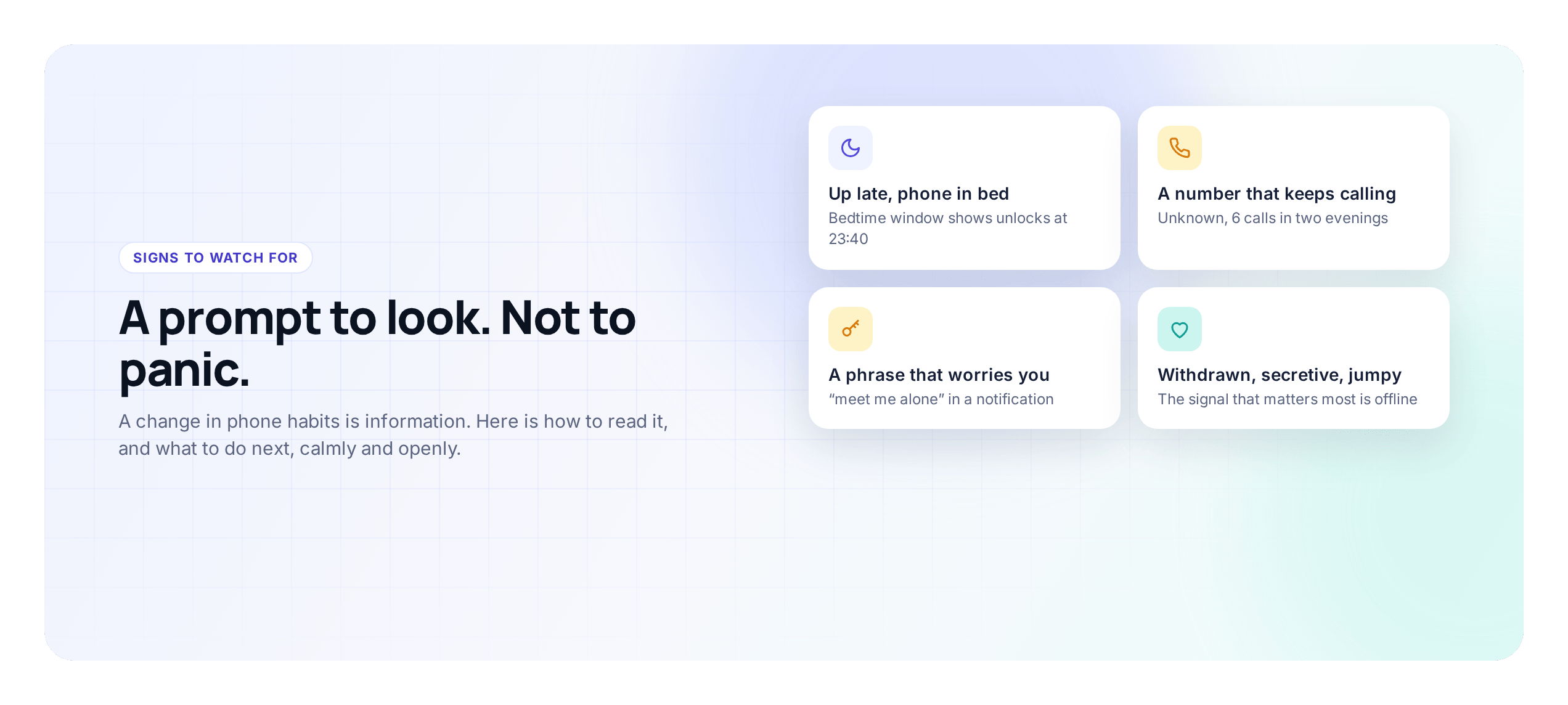
Adolescence is moody by design. Kids pull away, guard their privacy, go silent, and get glued to a screen. All of that is ordinary growing up, and none of it on its own means something is wrong. So read this guide the way a doctor reads symptoms: one sign in isolation usually means little, but a cluster of them appearing together, or a sudden sharp change from how your child normally is, earns a second look.
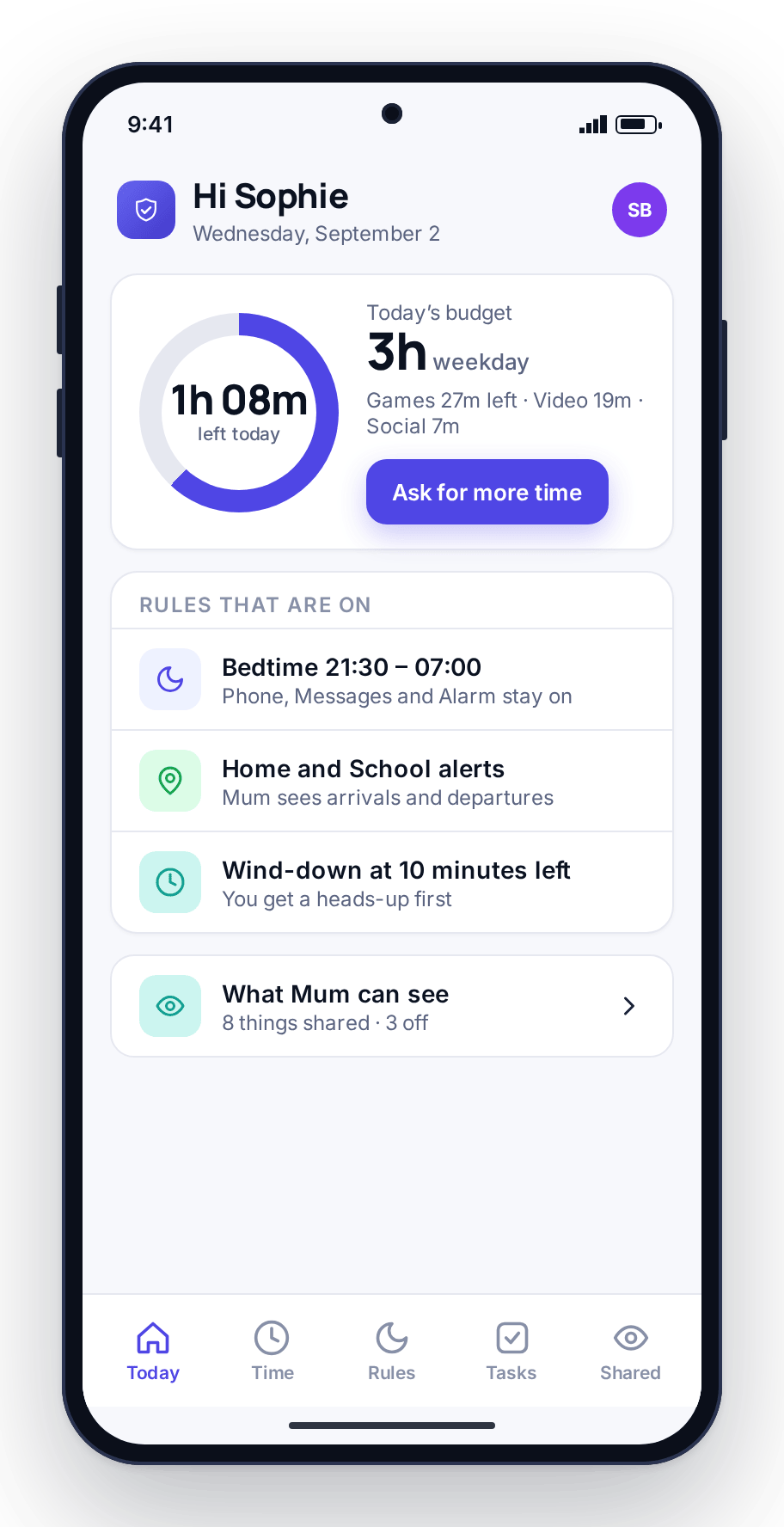
The aim is never to catch your child out. It is to notice early enough to help, while the problem is still small. And the tool for that is not a secret one. Everything here works best when your child already knows you can see the phone and knows why, because then a closer look is part of an existing agreement rather than a betrayal they discover later. If you have not set anything up yet, the complete guide to child phone monitoring covers the open, consent-first approach from scratch.
Behavioral signs to watch for
The signs that matter most are usually in your child, not their phone. The phone is where you look second, to understand something a change in behavior has already flagged.
A sharp mood shift tied to the phone. Watch the timing. If your child seems fine, checks a message, and is suddenly withdrawn, tearful or angry, and this keeps happening, the phone is bringing in something that upsets them. One bad evening is nothing. A pattern of the phone flipping their mood is worth noticing.
Pulling away from things they used to like. Dropping a sport, ducking out of family meals, losing friends they used to see, sleeping far more or far less. Withdrawal that spreads across their life, rather than a single grumpy week, is one of the clearest signals that something is weighing on them.
Secrecy that spikes. Every teenager wants privacy, and that is healthy. What is different is a sudden jump: turning the screen over the instant you walk in, taking the phone everywhere including the bathroom, deleting messages the moment they are read, or getting sharply defensive at an ordinary question about who they are talking to. The change in the level of secrecy is the flag, not secrecy itself.
Changes in phone habits
Once behavior has your attention, the phone’s own rhythms can fill in the picture. These are the habit changes worth noticing.
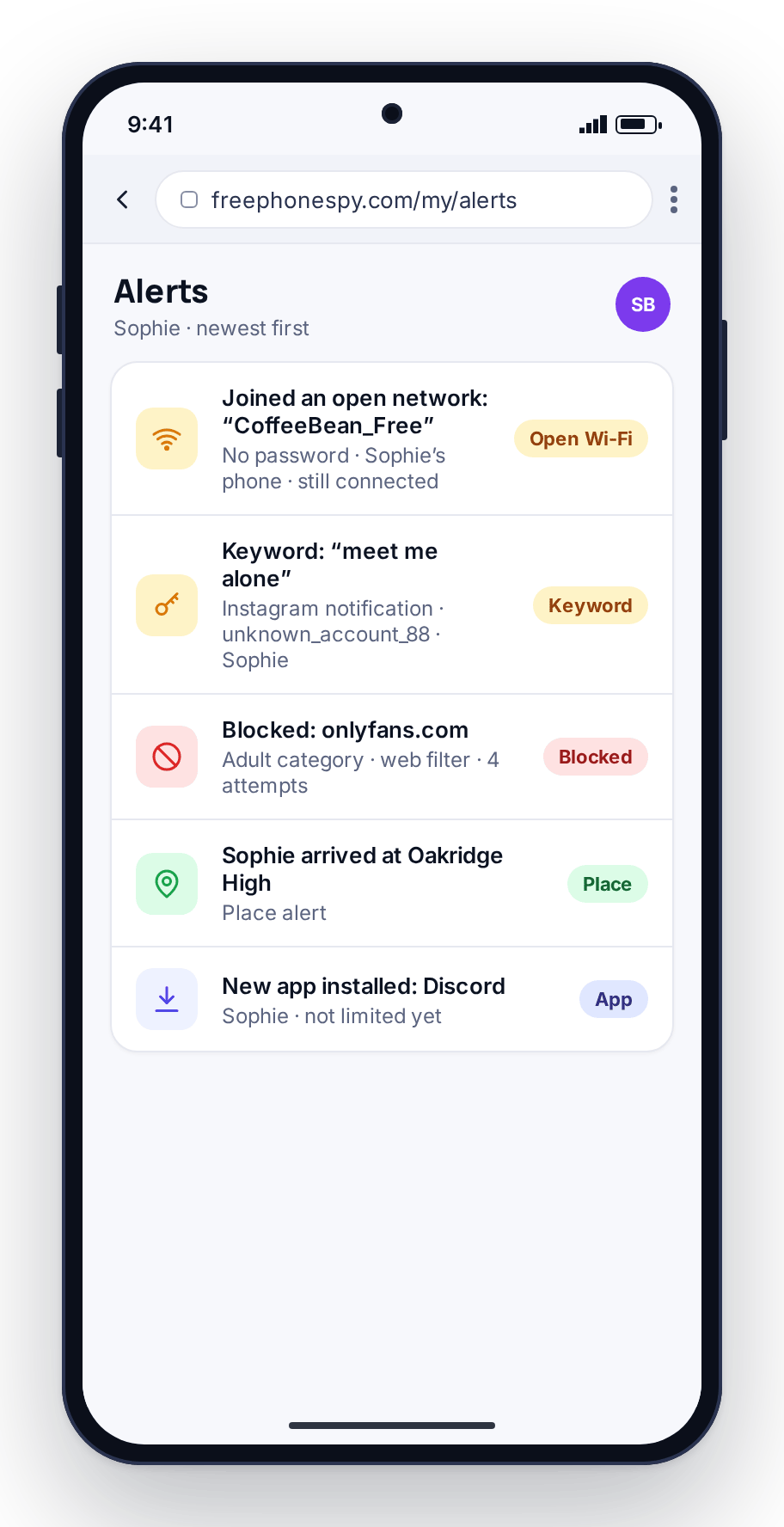
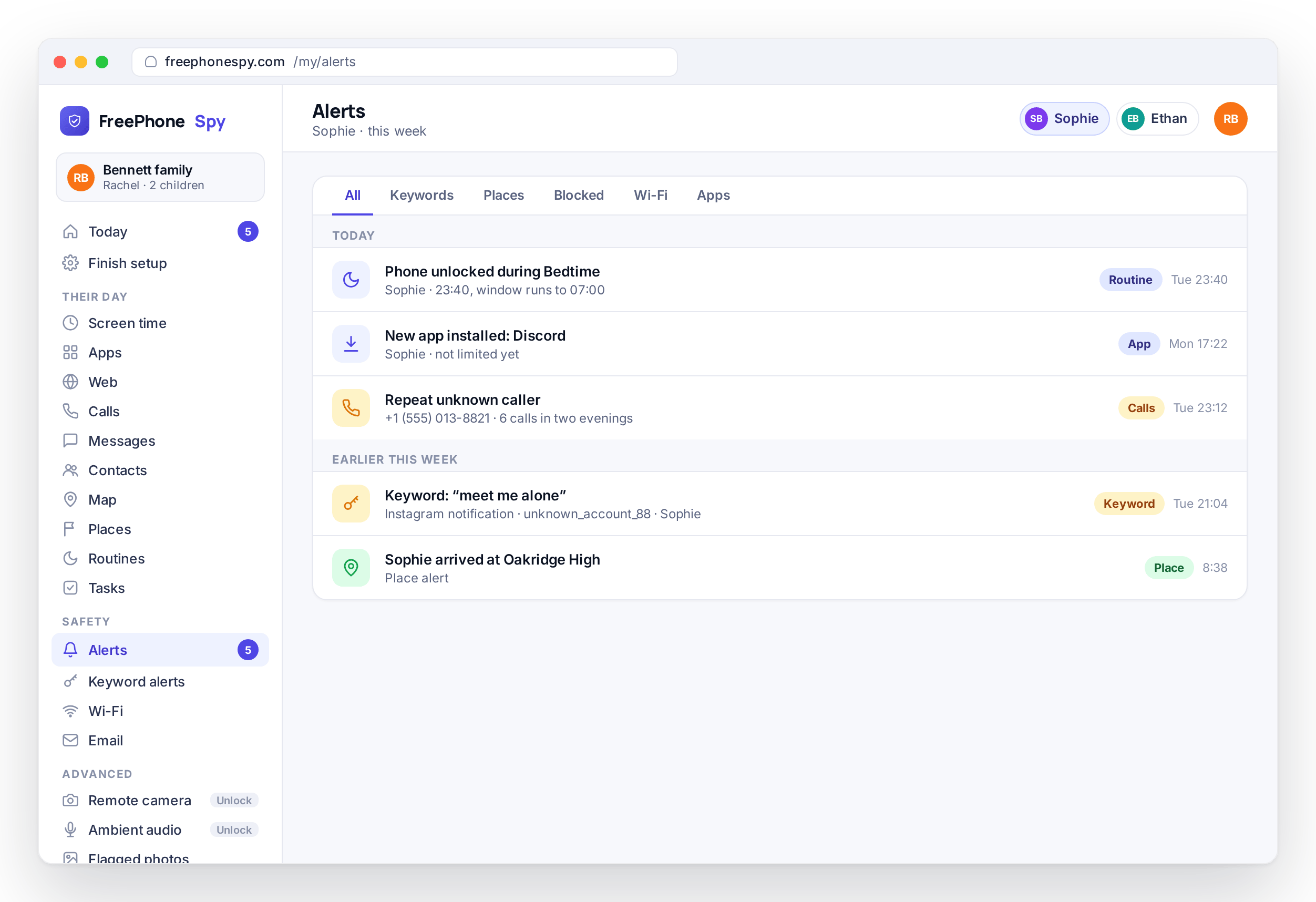
- Night-time use that is climbing. A phone that is suddenly busy at 1am, or a child who is exhausted every morning, often means conversations they do not want happening in daylight, or ones they cannot stop.
- New contacts you do not recognize, or “friends” they cannot quite explain. Especially an adult, or someone they have only ever met online, who messages a lot.
- Constant checking and visible anxiety when the phone is away. Not ordinary teenage attachment, but real distress at being separated from it, or a compulsion to reply instantly.
- Money moving strangely. Asking for gift cards, in-game currency or top-ups out of the blue, or money going missing, can point to gaming pressure, scams, or something being demanded of them.
- New apps that hide or vanish. Apps installed and deleted quickly, or a second account on a platform they already use, can mean a conversation being kept off the main one.
None of these is proof of anything. Kids install and delete apps for fun and stay up too late because they are teenagers. But two or three of these landing at once, alongside a real change in mood, is the pattern that says look a little closer. Being able to see which apps are installed, and when the phone was in use overnight, turns “I have a bad feeling” into something you can check instead of guess at.
Online-danger signs: grooming, bullying, sextortion
This is the part that frightens parents, so here it is without drama. The serious online harms are real but not everyday, and the point of knowing the signs is to act early and get the right help, not to live in fear. Three are worth understanding.
Grooming
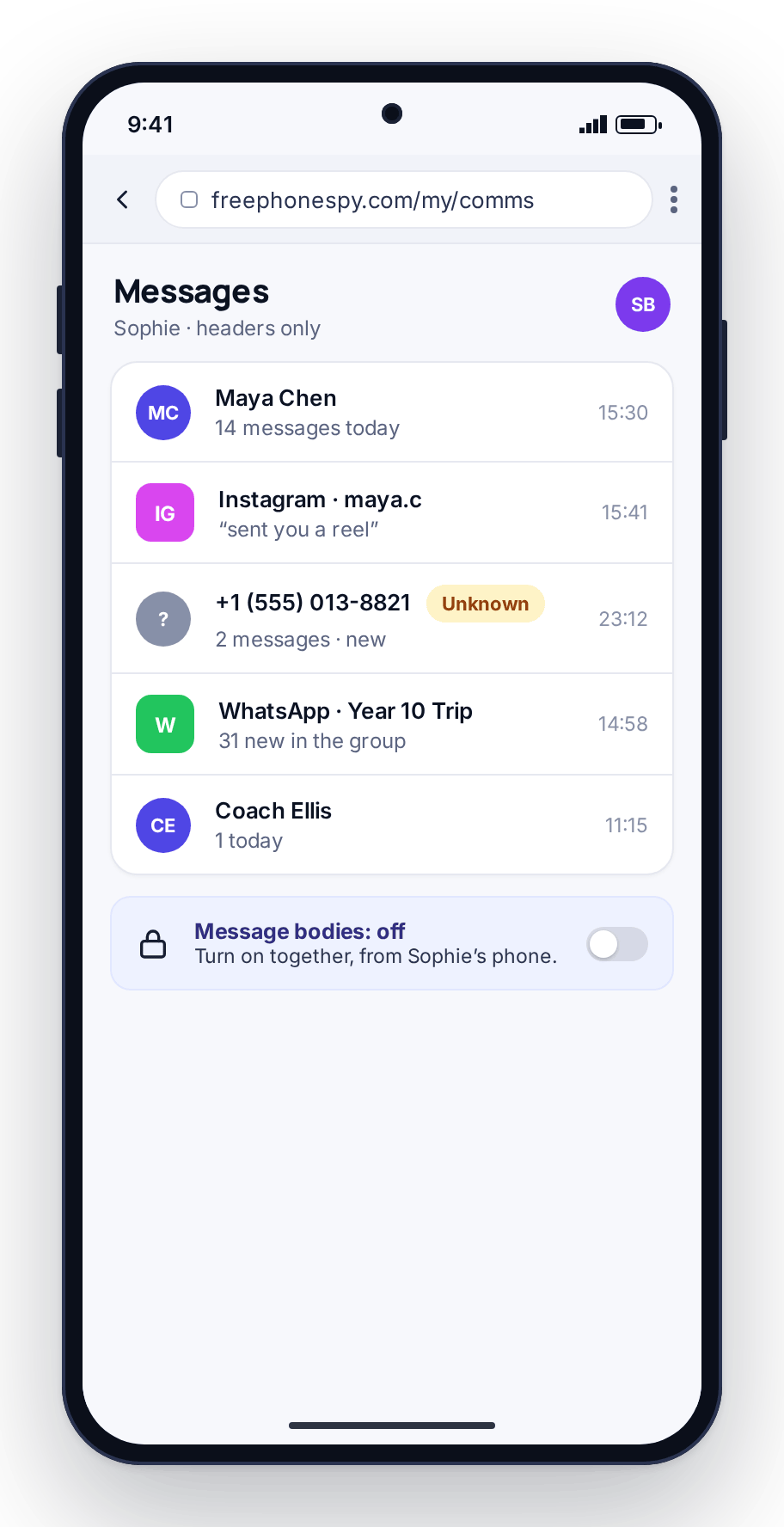
Grooming is an adult (or an older teen) building a relationship with a child in order to exploit them. The early signs are a new online “friend” who messages a lot and quickly gets very warm, with lots of compliments, “you’re so mature,” “you’re the only one who understands me,” who wants to move the chat to a private or disappearing-message app, who asks the child to keep the friendship secret, and who slowly tests boundaries. A child being groomed often becomes secretive and protective of that one contact. An unfamiliar adult in frequent contact, plus secrecy around it, is the combination that deserves attention.
Bullying
Cyberbullying tends to show as the mood-and-withdrawal pattern above, tied tightly to the phone. A child dreading messages, going silent after a group chat, suddenly not wanting to go to school, or visibly relieved when the phone is off. Bullying can also run the other way, so stay open to the possibility that a change in your child means they are the one doing it. Either way, the phone is where it is happening and steady attention is what helps.
Sextortion
Sextortion is when someone coerces a child into sending an intimate image and then threatens to share it unless the child pays or sends more. It moves fast and it targets boys as often as girls. The signs are sudden panic or fear around the phone, secrecy, and often the money angle: requests for gift cards or transfers, or money disappearing. A child in this situation is usually terrified and ashamed, which is why they hide it. If you ever suspect this, the most important things to know are that it is never the child’s fault, that they can stop complying, and that this is one to get help with rather than handle alone. See the steps below.
What a closer look can show you
A “closer look” does not mean reading your child’s whole life. Open monitoring is meant to answer a specific worry with the minimum needed, and it helps to be clear about what that looks like in practice so it stays proportionate.
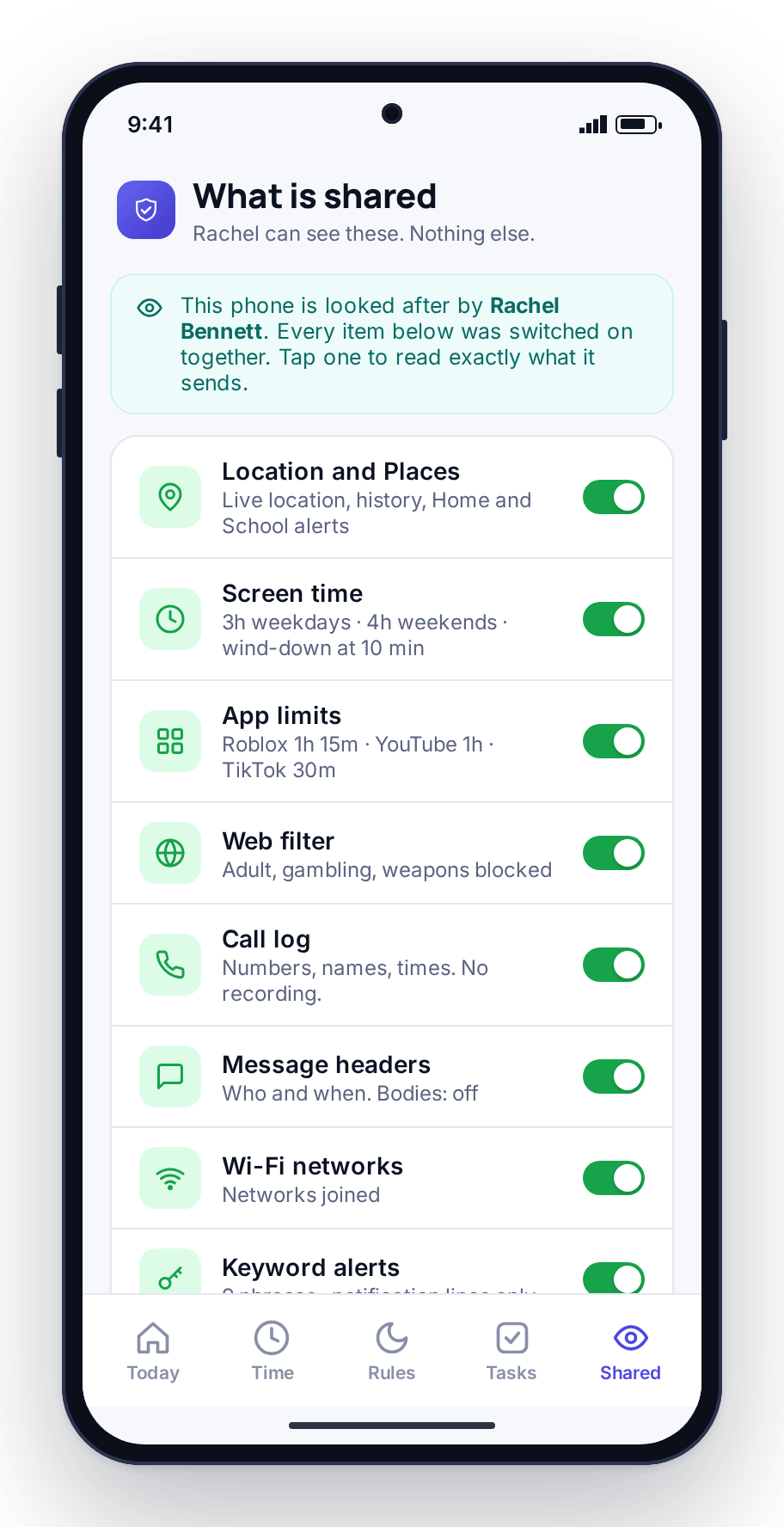
Who is in contact, and when. The message and social view shows headers, meaning who is messaging and at what times, while message bodies stay off unless a separate consent switch is turned on. For most of the signs above, the pattern of contact is what you need: an unfamiliar adult messaging a lot at odd hours tells you plenty without reading a word. The text and social monitoring page explains exactly where that line sits and why the consent switch exists.
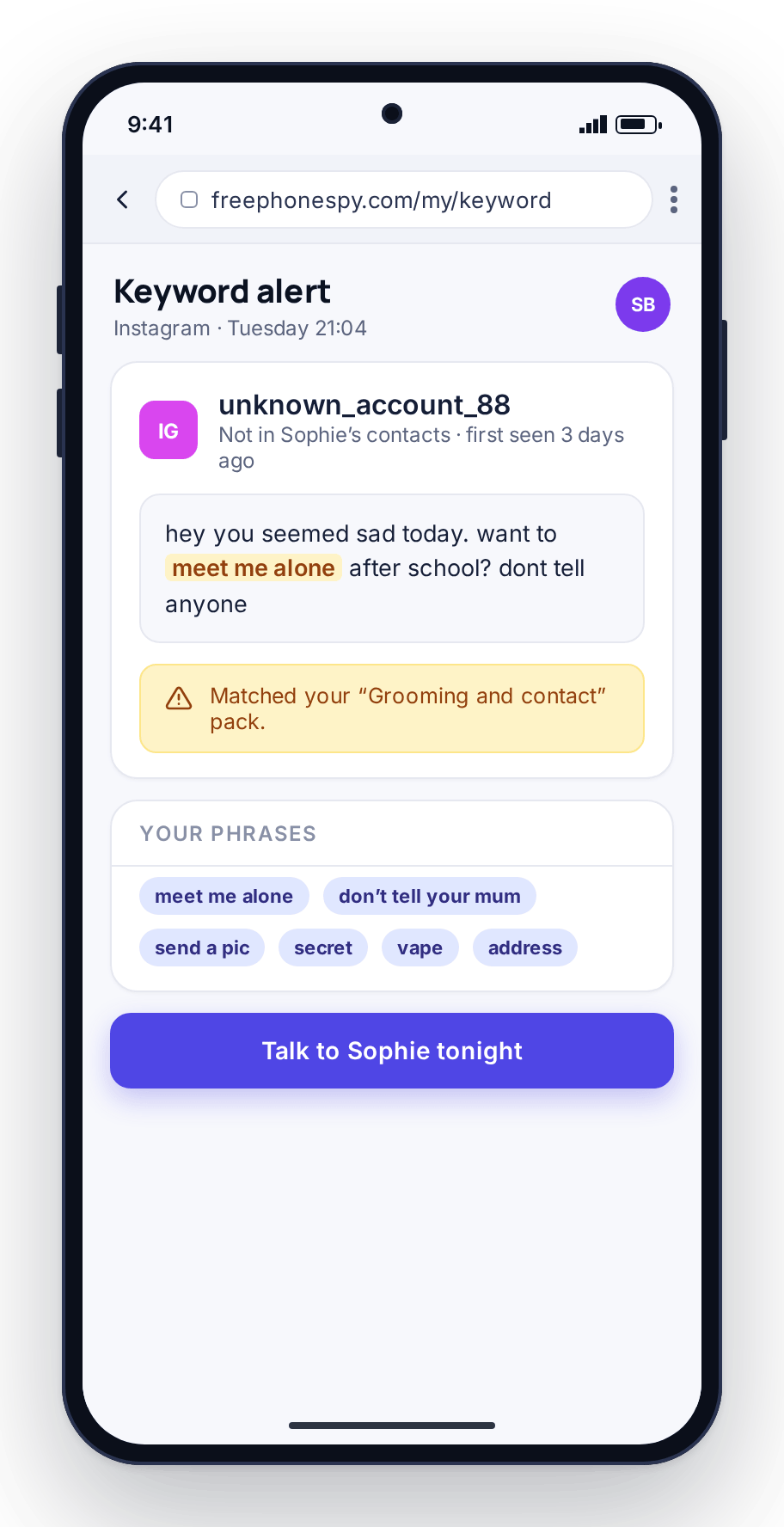
Words that would worry you. Keyword alerts let you enter specific phrases, the kind that come up in grooming or self-harm conversations, and notify you if one appears in a notification, rather than you scrolling through everything hoping to catch it. It works like a smoke alarm: silent almost all the time, and loud only when something specific is happening.
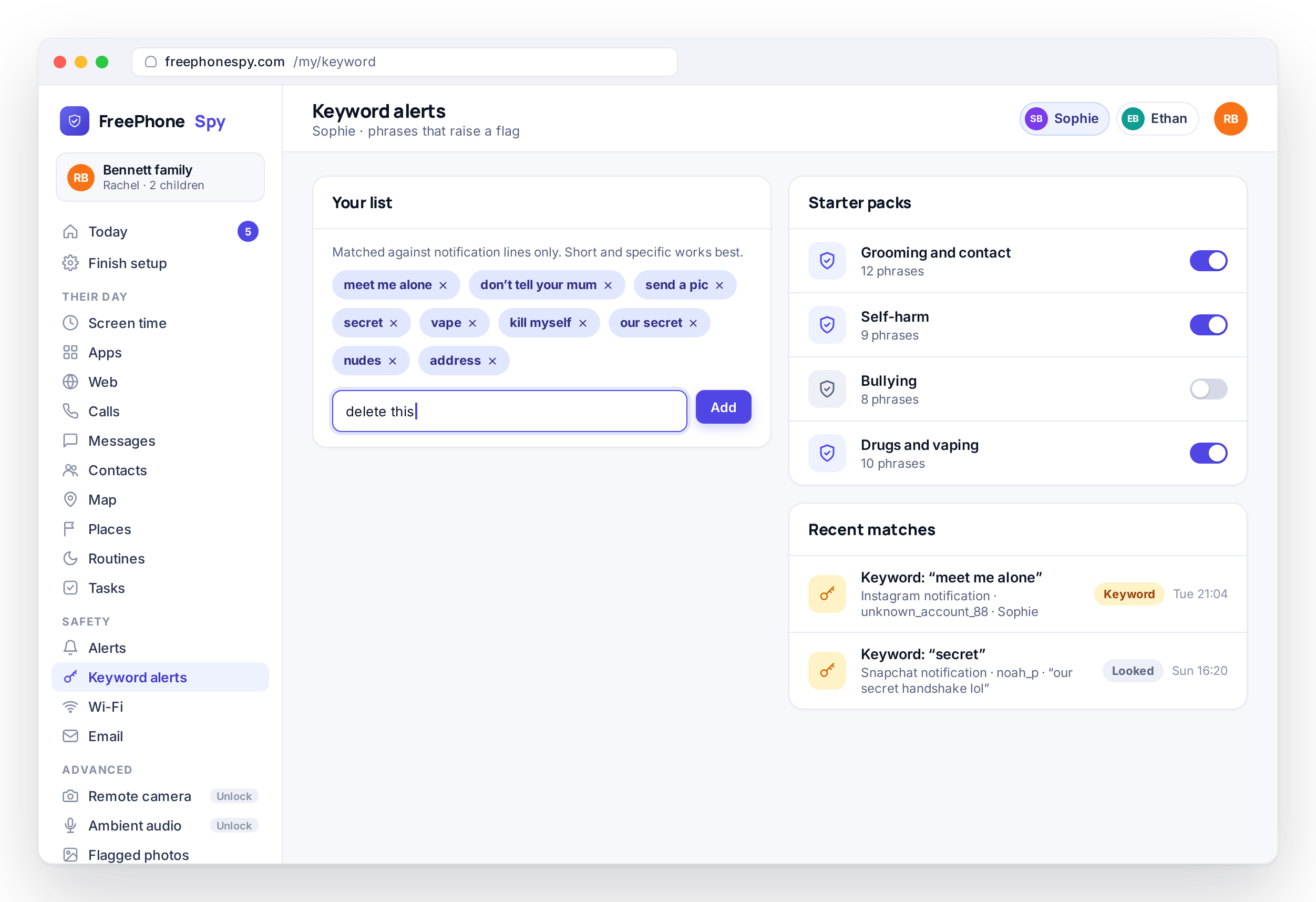
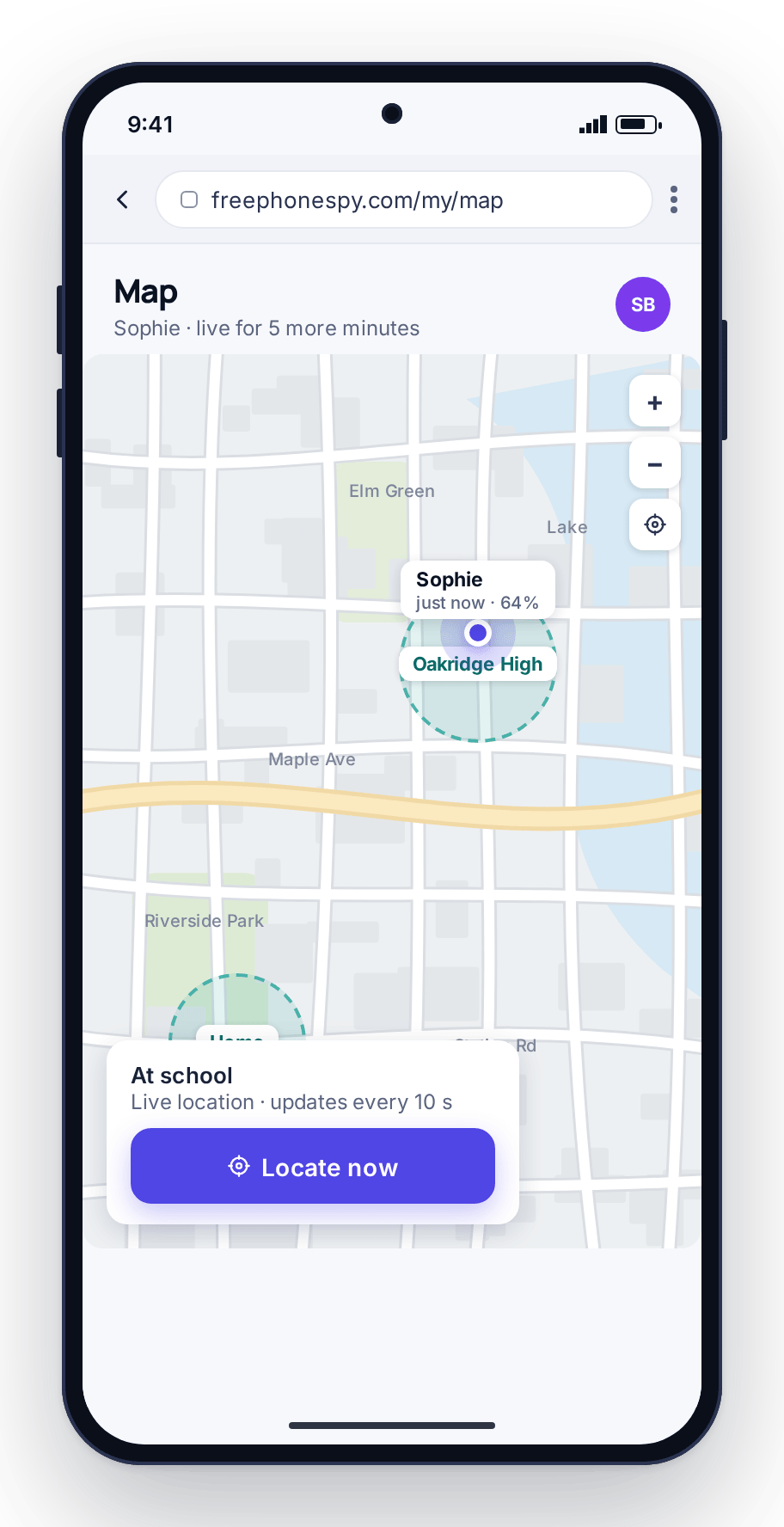
Where they are. Location and Places answer a surprising number of worries on their own: did they get to school, are they where they said, did they leave somewhere early. Often a glance at the map settles a fear without looking at messages at all.
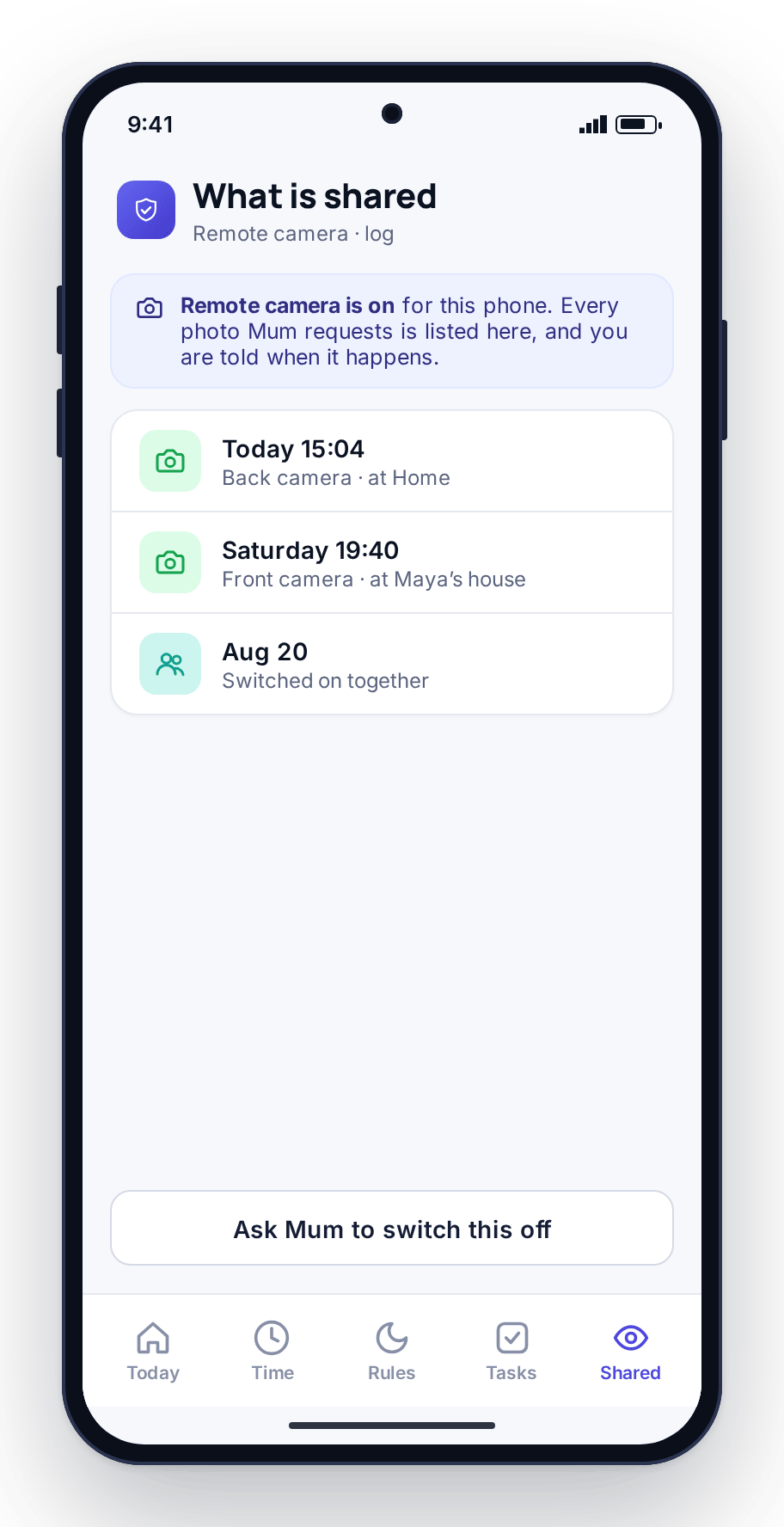
There is also a remote camera for the rare case where you need it. In FreePhoneSpy it is an advanced tool unlocked separately, every request is logged and shown on the child’s phone, and it is meant for a parent checking a device they manage with the child aware of it. It is never for photographing anyone without their knowledge.
The next steps: look, talk, adjust
If the signs have added up, the temptation is to grab the phone and go through everything at midnight. A raid confirms every fear your child has about being watched, and it usually ends the conversation before it starts. Here is the steadier sequence.
1. Look, proportionately. Check the specific thing your worry points to, whether that is location, the pattern of who is messaging, or whether a keyword fired, and nothing more. You are gathering enough to understand, not building a case. Reading everything is rarely needed and spends trust you cannot easily get back.
2. Talk, without accusation. Open with care, not evidence. “You’ve seemed a bit off lately and I’ve been worried about you. Is everything okay?” beats “who is this person you’re messaging at midnight.” Lead with the change you have noticed in them, not the thing you found on the screen. A child who feels cornered shuts down; one who feels cared for might tell you. Our post on talking to your kids about monitoring has wording for this that does not turn into a fight.
3. Adjust, together. Whatever you learn, change something small and sensible rather than everything at once. Maybe that is a bedtime routine that gets the phone out of the bedroom at night, blocking or time-limiting one app, or agreeing to check in each week. The aim is to reduce the risk and keep the relationship, not to lock the phone in a drawer and call it solved.
It is also worth remembering that a closer look is meant to wind down, not ramp up. If the signs turn out to be a false alarm, and often they will, that is the moment to ease off rather than keep watching “just in case.” Doing exactly what you said you would do, including backing off when things are fine, is what makes your child trust the arrangement the next time it matters. The line between this and surveillance is covered in monitoring versus spying.
When to bring in outside help
Some situations are bigger than a family conversation, and it matters to know where that line is. Bring in help when any of these is in play:
- An adult is pressuring, threatening, or in inappropriate contact with your child. This is a matter for child-protection services and, if there is immediate danger, the police.
- Intimate images are involved, or someone is threatening to share them. Report it, preserve the messages, and reassure your child it is not their fault. Many countries have dedicated services that can get images taken down.
- Your child is talking about self-harm or seems in real crisis. Contact a doctor or a mental-health helpline, and do not leave them alone with it.
- Bullying that is serious or coming from school. Loop in the school and, where there are threats, the police.
Look up the specific helplines and reporting routes for your own country and keep them somewhere handy: a national child-protection hotline, a mental-health line, and your local police non-emergency number are the three worth having. You are not overreacting by making a call. Getting the right people involved early is the responsible move, and it takes the weight off you to be the expert on something no parent should have to face alone.
Whatever the signs turn out to mean, the sequence is the same: notice early, look proportionately, talk with care, and reach for help when it is beyond a family fix. A phone that was set up openly, where your child knows you can see it and knows why, makes each of those steps easier, because the closer look was part of the deal from the start. If you want to see how the pieces fit together, look at the full feature set or open the live demo before you set anything up.
FAQ
How do I tell a real warning sign from normal teenage moodiness?
Look for clusters and sudden changes, not single moments. A grumpy week or wanting more privacy is ordinary growing up. What earns a closer look is several signs landing together, such as a mood shift tied to the phone, withdrawal that spreads, and a spike in secrecy, or a clear break from how your child normally is. One sign on its own rarely means much.
Should I read all my child’s messages if I’m worried?
Usually no. Most worries are answered by the pattern of who is in contact and when, by location, or by a keyword alert, and reading everything spends trust you cannot easily rebuild. Message bodies stay off unless a consent switch is turned on, so the default is to look at the least that addresses your concern. If the worry is serious enough to need more, say so to your child rather than turning it on in secret.
I think my child is being groomed or blackmailed. What do I do?
Do not handle it alone and do not delete anything. Keep the messages as evidence, reassure your child it is not their fault and that they can stop complying, and contact the appropriate authorities and helplines in your country: your national child-protection body, and the police if there is immediate danger. Acting alone can tip off an offender or lose evidence an investigation needs.
Won’t my child just hide things if they know I can see the phone?
Some things, sometimes. But open monitoring changes behavior in the moment, which matters more than catching things afterward: a child who knows you might see a message thinks twice before sending it. Secret monitoring nearly always comes out, and the discovery costs far more trust than it bought. Openness is the stronger position.
What if I look and everything’s fine?
Then ease off. That is the right outcome, not wasted effort. Doing what you said you would, including backing off when things are fine, is what makes your child trust the arrangement next time. A closer look is meant to wind down as they show you they are okay, not to keep running indefinitely.
Does this work on an iPhone?
The FreePhoneSpy child app is Android, with iPhone support in development. On an iPhone today, Apple’s Screen Time and Family Sharing cover limits, location and some content controls. The behavioral and online-danger signs in this guide apply to any phone; the noticing and the measured response matter most, whatever the device.