Monitoring vs Spying: Where Parents Should Draw the Line
Ask ten parents whether they would read their child’s phone and you get ten uneasy answers. That unease is pointing at a real line. Monitoring and spying use the same software and can look identical from the outside, and the thing that separates them has nothing to do with features or how much you can see. This piece is about where that line sits, why crossing it costs more than it saves, what the law says, and what a setup on the right side of the line looks like day to day.
The one difference that matters
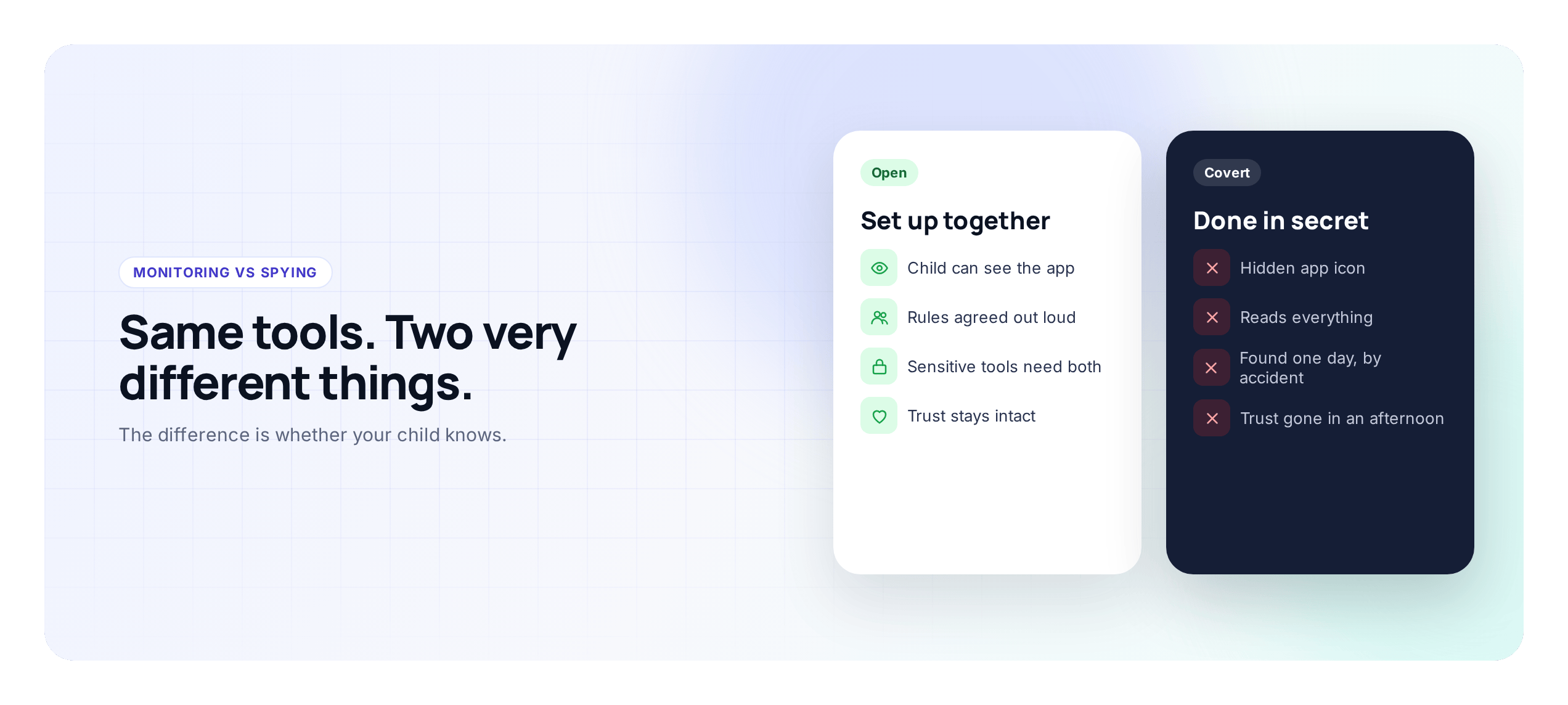
Stripped down: monitoring is something you do with your child’s knowledge; spying is something you do behind their back. Not the features you use, not how much you can see, not your reasons. A parent who sets a bedtime routine and tells their child about it is monitoring. A parent who installs a hidden app to read a partner’s texts is spying, and it makes no difference that both are the same category of software.
People try to draw the line in other places and it never holds. “It’s spying if you read their messages”: no, a family can agree to that openly for a good reason, with an older child in the loop. “It’s fine because they’re my child”: being the parent gives you the right to monitor, but it does not make secret surveillance healthy or useful. The only line that survives contact with real situations is the one about knowledge. Does the person being monitored know it is happening? If yes, you are on the parenting side. If no, and they are old enough to understand, you have stepped over.
What covert spying costs
Say you go the covert route with a teenager. You install something hidden, you read everything, and for a while you know more. Here is the bill that comes due, because it always does.
They find out. Teenagers are more capable with phones than we credit, and secrets on a shared home network have a way of surfacing: a battery-drain warning, a permissions list in Settings, a friend who has seen the same app before. When they discover it, the damage is not that they are annoyed. It is that they have learned you were willing to deceive them. Every past conversation gets re-read as possibly surveilled, and they learn that hiding is the smart move, because you did it first.
The safety net inverts. What keeps a teenager safe online is not an app. It is that when something goes wrong, a threat, a mistake, a stranger who turned nasty, they come to you. A child who has been spied on does not come to you. They have learned you are a surveillance risk rather than a safe harbor. You traded the small win of seeing their messages for the large loss of them ever telling you the thing that mattered.
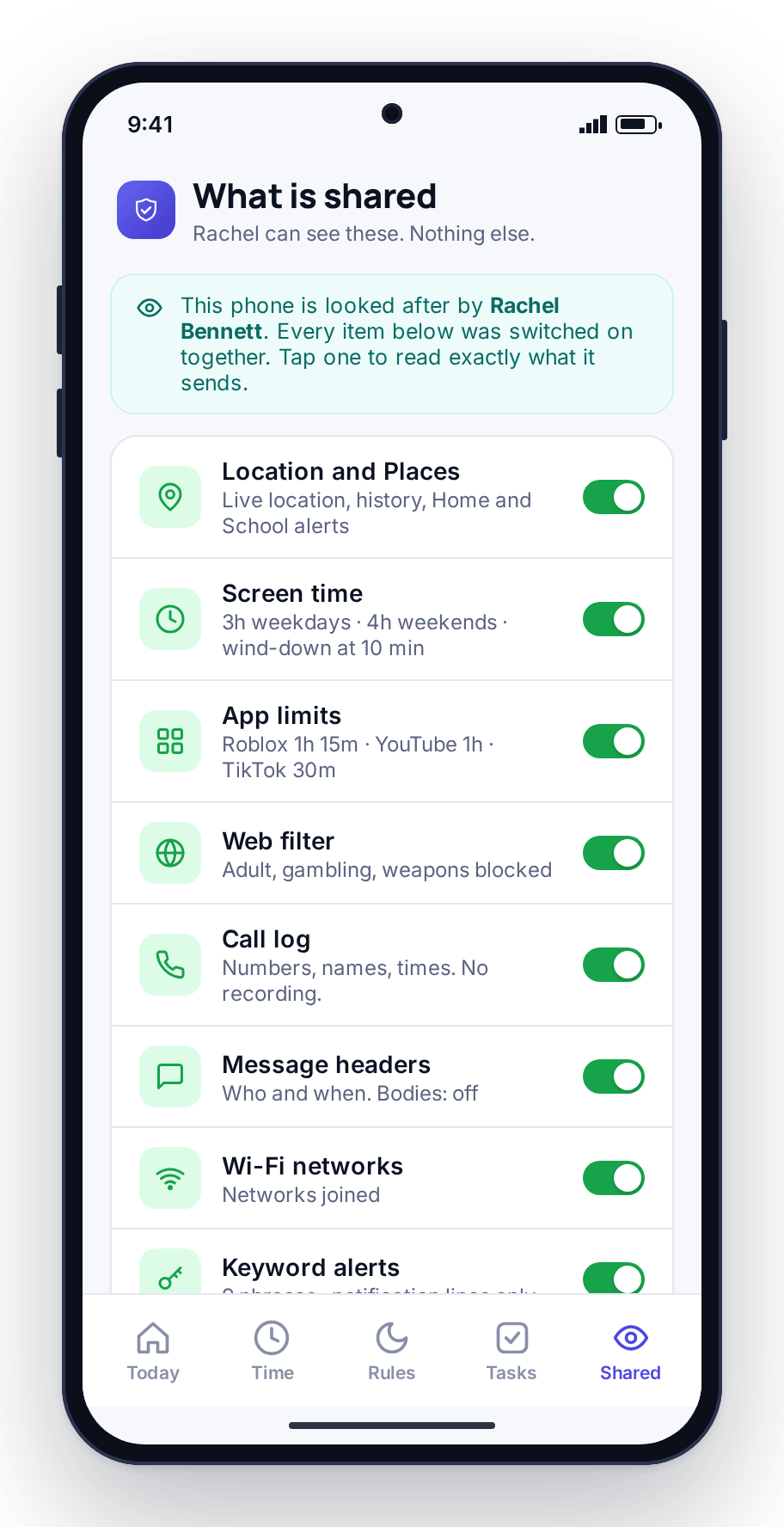
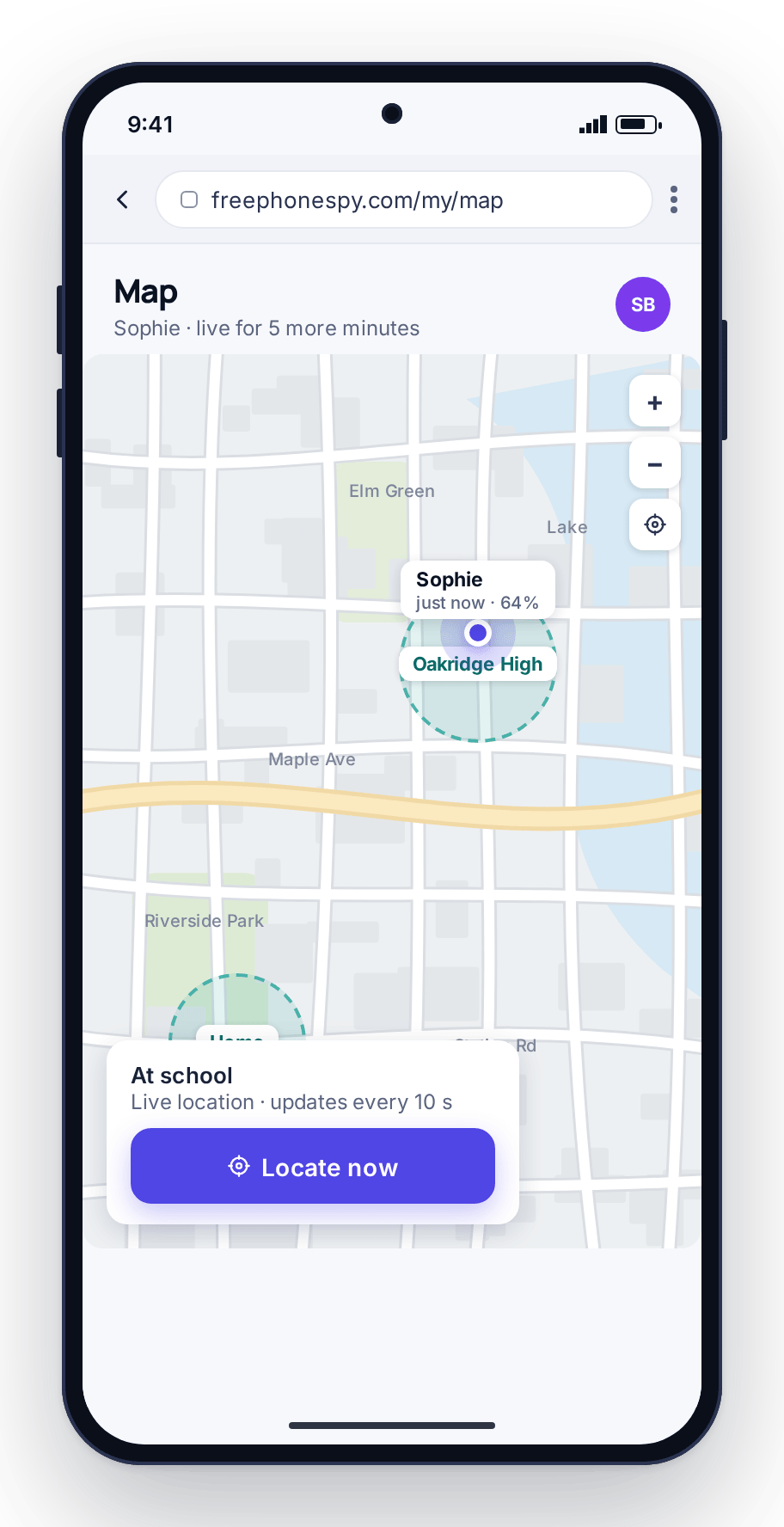
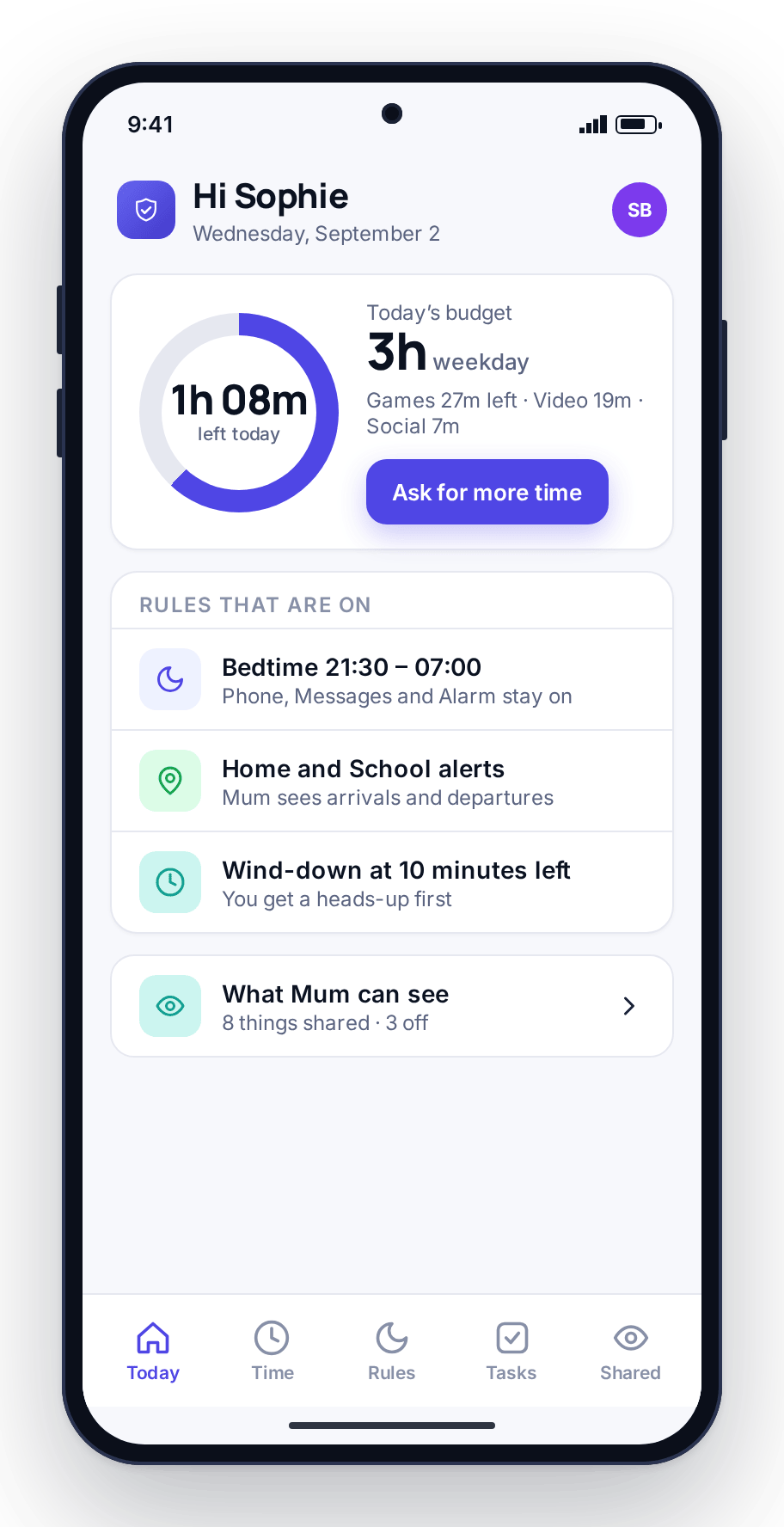
This is why a family tool should be visible on the phone. FreePhoneSpy has a Transparency screen on the child’s device that shows the app is installed and lists what it shares, and nothing is monitored until a parent switches a feature on. A tool built to be hidden is built for a different job, and one this article is arguing against.
The law, in plain terms
We are not your lawyer, and rules vary by country and by state, so treat this as the general shape rather than legal advice. The broad picture is consistent enough to be useful.
Your own minor child, on a device you own or provide: you generally have the right to monitor. You are the parent and guardian, and the law recognizes that. This is the solid ground almost every family stands on.
Another adult, such as a partner, an ex, an adult child or an employee, without their consent: this is where people land in serious trouble. Intercepting someone’s communications without consent is a criminal offense in many jurisdictions, and “I was worried” is not a defense. Recording calls and audio is especially fraught: some places require only one party to consent, others require everyone on the call, and the person doing the recording is the one who is liable. If you take one thing from this section, take that recording laws are stricter and more varied than most people assume.
The gray zone, an older teen: legally you are still the parent, so you are within your rights. But the closer they get to eighteen, the more the sensible basis shifts from “because I can” to “because we agreed.” A sixteen-year-old monitored openly and lightly is a different situation from a nine-year-old, and the law being on your side does not settle the parenting question. There is more on matching the approach to age in what age to monitor a child’s phone.
What a healthy setup looks like
So what does the good version look like day to day? It is lighter than people expect. A healthy setup watches a few things that matter and leaves the rest alone.
- The child knows. The app is visible, the rules are named, and there are no features running that they have not been told about.
- You watch the glance, not the detail. Location and whether they got to school, screen time and sleep, and a flag when something specific goes wrong, rather than a live read of every chat.
- Message bodies stay off unless there is a reason. Headers tell you who and when. The contents sit behind a consent switch you turn on only for a real worry, with the older child in the loop.
- It loosens over time. As trust is earned, controls come off. Monitoring that never eases is surveillance with a schedule.
- It prompts conversations rather than replacing them. A flag is a reason to ask a question, not evidence for a confrontation.
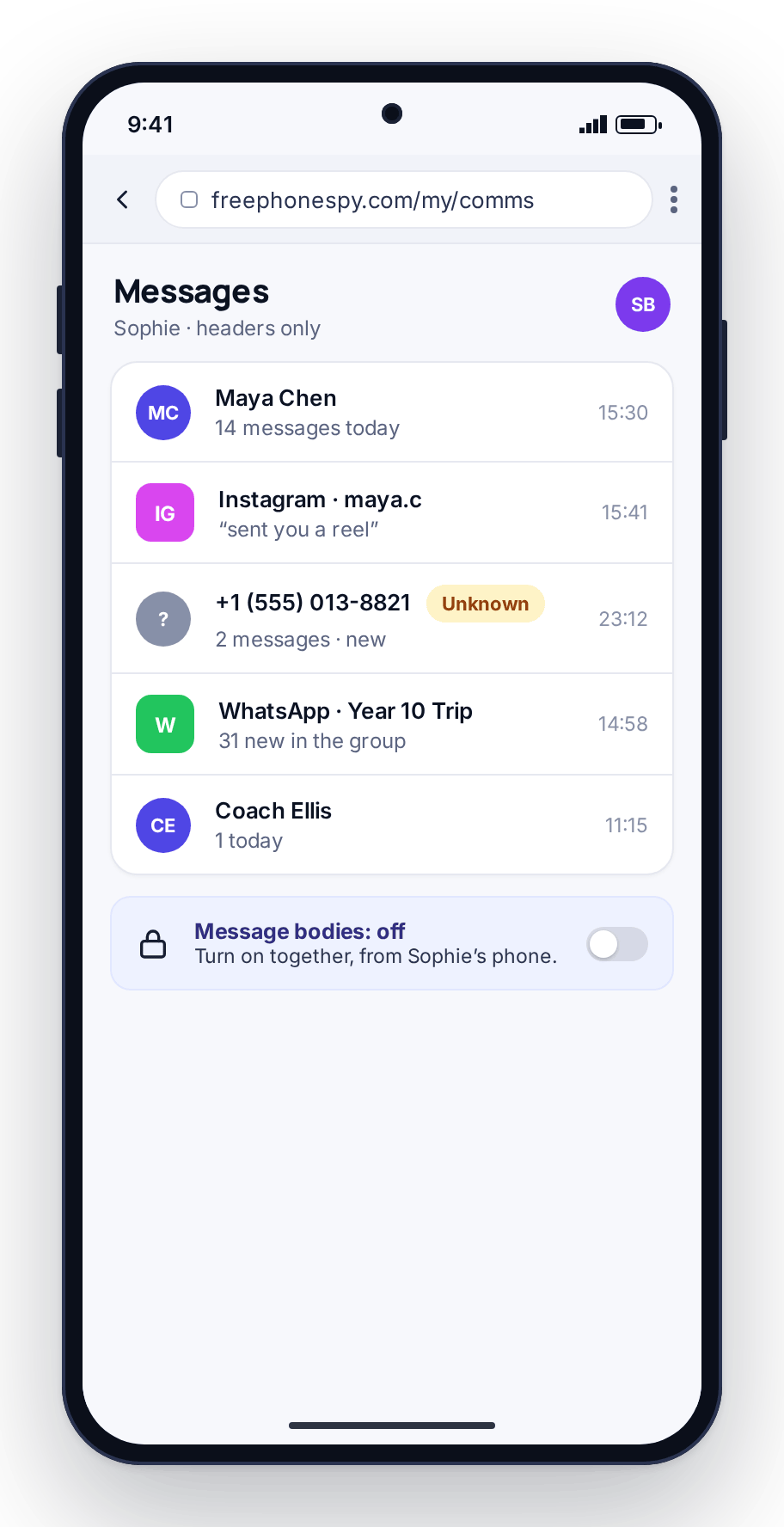
You can see the shape of this in a well-designed panel. The Today dashboard leads with a short “Needs you” list, a handful of items that want a decision from you, rather than a log of everything the phone did. If a monitoring tool’s home screen is a firehose, it is encouraging you to read more than you should.
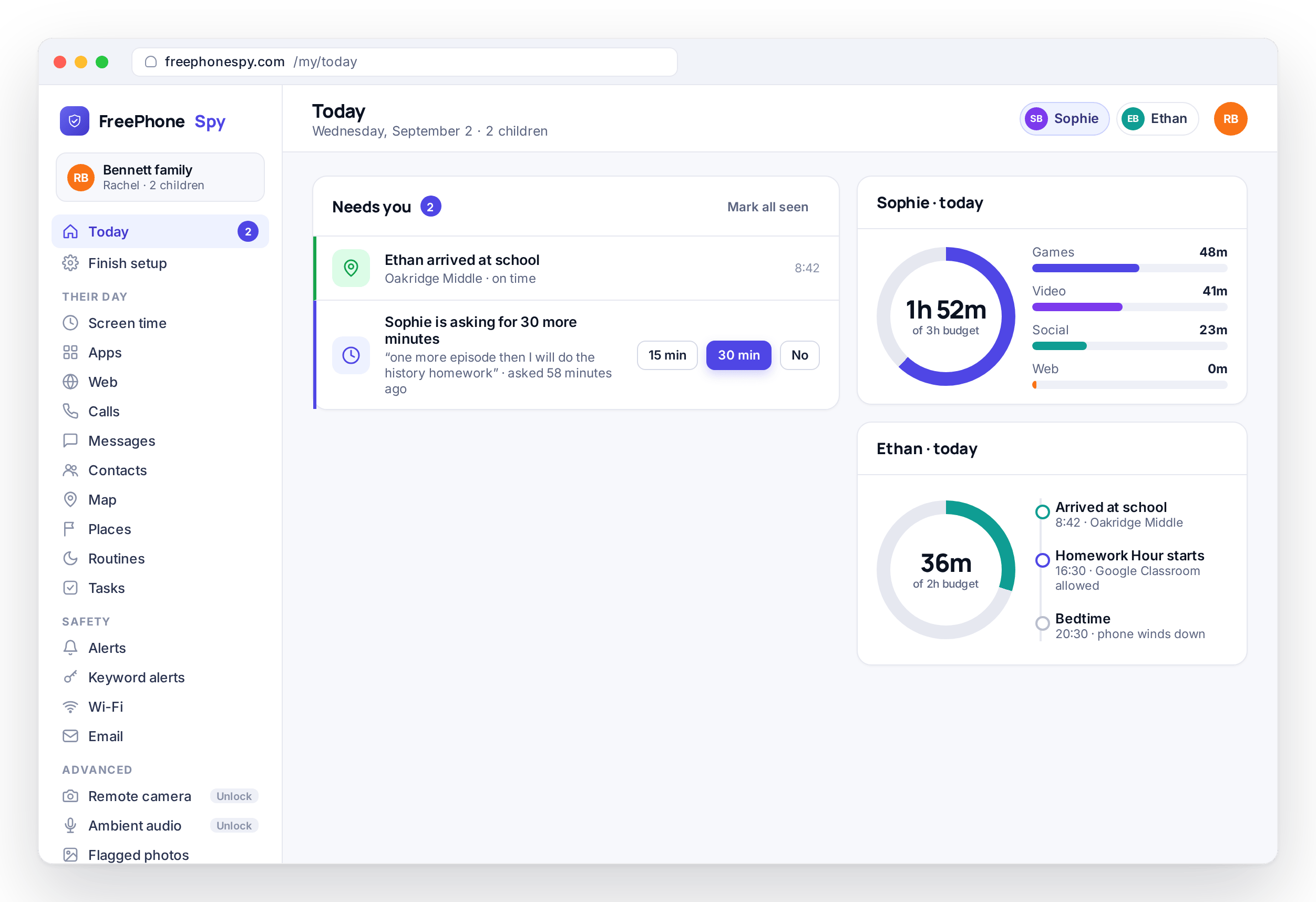
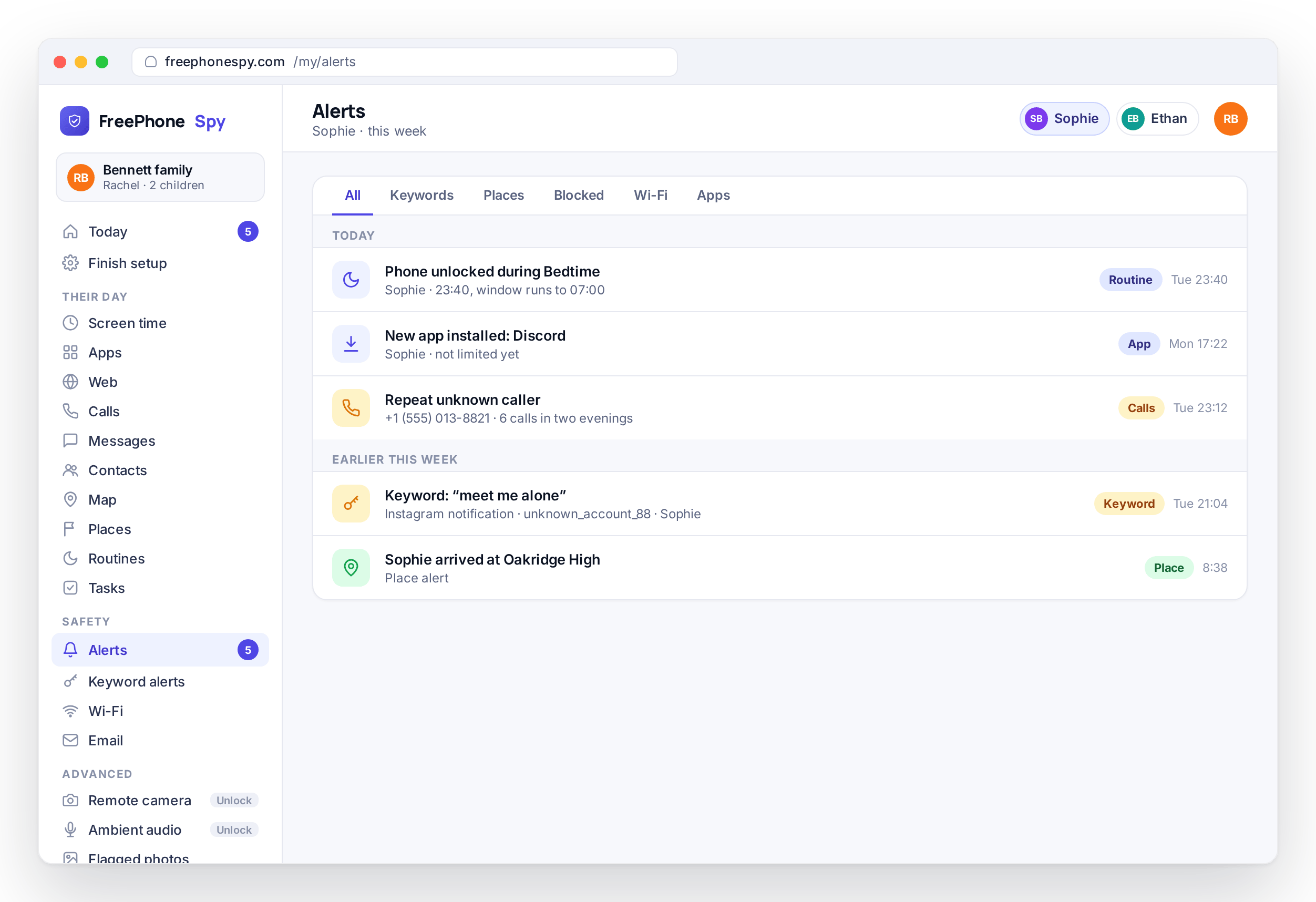
Keyword alerts are a good example of proportionate monitoring. Instead of reading every message, you enter a short list of phrases that would worry you, something like “meet me alone” or “don’t tell your mom”, and you are notified only if one appears in a notification. You get the safety signal without living in your child’s private conversations, which respects them and keeps you sane.
Telling your child: the principle
If the line is knowledge, then telling your child is not an optional extra. It is the thing that puts you on the right side of it. The conversation is easier than parents expect when it is framed as safety rather than suspicion, and two commitments do most of the work: “I will always talk to you before I act on something,” and “the more you show me you can handle this, the more comes off.”
The first commitment makes you a person rather than a camera. The second gives them a reason to cooperate. Beyond those two, the details depend on age and on whether trust is already strained, and there is a separate guide for that: how to talk to your kids about phone monitoring has wording for a nine-year-old, a thirteen-year-old and a sixteen-year-old, and a sample conversation that handles the “so you’re spying on me” objection. The complete guide covers the set-it-up-together first step in practice.
“But they’ll just hide things”
This is the objection that pushes parents toward the covert route, so it deserves a direct answer. Yes, an older child can hide some things: a second account, a friend’s phone, a chat app you did not think of. No monitoring setup catches everything, and any product that claims otherwise is lying to you.
Look at what covert spying gets you here, though. It does not stop the hiding. It moves the hiding somewhere you cannot see, and it removes the one thing that works against hiding, which is a child who trusts you enough to slip up in front of you or to come to you when they are in over their head. Spying makes children better at hiding, because it teaches them that everything is watched and the only safe move is to go dark.
Open monitoring plays a different game. It keeps a baseline of safety on the main phone, and it keeps the relationship intact, which is where most of the real safety lives. The child who knows you will talk before you punish is the child who tells you when a stranger got weird in a chat you never had access to. You cannot monitor your way to that. You can only earn it, and secrecy spends it.
So when the worry is “they’ll hide things,” the answer is not more secrecy on your side. It is a light, open setup plus a home where coming to you is safe. That combination catches more of what matters than a hidden app will. If you are seeing specific red flags, the complete guide covers what to watch and when to lean in, and the alerts feed is the tool for it, used in the open.
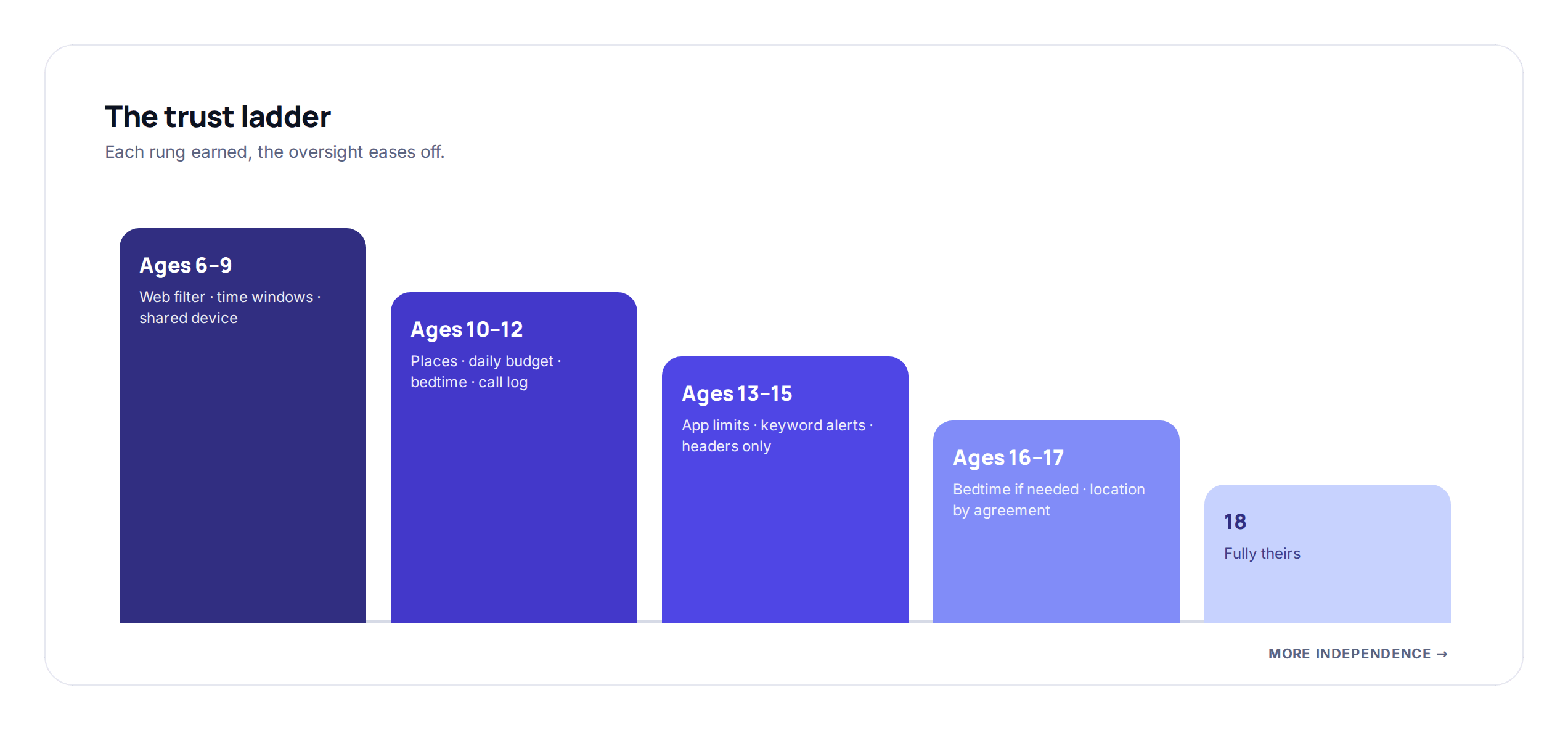
The mental model worth keeping is a ladder. You start with more oversight when they are young and less able to judge risk, and every rung up is earned by showing they can handle it. The controls come off as they climb. Someone who has climbed that ladder can handle a phone on their own; someone who was watched the whole time has only learned to be watched.
FAQ
Is it spying to monitor my own child?
Not if they know about it. Monitoring your own minor child openly, with the app visible and the rules named, is ordinary parenting and within your rights. It becomes spying when it is done in secret, or when it is aimed at someone who has not consented. The dividing line is knowledge, not which features you use.
Should I tell my child I’m monitoring their phone?
Yes. Beyond being the ethical choice, it is the practical one: covert monitoring, once discovered, costs the trust that keeps a child safe. Tell them what is on, keep it light, and promise to talk before you act on anything. A child who was told is far more likely to come to you when something goes wrong.
Is it legal to monitor someone’s phone?
Monitoring your own minor child on a device you provide is generally legal. Covertly monitoring another adult without their consent is illegal in many places, and recording calls or audio adds stricter, location-specific consent rules on top. Laws vary by country and state, so check yours before recording anything.
Won’t my child just hide things from me anyway?
An older child can hide some things, and no app catches everything. Covert spying makes hiding worse, because it teaches them that going dark is the only safe move. Open monitoring plus a home where coming to you is safe catches more of what matters than any hidden app, because the child telling you is the real safety net.
Can FreePhoneSpy be hidden from my child?
No. The app is visible on the phone, the Transparency screen lists what it shares, and nothing is monitored until a parent switches a feature on. Android also shows the permission prompts during setup on the child’s device. It is built for families who set it up together, not for covert use.